What Makes Aerobic Gymnastics Trio Unique
Aerobic gymnastics trio stands as one of the most demanding disciplines within the FIG competitive framework. Three athletes must execute identical movements with microsecond precision while maintaining the explosive energy and physical intensity that defines aerobic gymnastics. Unlike individual competition where an athlete controls every variable, trio demands constant awareness of two partners whose timing, amplitude, and spatial positioning must align perfectly.
The discipline tests not only aerobic capacity and strength but also an athlete’s ability to suppress individual tendencies in favor of collective synchronization. A single mistimed arm position or landing can disrupt the visual unity judges seek. This creates a competitive environment where the strongest individual performers are not necessarily the best trio athletes.
The Structure of Trio Competition
FIG aerobic gymnastics trio routines last between 1 minute 20 seconds and 1 minute 30 seconds. Athletes perform on a 10×10 meter floor, executing a combination of aerobic movement patterns, difficulty elements, and choreographic sequences. Judges evaluate artistic components including synchronization, musicality, and presentation alongside technical execution and difficulty value.
Trio formations require constant spatial reconfiguration. Athletes transition between linear arrangements, triangular patterns, and stacked formations while maintaining aerobic intensity. The choreographic demands mean trio athletes must memorize not only their own pathway but anticipate their partners’ positions throughout the routine.
Scoring and Judging Criteria
The scoring system rewards both difficulty and execution quality. Technical panels assess the complexity of individual elements while artistic panels evaluate the trio’s collective performance. Synchronization errors receive specific deductions, making video review essential for training refinement.
At World Championship and European Championship level, the margin between medalists often comes down to synchronization precision rather than raw difficulty. Teams that sacrifice synchronization for higher difficulty scores frequently finish behind more unified trios performing cleaner routines.
The Club-to-International Pathway
Most aerobic gymnastics trio athletes begin their journey in local clubs offering aerobic gymnastics programs. In countries with strong traditions—Italy, Romania, China, Portugal—structured development pathways exist that identify promising athletes during youth competition and integrate them into national training systems.
The pathway typically follows age-group competition at regional level, selection for national junior programs, and eventual integration into senior trios. Athletes often compete in multiple disciplines—individual, pair, trio, group—before specializing based on their synchronization capabilities and physical compatibility with potential partners.
Partner Selection and Team Building
Trio composition involves matching athletes of similar height, body proportions, and movement style. National coaches evaluate not only technical ability but also interpersonal dynamics, since trio training requires thousands of hours of close collaboration. Successful trios often train together for multiple Olympic cycles, developing intuitive awareness that cannot be replicated quickly.
The challenge for smaller federations lies in having sufficient athlete depth to form competitive trios. Nations with fewer aerobic gymnastics practitioners must sometimes sacrifice individual program development to concentrate resources on team events.
Italy’s Dominance in Aerobic Gymnastics Trio
Italy has established itself as a consistent force in aerobic gymnastics across all disciplines. The Italian federation’s investment in coaching development and regional training centers has produced multiple World Championship and European Championship medalists.
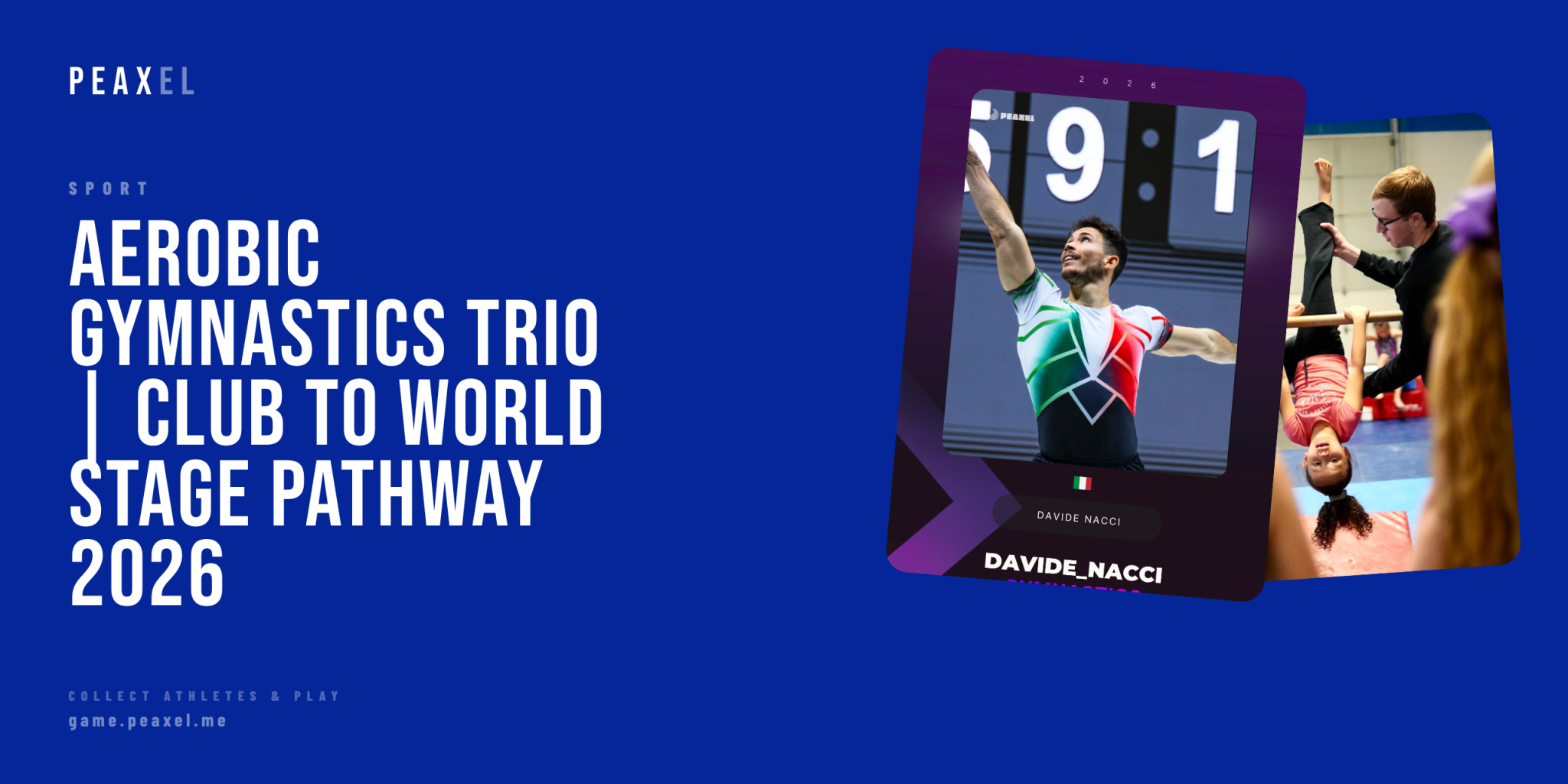
Davide Nacci exemplifies the Italian system’s effectiveness. Training under Vito Iaia at ASD Ginnastica Francavilla and national coach Luisa Righetti, Nacci won the 2026 Italian National Championship in trio alongside Francesco Sebastio and Pierpompeo Semerano. Their high-intensity choreography demonstrated the synchronization precision that has become Italy’s competitive trademark.
Nacci’s career trajectory—beginning gymnastics at age three, switching to aerobic gymnastics at nine, and achieving European Championship gold by 2023—illustrates the long development timeline required for international success. His ability to compete across individual, trio, and group disciplines reflects the versatility Italian programs cultivate. Fans can follow his journey and add him to their fantasy sports roster at Peaxel.
Training Requirements for Trio Excellence
Trio preparation demands significantly more training hours than individual competition. Beyond personal conditioning and element practice, athletes must dedicate substantial time to synchronized rehearsal. Elite trios typically train together six days per week during competition season, with video analysis sessions following each practice.
Physical conditioning emphasizes identical development across all three athletes. Strength training programs are coordinated to ensure no single athlete develops movement characteristics that diverge from partners. Flexibility work similarly follows standardized protocols.
Choreographic Development
Routine creation for trio involves specialized choreographers who understand both aerobic gymnastics technical requirements and the visual principles of synchronized movement. Music selection must accommodate three athletes’ strengths while providing clear rhythmic cues for synchronization.
The choreographic process typically begins 12 to 18 months before major competition. Initial concepts are refined through iterative practice, with difficulty elements added or removed based on the trio’s developing synchronization capability.
The Competitive Calendar
Aerobic gymnastics trio competition follows the FIG calendar with World Championships held biennially and continental championships in alternating years. World Cup events throughout the season provide ranking points and competitive experience.
The discipline also features at the World Games, where aerobic gymnastics enjoys significant visibility. For trio athletes, World Games selection represents one of the sport’s highest honors, offering exposure to multi-sport audiences unfamiliar with aerobic gymnastics.
Growing the Sport Globally
FIG development programs have expanded aerobic gymnastics into new territories, though trio competition remains concentrated in traditional strongholds. The challenge lies in building sufficient athlete pools to form competitive trios, which requires sustained investment over multiple athlete generations.
Digital platforms have increased accessibility for athletes in developing aerobic gymnastics nations. Video-based coaching and online competition formats allow isolated practitioners to receive feedback from international-level coaches. Platforms like Peaxel enable fans worldwide to discover aerobic gymnastics athletes and follow their competitive journeys.
The Future of Aerobic Gymnastics Trio
The discipline continues evolving as athletes push physical and artistic boundaries. Difficulty values have increased substantially over the past decade, with trios now attempting elements previously reserved for individual competition. The challenge remains balancing this difficulty progression with the synchronization precision that defines trio excellence.
For aspiring trio athletes, the pathway from club training to international podiums demands years of dedicated preparation. Those who master both individual excellence and collective synchronization join an elite group of athletes competing in one of gymnastics’ most demanding disciplines. The complete list of aerobic gymnastics athletes competing on Peaxel offers fans the opportunity to explore this remarkable sport and support its athletes directly.