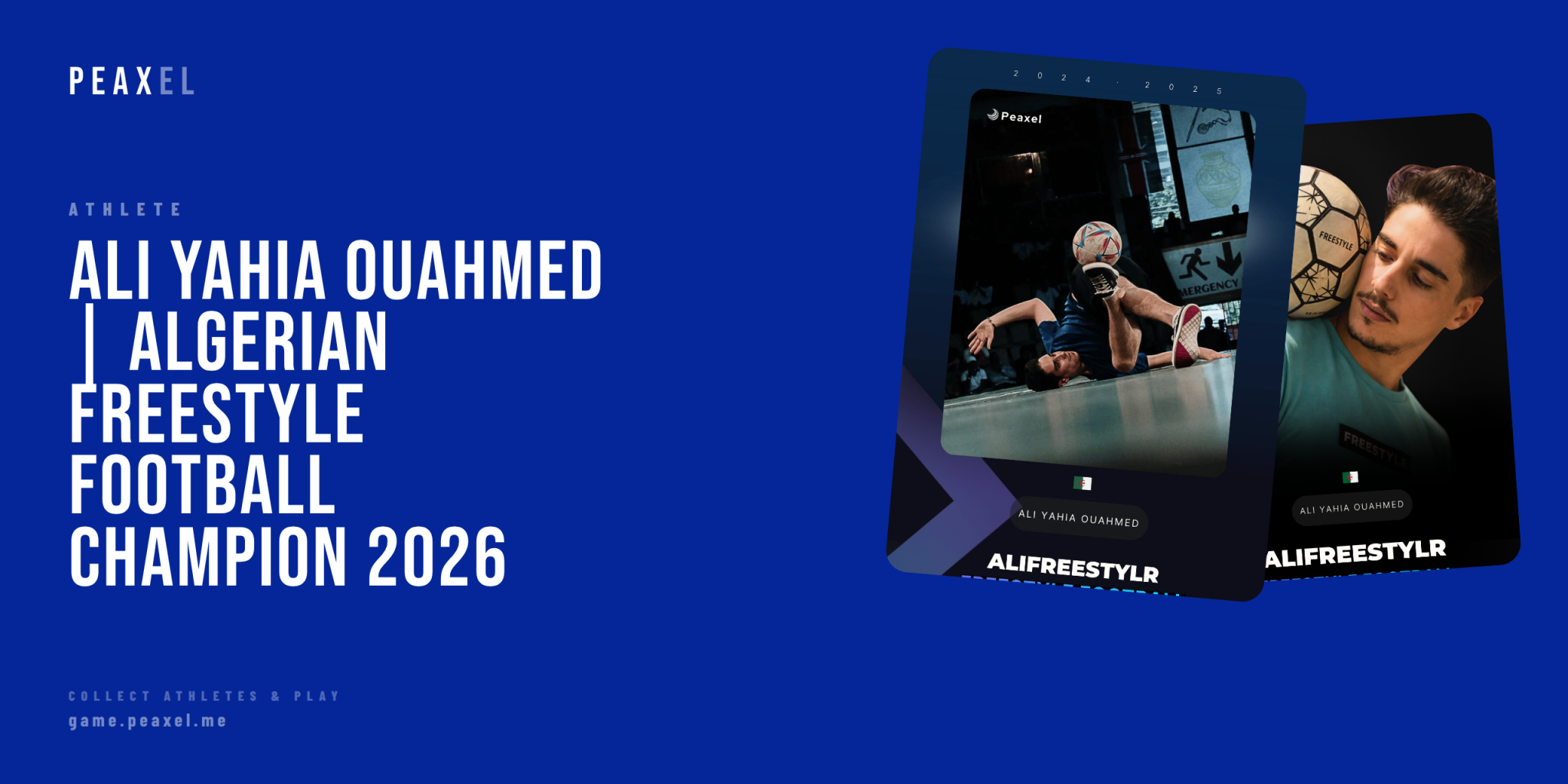
From Cairo to Nairobi: How Ali Yahia Ouahmed Became Africa’s Best Freestyler
On November 14, 2023, in Cairo, Egypt, Ali Yahia Ouahmed stood at the center of a packed venue, ball at his feet, facing 13 of Africa’s most skilled freestyle football athletes. When the final scores were announced, the Algerian had done what few believed possible—he had claimed the African Freestyle Football Championship at Freestyle Connect Africa 2023, earning his place among the continent’s elite.
The victory was more than a title. It was a ticket to the World Freestyle Football Championship in Nairobi, Kenya, just eleven days later. For Ali Yahia, the journey from local practice sessions to continental champion represents everything that defines modern freestyle football: relentless technical work, creative expression, and the discipline to compete under pressure.
The Path to Continental Glory
Freestyle football differs fundamentally from traditional football. There are no goals, no teammates, no ninety-minute matches. Instead, athletes perform intricate ball control sequences—combining juggling, stalls, aerial tricks, and ground moves—in routines judged on difficulty, creativity, execution, and musicality. The sport demands thousands of hours of isolated practice to master even basic combinations.
Ali Yahia Ouahmed built his reputation on lower body technical proficiency. His routines emphasize complex leg-over sequences, rapid transitions between sitting and standing positions, and the kind of fluid ball control that separates elite freestylers from hobbyists. In Cairo, these skills proved decisive against a field that included national champions from across Africa.
The Freestyle Connect Africa 2023 competition brought together 14 athletes judged by internationally recognized freestyle legends. The format rewarded not just difficulty but also the ability to perform under live conditions—a challenge that separates practice-room talent from competition-ready athletes.
What Freestyle Football Training Actually Looks Like
Unlike team sports with structured seasonal calendars, freestyle football athletes largely design their own training programs. Ali Yahia’s approach reflects the discipline’s unique demands: hours of solo repetition, video analysis of personal footage, and the constant pursuit of new combinations that haven’t been performed before.
A typical training session for a competitive freestyler includes warm-up juggling to establish ball feel, focused work on specific trick categories (lowers, uppers, transitions), combination drilling to link moves into seamless sequences, and full routine practice under simulated competition conditions. The sport’s judging criteria mean athletes must balance innovation—developing original moves—with execution reliability.
Physical conditioning supports but doesn’t define freestyle training. Core strength, ankle flexibility, and balance matter, but the primary limiting factor is always ball control mastery. Many elite freestylers train four to six hours daily, with additional time spent analyzing footage of their own sessions and studying competitors’ innovations.
The Mental Game in Freestyle Competition
Performing intricate ball control sequences in front of judges and audiences requires more than technical skill. Freestyle football competitions create pressure environments where dropped balls or mistimed transitions can eliminate months of preparation in seconds.
Ali Yahia’s Cairo performance demonstrated the mental composure that separates champions from talented practitioners. Executing difficult lower body combinations while judges evaluate every touch demands complete focus—the kind of competitive presence that only develops through repeated exposure to high-stakes situations.
Algeria’s Growing Freestyle Football Scene
Freestyle football has grown steadily across North Africa over the past decade. Algeria, with its deep football culture and young population, has produced increasingly competitive athletes on the continental circuit. Ali Yahia Ouahmed’s continental title represents a breakthrough moment for Algerian freestyle, demonstrating that training infrastructure and competitive pathways are developing outside traditional European and Asian strongholds.
The sport’s accessibility contributes to its growth in regions with limited sports infrastructure. A ball, flat surface, and smartphone camera are sufficient to begin training and connecting with the global freestyle community. Social media platforms have democratized exposure, allowing athletes from any country to build international followings through compelling content.
From African Champion to World Stage
Qualifying for the World Freestyle Football Championship in Nairobi placed Ali Yahia among the global elite. The World Championship brings together continental champions and top-ranked athletes from every region, creating the sport’s most competitive annual event.
Competing at world level exposes athletes to styles and techniques from Japan, Europe, South America, and beyond—each region contributing distinct aesthetic and technical traditions to freestyle’s evolving vocabulary. For athletes like Ali Yahia Ouahmed, these competitions provide both competitive benchmarks and creative inspiration.
The Future of Algerian Freestyle Football
Continental success creates visibility that can transform national scenes. Younger Algerian athletes now have a domestic champion whose path they can study and emulate. Ali Yahia’s techniques, training methods, and competitive results provide a template for the next generation of North African freestylers.
The sport’s structure rewards individual excellence—athletes can progress from bedroom practice to continental championship without requiring club infrastructure or institutional support. This pathway makes freestyle football particularly suited to regions where traditional sports development systems remain limited.
Freestyle Football in the Fantasy Sports Era
As niche sports gain visibility through digital platforms, freestyle football has attracted growing interest from fans seeking alternatives to mainstream sports entertainment. The sport’s individual format and visual spectacle translate effectively to social media and streaming platforms.
Platforms like Peaxel now feature freestyle football among their supported disciplines, allowing fans to engage with athletes like Ali Yahia Ouahmed through fantasy sports mechanics. This integration brings freestyle football into the broader ecosystem of competitive sports fandom, connecting athletes directly with global audiences who appreciate technical excellence across disciplines.
For those discovering freestyle football through Ali Yahia’s continental championship run, his journey from Algerian training sessions to Cairo’s competition stage illustrates what makes this sport compelling: individual excellence earned through countless hours of solitary practice, expressed in moments of creative performance that no team structure can replicate.