From Colchester Rink to British Dominance
Amy Rainbow first stepped onto a roller skating rink at Rollerworld in Colchester, Essex, at the age of eight. What began as childhood curiosity quickly transformed into an obsessive pursuit of excellence. Within years, she was competing at the highest levels of British artistic roller skating, a discipline that demands the grace of ice figure skating combined with the technical precision unique to quad wheels.
By 2012, Rainbow had claimed her first British Championship title in figure and free skating. She would go on to defend that crown for four consecutive years, establishing herself as the undisputed queen of British artistic roller skating through 2015. Her reign represented a level of consistency rarely seen in a sport where falls, equipment failures, and the physical demands of spinning on eight wheels can derail even the most talented competitors.
Representing Great Britain on the World Stage
Rainbow’s domestic dominance earned her selection to the Great Britain national team. For two consecutive years, she competed internationally, carrying the British flag against the world’s best artistic roller skaters. International competition in artistic roller skating operates under World Skate governance, with athletes judged on technical elements, artistic impression, and the seamless integration of choreography with music.
Competing at this level required Rainbow to master compulsory figures—the intricate tracings on the floor that test edge control and precision—alongside free skating programs that showcase jumps, spins, and footwork sequences. The dual nature of the discipline separates elite competitors from recreational skaters, and Rainbow proved herself capable in both dimensions.
The Technical Demands of Artistic Roller Skating
Unlike ice skating, artistic roller skating requires athletes to generate rotation and momentum without the glide advantage of a frozen surface. Quad skates demand ankle strength and proprioceptive control that takes years to develop. Jumps must be landed cleanly on small polyurethane wheels, and spins require precise weight distribution across a narrower base than ice blades provide.
Rainbow’s four consecutive British titles demonstrated her mastery of these technical challenges. Her programs were known for combining athleticism with genuine artistic expression—a balance that judges reward and audiences remember.
Transition to Coaching and Global Influence
After her competitive career, Amy Rainbow transitioned into coaching and instruction. Rather than limiting herself to British rinks, she expanded her reach globally through online tutorials, private lessons, and masterclasses. Her teaching philosophy centers on accessibility—making artistic roller skating available to anyone regardless of age, background, or initial skill level.
Currently based in Bali, Indonesia, Rainbow continues to engage with the skating community through digital platforms. Her social media presence has built a following of aspiring skaters who access her tutorials, technique breakdowns, and motivational content. The move to Bali reflects both a lifestyle choice and a recognition that modern coaching transcends geography.
Skating as Therapy and Self-Expression
Rainbow has spoken openly about her belief in skating as a form of therapy. The physical demands of the sport—the focus required, the proprioceptive engagement, the flow states achieved during practice—offer mental health benefits beyond pure athletics. Her teaching emphasizes this holistic approach, positioning skating not merely as competition preparation but as a pathway to personal well-being.
This philosophy resonates particularly in 2026, as more athletes and fans recognize the connection between movement practices and mental resilience. Rainbow’s journey from elite competitor to wellness-focused instructor mirrors broader trends in how sports communities understand athletic purpose.
The Broader Landscape of Roller Sports
Artistic roller skating exists within a diverse ecosystem of roller sports now featured on Peaxel’s platform. From freestyle roller skating’s park and vert disciplines to the emerging world of surfskating, quad wheels and inline configurations support multiple athletic expressions. Rainbow’s discipline represents the traditional, classical branch—closest in spirit to Olympic figure skating while maintaining its distinct technical identity.
The sport continues to grow internationally, with strong programs in Italy, Spain, Argentina, and the United States. British artistic roller skating, while smaller in scale, has produced consistent international-level talent, and Rainbow’s four-year dominance remains a benchmark for aspiring British skaters.
Athlete Cards and Fantasy Sports Integration
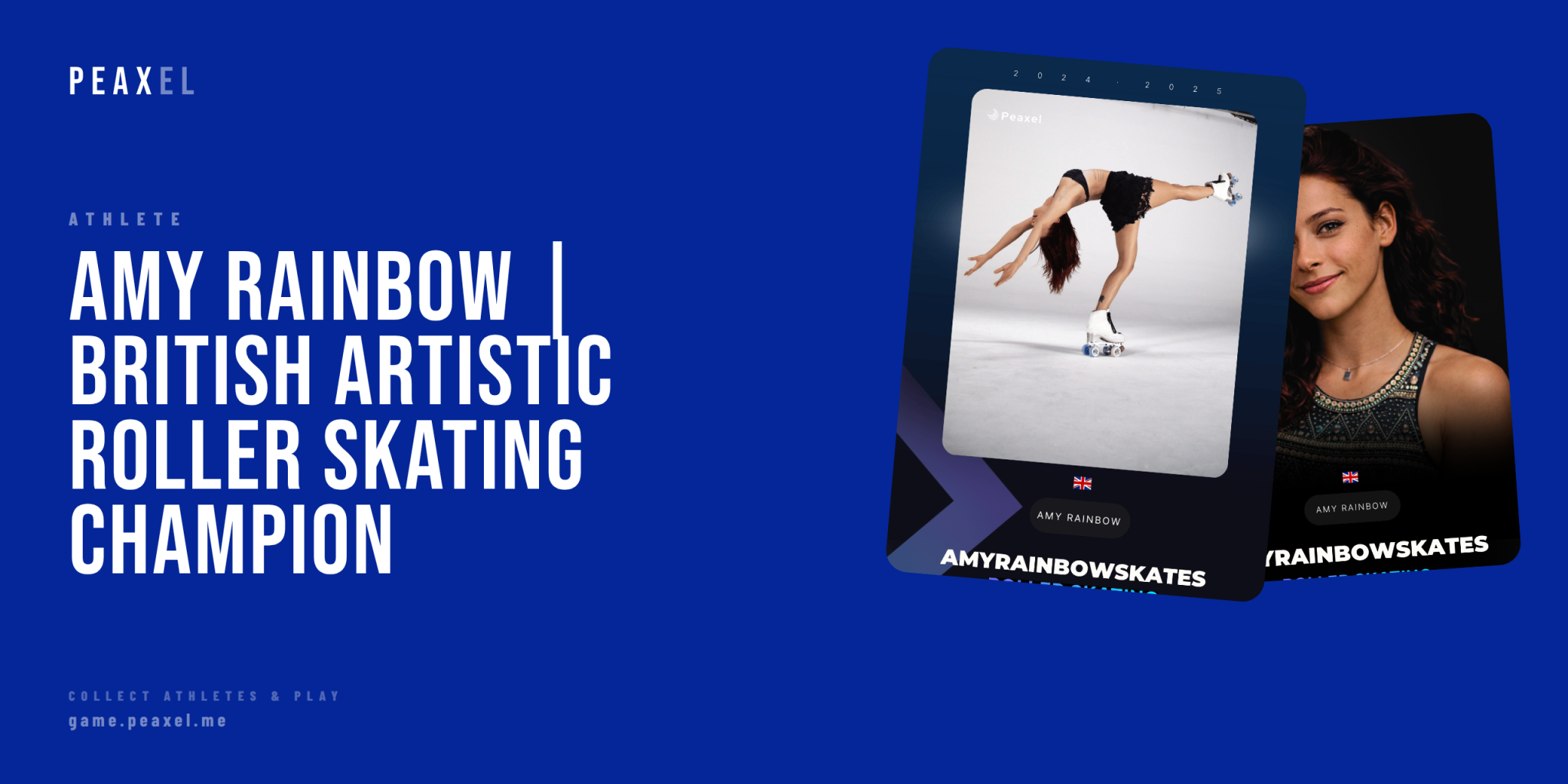
For fans interested in following artistic roller skating through fantasy sports, Amy Rainbow’s profile on Peaxel offers a way to engage with her career trajectory. The platform allows users to collect athlete cards, build teams, and compete as athlete managers across dozens of sports—including niche disciplines like artistic roller skating that rarely receive mainstream coverage.
Rainbow’s combination of competitive achievement and ongoing influence makes her profile particularly interesting for fantasy managers seeking athletes with both historical credentials and active community engagement. Her transition from competitor to instructor demonstrates the multiple value streams modern athletes can generate beyond podium results.
Legacy and Continued Impact
Amy Rainbow’s four British Championship titles between 2012 and 2015 established her as one of the most successful artistic roller skaters in recent British history. Her subsequent work as a global instructor has extended that legacy, influencing thousands of skaters who may never compete but who benefit from her technical knowledge and philosophical approach to the sport.
From a Colchester rink to international competition to a Bali-based coaching practice, Rainbow’s journey illustrates how athletic careers can evolve beyond traditional competitive frameworks. For fans discovering artistic roller skating through Peaxel, her story offers both historical context and contemporary relevance—a champion who continues shaping the sport she once dominated.