The Global Landscape of Downhill Skateboarding in 2026
Downhill skateboarding has evolved from underground hill-bombing sessions into a structured international sport with dedicated world cup circuits and national federations. In 2026, the discipline continues to grow, with certain nations establishing themselves as dominant forces through infrastructure investment, grassroots development, and consistent production of world-class talent.
The International Downhill Federation (IDF) remains the primary governing body, sanctioning events across North America, South America, Europe, Asia, and Oceania. Understanding which countries lead this gravity-powered discipline reveals much about the sport’s culture, accessibility, and future trajectory.
North America: The Established Powerhouse
United States
The United States continues to produce elite downhill talent thanks to its vast terrain diversity and long-established skate culture. California’s mountain roads and Colorado’s alpine descents provide year-round training grounds. American riders consistently podium at IDF World Cup events, supported by strong domestic competitions and manufacturer backing from companies headquartered in the region.
The US scene benefits from crossover appeal—many downhill riders transition from street or park skateboarding, bringing technical skills to high-speed environments. This pipeline ensures a constant flow of emerging competitors into the international ranks.
Canada
Canada’s contribution to downhill skateboarding cannot be overstated. British Columbia, particularly the Sea-to-Sky corridor, offers some of the world’s most technical and scenic descents. Canadian brands like Landyachtz have shaped equipment standards globally, and the nation’s riders are known for their technical precision and adaptability to varying road conditions.
The Canadian scene emphasizes community-driven events and rider development, creating an ecosystem where amateur competitors can progress toward professional ranks without relocating internationally.
South America: Brazil’s Rising Dominance
Brazil has emerged as one of downhill skateboarding’s most exciting nations. The country’s mountainous terrain in states like Rio Grande do Sul and Santa Catarina provides ideal racing conditions. Brazilian riders are known for aggressive racing styles and fearless approach to technical sections.
The Brazilian skateboarding federation has invested in downhill infrastructure, organizing national championships that attract significant media attention. This institutional support has elevated the sport’s profile domestically and produced riders who compete successfully on the IDF World Cup circuit.
Argentina and Chile also contribute to South America’s growing presence, with Andean mountain roads offering challenging descents that develop technically proficient athletes.
Europe: Depth Across Multiple Nations
France and Spain
The Pyrenees mountain range serves both French and Spanish downhill communities, creating a cross-border scene with shared events and training locations. French riders benefit from strong federative support within the broader roller sports structure, while Spain’s consistent climate allows year-round training.
Both nations host IDF-sanctioned events that attract international fields, contributing to Europe’s status as a competitive hub for the discipline.
Czech Republic and Central Europe
Central European nations have developed passionate downhill communities despite less dramatic terrain than Alpine neighbors. The Czech Republic, in particular, has produced riders who combine technical skill with strategic racing intelligence. German and Austrian scenes complement this regional strength, with the Alps providing premium training and competition venues.
Asia-Pacific: Emerging Talent
Japan
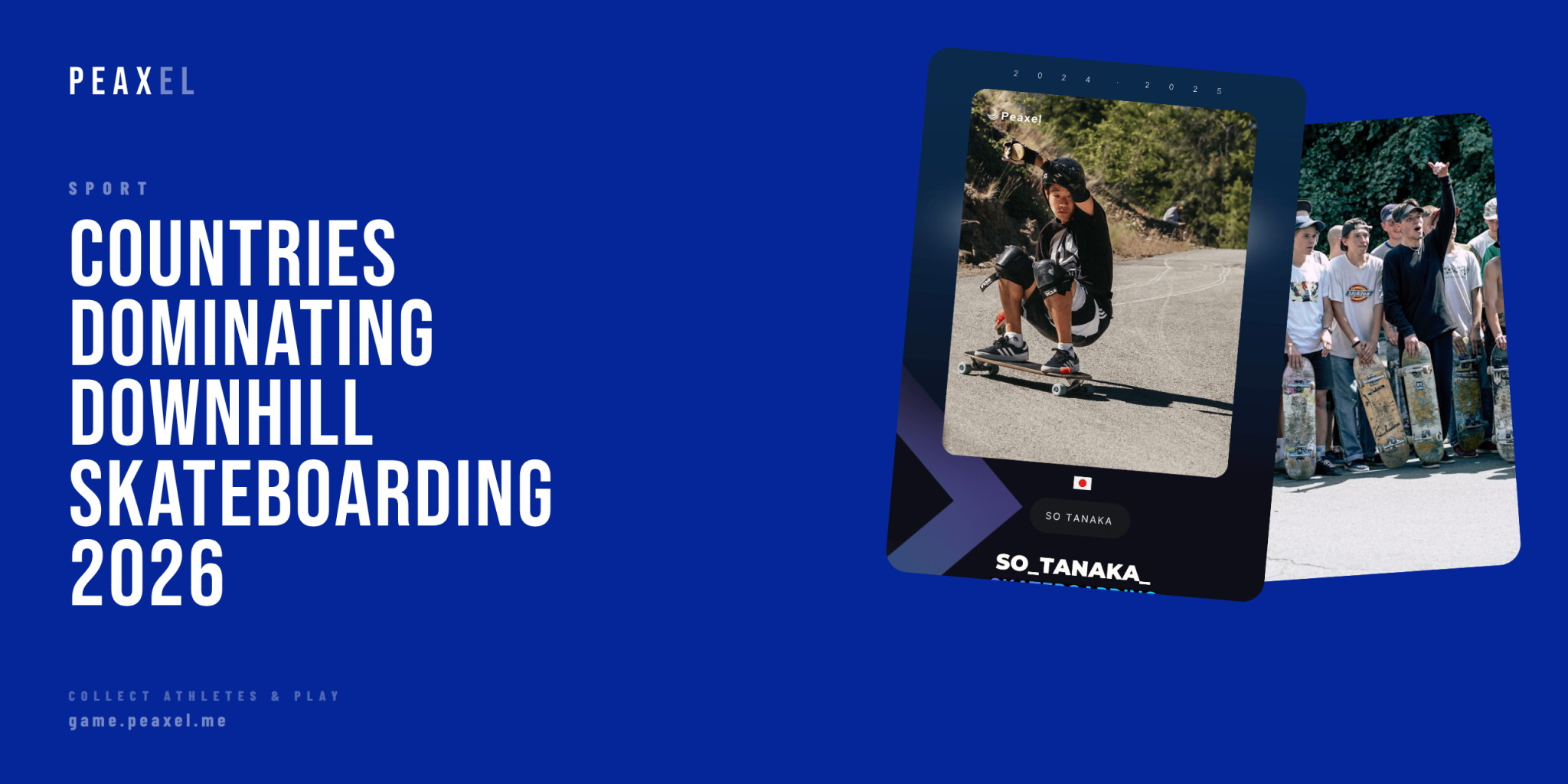
Japan’s contribution to downhill skateboarding centers on its unique approach to freeriding and technical skill development. Japanese riders like So Tanaka have gained international recognition for their ambidextrous sliding techniques and stylistic innovation. Tanaka, originally from Japan and now based between Australia and Canada, represents the globalized nature of elite downhill athletes who train across multiple continents to refine their craft.
The Japanese scene emphasizes precision and control, producing riders who excel in technical sections where others rely purely on speed. This approach has influenced global equipment development and riding methodology.
Australia
Australia’s downhill community thrives despite geographic isolation from major international circuits. Australian riders regularly travel to compete in IDF events, and the nation hosts domestic competitions that maintain competitive standards. The Australian scene’s strength lies in its community cohesion and willingness to develop local talent through grassroots initiatives.
What Makes Nations Dominant in Downhill Skateboarding
Several factors determine which countries produce elite downhill talent. Access to suitable terrain remains fundamental—nations with mountain roads featuring consistent pavement, manageable traffic, and varied gradient profiles provide ideal development environments.
Equipment manufacturer presence also matters significantly. Countries hosting major brands benefit from rider sponsorship opportunities, prototype testing programs, and industry-funded events. This commercial ecosystem sustains professional careers and attracts emerging talent.
Federative recognition elevates the sport’s legitimacy. Nations where downhill skateboarding falls under established roller sports or skateboarding federations can access government funding, insurance structures, and official competition frameworks that independent scenes cannot replicate.
The Competitive Circuit in 2026
The IDF World Cup series continues to define elite competition, with events hosted across multiple continents throughout the racing season. World championship events attract the strongest international fields, while regional series in Europe, North America, and South America provide consistent competition opportunities.
Rankings reflect the geographic distribution of talent. While no single nation dominates absolutely, the depth of competitive fields from USA, Brazil, Canada, and several European nations ensures that podiums represent global diversity. Emerging riders from Japan, Australia, and South American nations beyond Brazil increasingly challenge established hierarchies.
Following Downhill Skateboarding on Peaxel
For fans interested in following downhill skateboarding talent, Peaxel offers athlete profiles and card collections featuring riders from this discipline. Athletes like So Tanaka can be discovered and supported through the platform, which covers numerous action sports including gravity disciplines.
As downhill skateboarding continues its global expansion, the nations investing in infrastructure, athlete development, and competitive structures will shape the sport’s trajectory through the decade ahead.