The Global Landscape of Freestyle Wrestling
Freestyle wrestling stands as one of the oldest and most physically demanding combat sports in the world. Contested at the Olympic Games since 1904, it combines raw power, technical precision, and tactical intelligence in bouts that last mere minutes but demand years of preparation.
Unlike Greco-Roman wrestling, freestyle allows attacks on the entire body, including leg takedowns and trips. This open ruleset has shaped distinct national styles, with some countries emphasizing explosive attacks while others prioritize defensive positioning and counterattacks.
In 2026, the sport’s competitive hierarchy remains defined by a handful of dominant nations, though emerging programs are beginning to challenge the established order.
The United States: A Modern Wrestling Superpower
American freestyle wrestling has reached unprecedented heights over the past decade. The USA Wrestling program consistently produces Olympic and World Championship medalists across nearly every weight category.
The American system benefits from a robust collegiate wrestling infrastructure, where thousands of athletes compete at the NCAA level before transitioning to freestyle. This pipeline creates depth that few nations can match, with multiple world-class athletes often competing for a single Olympic spot.
At the 2023 World Championships in Belgrade, American wrestlers claimed multiple medals, continuing a trend of dominance that has accelerated since the 2016 Rio Olympics.
Iran: The Heart of Wrestling Tradition
Iran treats wrestling not merely as a sport but as a cultural institution. The country’s wrestling tradition stretches back thousands of years, and success on the mat carries national significance that rivals any other sporting achievement.
Iranian wrestlers are renowned for their technical mastery and ability to perform under pressure. The national program has produced countless Olympic champions and world medalists, particularly in the lighter weight categories where speed and technique prove decisive.
The Iranian wrestling league and extensive club system ensure a constant flow of talent into the national team, maintaining the country’s position among the world’s elite.
Japan: Technical Excellence in Every Weight Class
Japanese freestyle wrestling combines traditional martial arts discipline with modern sports science. The country has produced legendary wrestlers who have influenced the sport globally, particularly in women’s wrestling where Japan has been dominant.
In men’s freestyle, Japanese wrestlers excel through technical precision and relentless conditioning. The emphasis on fundamentals and repetition creates athletes capable of executing complex techniques under the pressure of international competition.
Japan’s wrestling academies and university programs serve as development centers where young athletes train alongside Olympic champions, accelerating their growth.
Russia and the Former Soviet States
Despite geopolitical complications affecting their international participation, wrestlers from Russia and former Soviet republics remain among the most skilled in the world. The Soviet wrestling system created a template that continues to produce elite athletes.
Countries like Georgia, Azerbaijan, and Kazakhstan maintain strong wrestling programs built on Soviet foundations. These nations consistently medal at World Championships and Olympic Games, particularly in heavier weight categories where power and physicality dominate.
The Dagestan region of Russia, in particular, has become synonymous with wrestling excellence, producing numerous Olympic and world champions across multiple combat sports.
Emerging Nations: France and the New Wave
While traditional powerhouses maintain their grip on the medal standings, several nations are making significant investments in wrestling development. France has emerged as one of the most promising European programs outside the former Soviet bloc.
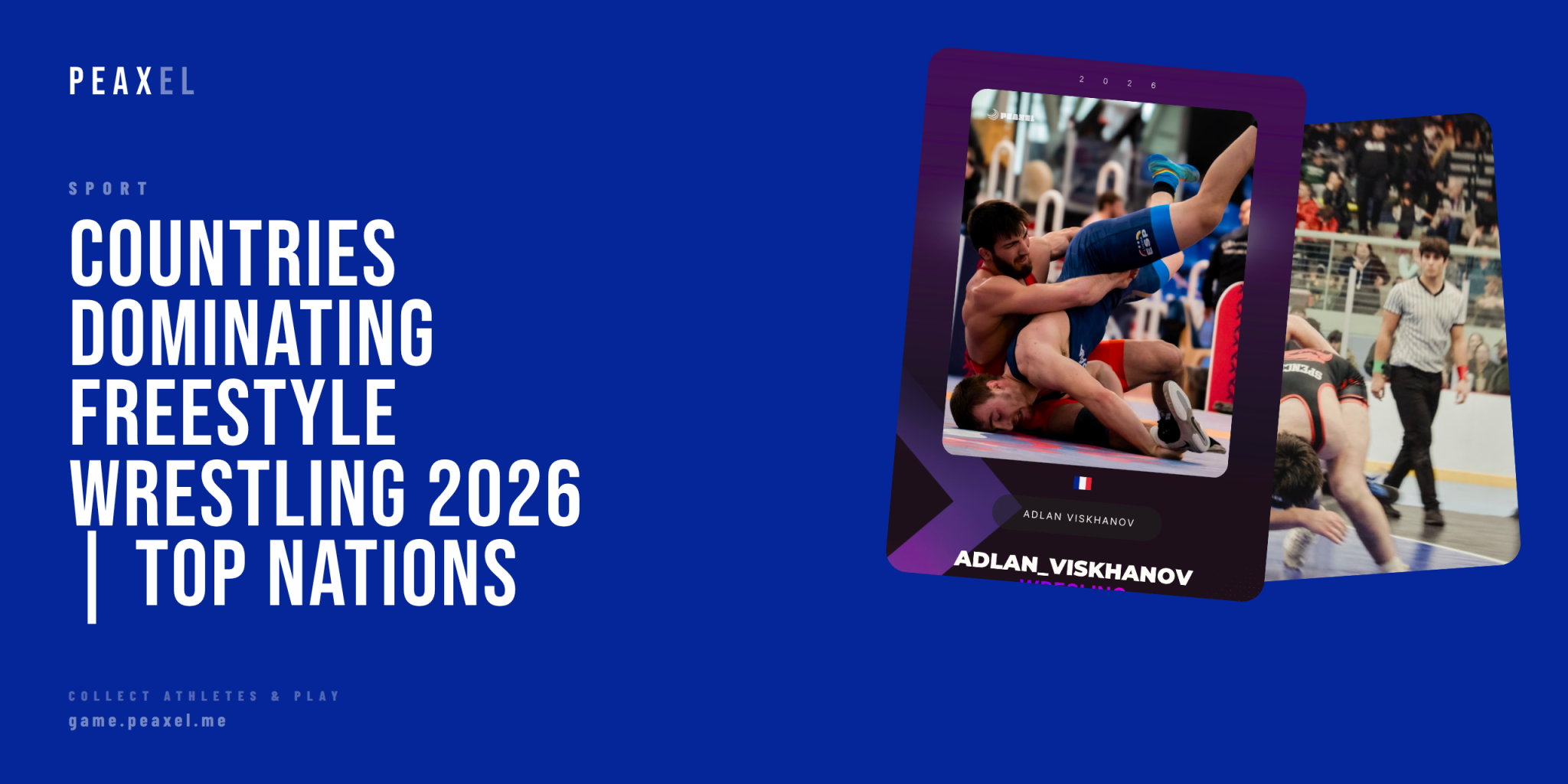
French wrestling has benefited from athletes with diverse backgrounds and strong national federation support. Adlan Viskhanov, competing in the 92-97 kg categories, exemplifies this growth. The Nice-based wrestler has earned bronze medals at both the World Junior Championships and European Junior Championships in 2022, followed by continued success at U23 European Championships in 2023 and 2024.
Viskhanov also claimed bronze at the 2025 World Military Wrestling Championships, demonstrating his ability to compete at senior international level. His trajectory reflects France’s broader ambition to establish itself among wrestling’s elite nations. Fans can follow his career on Peaxel and add him to their roster at game.peaxel.me.
What Makes a Wrestling Nation Dominant?
Several factors determine a country’s wrestling success. Infrastructure matters enormously—nations with extensive club systems, wrestling-focused schools, and competitive domestic leagues produce more elite athletes.
Cultural significance also plays a role. In Iran, Turkey, and parts of the Caucasus, wrestling carries social prestige that attracts top athletic talent. In the United States, the college system provides scholarships that make wrestling a viable path for athletes who might otherwise pursue other sports.
Coaching expertise and sports science investment have become increasingly important. Countries that combine traditional technical knowledge with modern training methods and recovery protocols tend to produce wrestlers who peak at the right moments.
The Weight Category Factor
Wrestling dominance often varies by weight class. Lighter categories tend to favor nations with deep technical traditions and large populations from which to identify naturally smaller elite athletes. Iran and Japan have historically excelled in these divisions.
Heavier weight categories often see Eastern European and American dominance, where larger populations and athletic development systems can identify and train the rare combination of size and wrestling ability required at 97 kg and 125 kg.
The middleweight divisions remain the most competitive globally, with no single nation consistently dominating across multiple Olympic cycles.
Looking Toward the 2028 Olympics
As the Los Angeles 2028 Olympics approach, the wrestling landscape continues to evolve. The United States will have home advantage, potentially boosting an already dominant program. Iran and Japan will aim to reclaim medals they’ve lost in recent cycles.
Emerging nations like France hope to break through with athletes who have matured through junior and U23 competition. The next two years of World Championships and qualification events will reveal whether the traditional hierarchy holds or new powers emerge.
For fans wanting to follow wrestling’s rising talents and established stars, Peaxel tracks athletes across combat sports and offers a unique way to engage with the sport’s global community.