What Is Double Mini Trampoline?
Double mini trampoline, commonly called DMT, is one of the four official disciplines within FIG trampoline gymnastics. Unlike individual trampoline performed on a large bed, DMT athletes sprint down a runway, mount an angled trampoline apparatus, and execute two explosive aerial skills before sticking a landing on a mat. The entire sequence lasts just seconds but demands extraordinary power, spatial awareness, and precision.
The apparatus itself is smaller than an individual trampoline and sits at an angle. Athletes perform a mount skill off the inclined section, then a dismount skill off the flat bed. Routines are judged on difficulty, execution, and landing stability. It’s one of the most visually spectacular events in gymnastics, combining the speed of a sprint with the aerial complexity of tumbling.
Why DMT Is Expanding Globally in 2026
Double mini trampoline has traditionally been dominated by a handful of nations, but 2026 marks a turning point. More federations are investing in DMT programs, and the discipline is gaining visibility through events like the FIG World Championships and World Age Group Competitions. The 2025 World Championships in Pamplona, Spain, showcased athletes from over 30 countries competing in DMT events.
Several factors are driving this expansion. First, DMT requires less infrastructure than individual trampoline—gyms can add a double mini apparatus without the ceiling height needed for full-size beds. Second, the discipline appeals to athletes with tumbling or acrobatic backgrounds who want to transition into FIG-sanctioned competition. Third, social media has amplified the visual appeal of DMT, with clips of athletes executing triple somersaults going viral.
The United States: A DMT Powerhouse
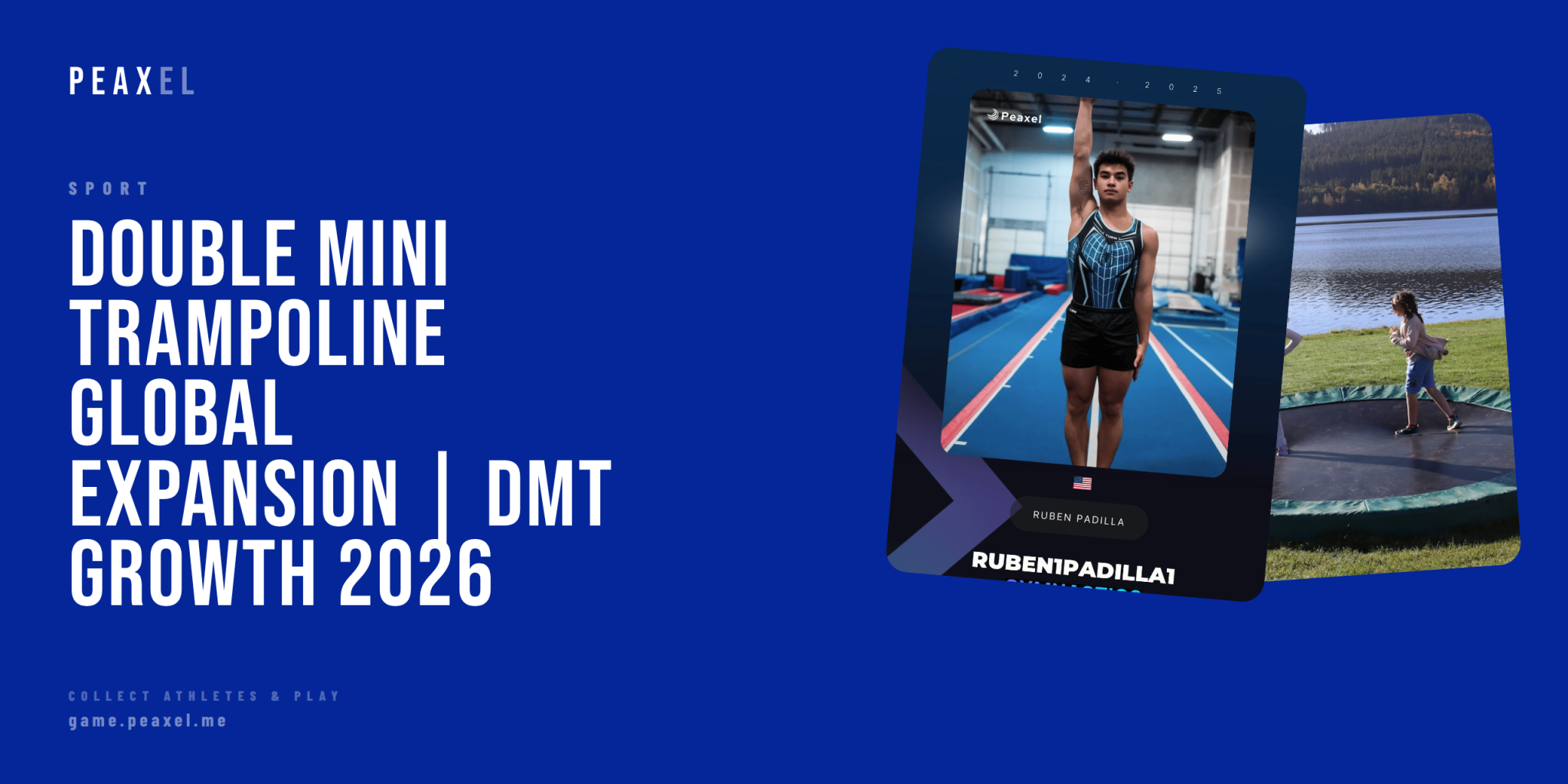
The USA has emerged as the dominant force in double mini trampoline. Ruben Padilla won the gold medal in men’s double-mini trampoline at the 2023 World Championships in Birmingham, England, successfully defending his title from the previous year. His combination of difficulty and execution consistency has set the standard for the discipline globally.
The American pipeline continues to produce talent. Nate Swanepoel, a 20-year-old from Scotts Valley, California, won silver at the 2025 FIG World Age Group Competitions in Pamplona in the 17-21 age division. Training at North Valley Gymnastics in Phoenix under coach Vernon Vargas, Swanepoel qualified second with a score of 55.200 before claiming the podium. You can follow his journey on Peaxel.
Taj Gleitsman, born in Santa Cruz and now training at Wasatch Trampoline and Tumbling in Salt Lake City, also competed at Pamplona in both trampoline and DMT. His versatility across disciplines reflects the cross-training culture that American programs emphasize.
Beyond the USA: Nations on the Rise
While the USA leads, other nations are closing the gap. Great Britain has a strong DMT tradition, with athletes regularly reaching World Championship finals. Portugal has invested heavily in trampoline gymnastics, producing world-class synchronized and individual athletes who often cross-train in DMT. China and Russia have historically dominated individual trampoline and are now allocating resources to DMT development.
Smaller nations are also entering the scene. Athletes from Australia, Canada, and several European countries competed at the 2025 World Age Group Competitions, signaling broader global interest. The FIG’s inclusion of DMT in multi-sport events and youth competitions has lowered barriers to entry for developing programs.
The Technical Evolution of DMT
Double mini trampoline has evolved dramatically over the past decade. Difficulty scores have risen as athletes push the limits of rotation and twist combinations. Today’s top competitors regularly perform skills with triple somersaults and multiple twists—elements that were rare just five years ago.
This progression mirrors trends across gymnastics disciplines. Athletes are training longer and with more scientific precision. Video analysis, biomechanical feedback, and specialized strength programs have all contributed to the technical escalation. The result is a discipline where margins are razor-thin and innovation is constant.
Training Pathways Into DMT
Many DMT athletes begin in tumbling or artistic gymnastics before transitioning to the apparatus. The sprint approach and aerial awareness required in DMT translate well from floor exercise and tumbling passes. Coaches often identify athletes with exceptional power-to-weight ratios and spatial orientation as ideal candidates for DMT specialization.
Ruben Padilla began gymnastics at age five in Oakley, California, progressing through multiple trampoline disciplines before focusing on DMT. Nate Swanepoel discovered the sport almost by accident—winning a raffle for a free week at a gymnastics academy where he was initially enrolled in parkour. These diverse entry points highlight how DMT attracts talent from across the acrobatic sports spectrum.
DMT’s Place in the Gymnastics Ecosystem
Within FIG trampoline gymnastics, double mini trampoline occupies a unique position. It shares competition venues with individual trampoline, synchronized trampoline, and tumbling, but its format is distinct. DMT finals are fast-paced, with athletes completing their passes in rapid succession. The visual impact is immediate—each routine is a burst of controlled chaos.
The discipline also serves as a development pathway. Young athletes often compete in DMT before specializing in individual trampoline or tumbling. The skills transfer across events, making DMT a valuable component of comprehensive trampoline programs. For fans, DMT offers an accessible entry point into trampoline gymnastics—routines are short, dramatic, and easy to follow.
Where to Follow DMT Athletes
Tracking double mini trampoline athletes has traditionally been difficult outside of World Championship coverage. Platforms like Peaxel are changing that by profiling athletes across niche disciplines, including DMT specialists like Ruben Padilla, Nate Swanepoel, and Taj Gleitsman.
Peaxel covers a wide range of sports—you can explore the full list at peaxel.me/list-of-all-sports-on-peaxel. For fans interested in gymnastics disciplines, the platform offers a way to discover and follow athletes who rarely receive mainstream coverage.
The Future of Double Mini Trampoline
Double mini trampoline is poised for continued growth. The FIG’s commitment to youth development through World Age Group Competitions ensures a steady pipeline of talent. As more nations invest in infrastructure and coaching, the competitive field will deepen. The discipline’s visual appeal makes it well-suited for digital audiences, and increased social media exposure will likely drive further interest.
For athletes like Ruben Padilla, Nate Swanepoel, and Taj Gleitsman, the goal is clear: push the technical boundaries while representing their nations at the highest level. For fans, DMT offers a thrilling, fast-paced discipline that showcases the outer limits of human aerial ability. If you’re looking to discover the athletes shaping this discipline’s future, Peaxel is a good place to start.