What Is Double Mini Trampoline?
Double mini trampoline sits alongside individual trampoline and tumbling within the FIG Trampoline Gymnastics program. Athletes sprint down a 10-meter runway, mount an angled mini-trampoline, execute one or two aerial skills on the apparatus, then perform a final skill onto a landing mat. The entire sequence lasts just seconds but demands explosive takeoff power, precise aerial awareness, and controlled landings.
Unlike individual trampoline where athletes bounce repeatedly on a large bed, DMT rewards a single committed approach. One hesitation on the run-up means a failed pass. This combination of speed, commitment, and aerial complexity makes double mini trampoline one of gymnastics’ most thrilling disciplines to watch.
The Club Foundation
Every elite DMT athlete begins at a local gymnastics club. In the United States, clubs like Vargas Academy of Gymnastic Arts in California and Wasatch Trampoline and Tumbling in Utah have produced multiple national team members. These facilities invest in specialized equipment: regulation double mini apparatus, proper landing mats, and overhead spotting rigs for learning new skills.
Young athletes typically enter recreational trampoline programs before coaches identify those with the explosive leg power and spatial awareness suited to DMT. The transition happens around age eight to ten, when coordination allows for more complex aerial progressions.
Building the Skill Foundation
Early DMT training focuses on basic mounts and dismounts. Athletes learn to control their approach speed, time their takeoff, and land in balance. From there, coaches introduce single somersaults with varying amounts of twist. A typical club-level progression spans two to three years before athletes attempt competitive routines.
The mental component matters as much as physical ability. DMT requires committing fully to each pass—there is no opportunity to abort mid-skill as in some other gymnastics disciplines. Coaches spend considerable time building athlete confidence alongside technical execution.
National Development Pathways
In the United States, USA Gymnastics oversees trampoline and tumbling development through a structured pathway. Athletes progress from developmental levels through Junior Olympic competition before reaching Junior and Senior Elite status. The system mirrors artistic gymnastics but remains more accessible—fewer athletes compete in T&T disciplines, creating more opportunities for dedicated participants.
National Championships serve as the primary selection event for the USA National Team. Athletes who perform well earn invitations to national team training camps and selection for international competitions including World Age Group Competitions and eventually World Championships.
The World Age Group Step
FIG World Age Group Competitions provide the crucial bridge between domestic success and senior international competition. Athletes compete in age divisions (11-12, 13-14, 15-16, 17-21) against peers from nations worldwide. Strong performances here signal readiness for senior-level competition.
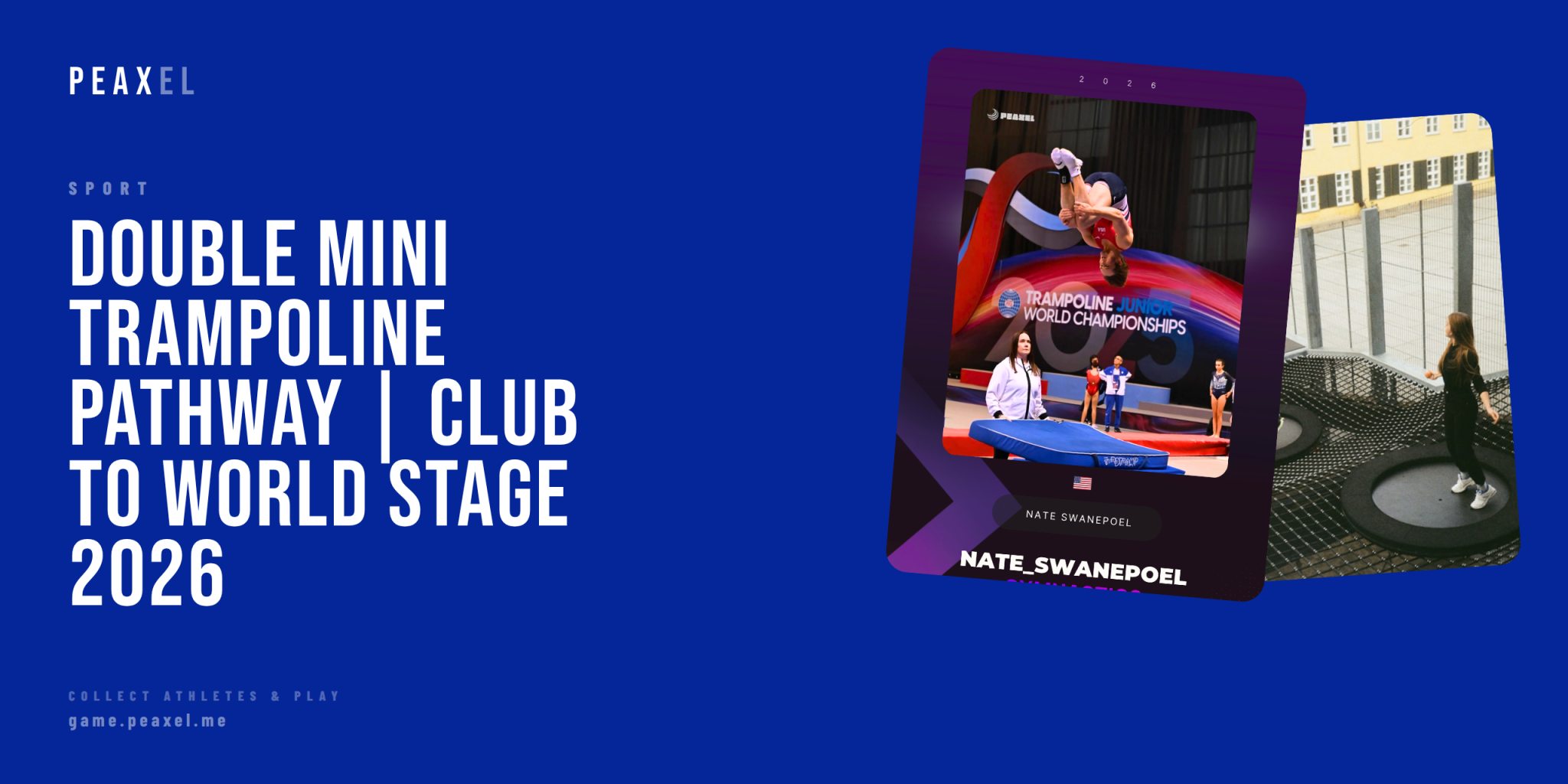
Nate Swanepoel exemplifies this pathway. After developing at Vargas Academy in California under coach Vernon Vargas, he relocated to Arizona State University while training with North Valley Gymnastics. At the 2025 World Age Group Competitions in Pamplona, Spain, Swanepoel qualified second in double mini with a score of 55.200 and claimed silver—demonstrating how American club programs produce world-class DMT athletes.
International Competition Structure
The FIG governs international DMT competition through World Championships, World Cups, and continental championships. World Championships occur annually, rotating between individual apparatus events and combined team competitions. The World Games, held every four years, also features double mini trampoline as a medal event.
Scoring combines difficulty and execution. Each skill in a routine carries a difficulty value determined by the number of somersaults, twists, and body positions. Judges then evaluate execution quality—deductions apply for bent knees, incomplete twists, balance errors on landing, and other technical faults. The highest-scoring routines combine ambitious difficulty with clean execution.
The Difficulty Arms Race
Elite DMT routines now feature triple somersaults with multiple twists. Athletes push boundaries continuously—coaches and athletes calculate risk-reward balances between attempting harder skills that might fail versus cleaner executions of slightly easier passes. This strategic element adds depth for fans following competition.
Ruben Padilla represents the multi-event versatility common in American trampoline programs. The 2023 World Champion in double mini also competes in synchronized trampoline and individual events, demonstrating how athletes develop across the full discipline range.
Training Volume and Athletic Demands
Elite DMT athletes train 20 to 30 hours weekly. Sessions split between apparatus work, strength conditioning, and flexibility training. The explosive leg power required for DMT takeoffs demands specific plyometric and weight training protocols.
Injury management shapes career longevity. Ankles, knees, and lower backs absorb significant impact forces. Successful athletes and coaches prioritize recovery, landing surface quality, and progressive skill introduction to minimize injury risk while maintaining competitive progression.
The Balancing Act
Many DMT athletes, particularly in the United States, balance training with education. Nate Swanepoel studies at Arizona State University while maintaining his competition schedule. This dual focus reflects the amateur nature of trampoline gymnastics—even world-level athletes rarely earn substantial income from the sport alone.
Global Participation and Growth
Double mini trampoline participation grows steadily worldwide. Traditional powerhouses include the United States, Russia, China, and several European nations. Emerging programs in South America, Asia, and the Middle East add competitive depth at World Championships.
The discipline benefits from relatively modest facility requirements compared to artistic gymnastics. A club needs the apparatus, proper landing mats, and adequate ceiling height—achievable for gymnastics centers without Olympic-scale investment. This accessibility supports grassroots development globally.
Following DMT Athletes on Peaxel
Double mini trampoline athletes compete across multiple events annually, creating opportunities for engaged fans to follow their progression. Peaxel features DMT athletes including emerging talents developing through the pathway described above. The complete sports list shows the range of disciplines available for fans building athlete collections.
For those discovering double mini trampoline through platforms like Peaxel, the discipline offers an entry point into the broader world of FIG trampoline gymnastics—a sport combining athletic power with aerial artistry in competitions spanning local clubs to World Championship stages.