The Fantasy Sport Nobody’s Talking About
You’ve played fantasy football. Maybe fantasy basketball. Perhaps you’ve dabbled in fantasy F1 or tried your hand at esports picks. But inline skating? That’s probably never crossed your mind.
Here’s the thing: the sports with the smallest fantasy footprint often hold the biggest upside. When everyone’s competing for the same football picks, the edge disappears. When you’re one of the first to recognize an athlete in a discipline most people can’t even name, you’re building a portfolio nobody else has.
Trick slalom is exactly that kind of opportunity. It’s a Japanese-born discipline where skaters navigate cones with style, creativity, and flair—judged not on rigid technical scores but on visual impact and originality. And on Peaxel, you can actually collect cards from athletes in this sport.
What Makes Trick Slalom Different
Forget what you think you know about inline skating competitions. Trick slalom isn’t about speed. It’s not about who crosses the finish line first.
Athletes set up 15 soft cones at 150mm intervals and then perform whatever movements they want. A simple trick executed with personality beats a complex one performed robotically. It’s skating as self-expression, closer to skateboarding culture than traditional racing.
This matters for fantasy because creative disciplines produce athletes with distinct profiles. You’re not betting on who trained harder last week—you’re identifying who has the vision and execution to stand out. That’s a different kind of scouting entirely.
Riki Nakano: The Pick Nobody Has
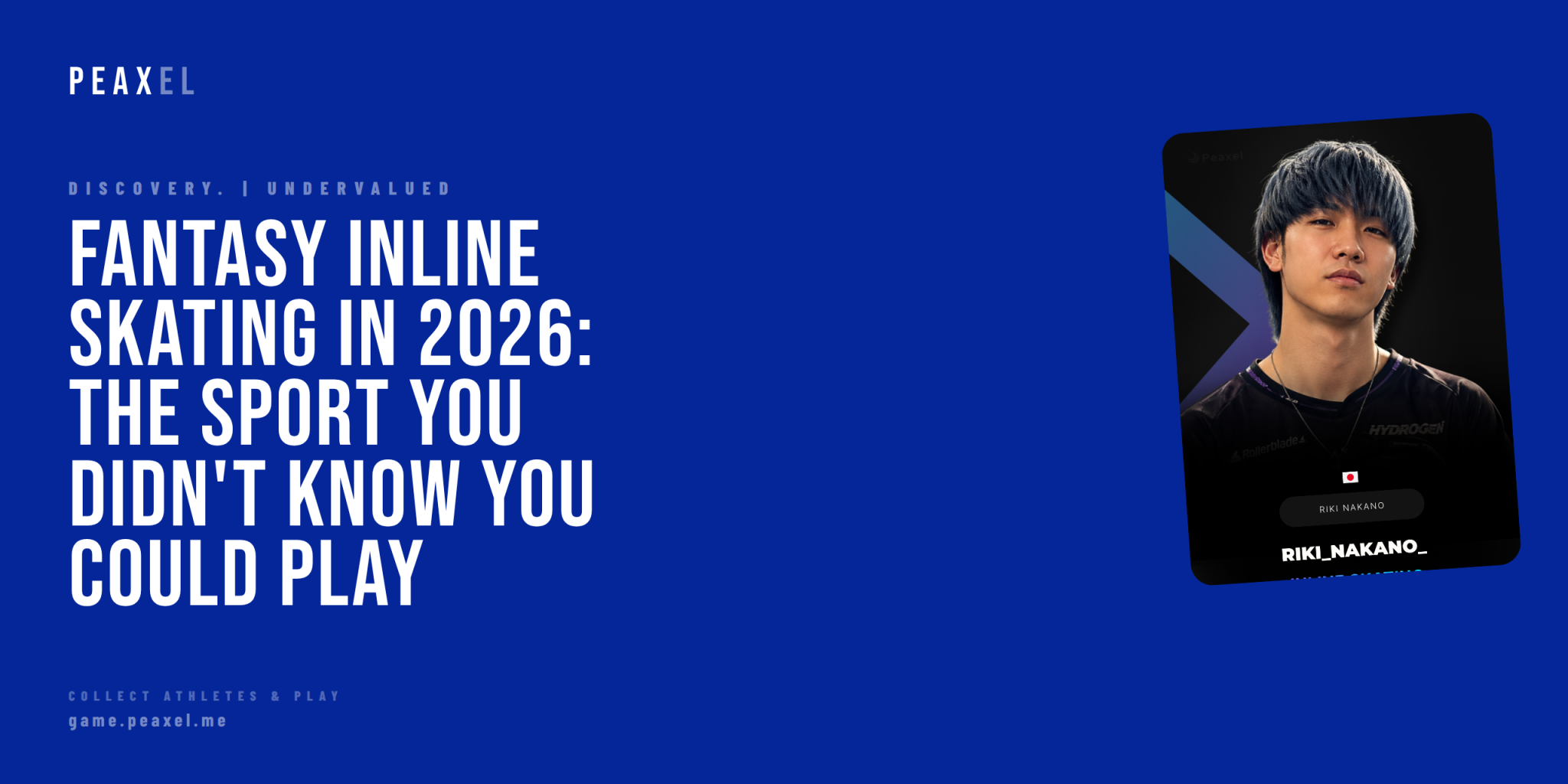
If you’re going to enter fantasy inline skating early, Riki Nakano is the obvious starting point.
Born in Tokyo in 2002, Nakano has been skating since age five. His family introduced him to wheels—uncle first, then father and older brother. By now, he’s one of the world’s leading trick slalom practitioners, with an official Rollerblade ambassadorship that puts him in elite company.
Honestly, this is the kind of athlete profile that makes early fantasy adopters look smart six months later. He organizes competitions across Japan, runs seminars in multiple cities, and actively works to grow the discipline internationally. That’s not just athletic talent—it’s platform-building behavior that tends to correlate with rising visibility.
His Peaxel card sits in a category with virtually no competition. While everyone fights over the same cycling or MMA picks, Nakano’s card represents territory most fantasy players haven’t discovered yet.
Why This Matters for Your Peaxel Strategy
Peaxel covers over 80 sports disciplines. That breadth is the whole point.
When you’re building lineups across combat sports, Olympic disciplines, extreme sports, and more, the players who only know football fantasy are playing a different game. They’re competing in crowded waters. You’re finding open space.
Inline skating won’t headline SportsCenter. That’s precisely why it’s valuable. The athletes in these disciplines are real, competing, building careers—and their Peaxel cards let you get in early on profiles that could grow significantly as the sport gains visibility.
Check the full list of sports on Peaxel and you’ll find dozens of disciplines like this. Trick slalom. Artistic roller skating. Wingsuit flying. Sports with dedicated athletes and almost zero fantasy coverage elsewhere.
The Undervalued Advantage
Every fantasy platform has its meta—the obvious picks everyone gravitates toward. The value sits in the gaps.
Nakano checks the boxes that matter: professional brand partnerships, active competition schedule, community-building presence, and a sport that’s growing internationally. He’s not a complete unknown. He’s just unknown to fantasy players.
That’s the difference between undervalued and obscure. Undervalued athletes have real credentials that haven’t been priced into fantasy markets yet. Nakano has the Rollerblade partnership, the event organization track record, and the social media presence. He’s simply operating in a discipline that most fantasy platforms ignore entirely.
Getting Started With Inline Skating Fantasy
Peaxel works differently than the fantasy games you’re used to. You collect athlete cards, build lineups across any sport, and compete as a manager rather than a gambler. There’s no betting involved—just strategic card collection and lineup construction.
For inline skating specifically, the approach is straightforward: identify athletes with professional trajectories, collect their cards early, and build a portfolio in a space where competition is minimal. As the sport gains international exposure—through events, social media, and Nakano’s own efforts to grow trick slalom globally—the value of those early cards could shift substantially.
You don’t need to be an inline skating expert. You just need to recognize opportunity in the gaps that other fantasy players haven’t noticed yet.
One Card Worth Exploring
If any of this sounds interesting, start with Riki Nakano’s card on Peaxel. It’s a low-risk entry point into a discipline with genuine growth potential and an athlete who’s actively working to expand the sport’s footprint.
Fantasy sports reward the people who see value before the crowd. Inline skating might be the next place to look.