Why Sprint Swimming Is the Next Frontier for Fantasy Sports
Fantasy sports has long dominated football, basketball, and baseball. But a new wave of platforms is bringing fantasy competition to individual sports—and sprint swimming is emerging as one of the most compelling options for fans seeking something different.
Unlike team sports where roster construction focuses on positions and matchups, fantasy swimming challenges fans to understand split times, relay dynamics, and the razor-thin margins that separate world records from ordinary swims. For fans who love data and precision, sprint events offer a uniquely measurable form of athletic performance.
The appeal is clear: in a 50-meter freestyle race, hundredths of seconds matter. Every reaction time off the blocks, every stroke count, every turn becomes a data point that fantasy platforms can translate into scoring systems.
Understanding Relay Events for Fantasy Scoring
Relay races add a layer of strategic complexity that makes them particularly interesting for fantasy formats. A 4x50m or 4x100m freestyle relay isn’t just four swimmers racing sequentially—it’s a coordinated effort where exchange times, leg order, and individual splits all contribute to the final result.
Fantasy scoring for relays typically rewards both individual leg performance and team placement. A swimmer who posts the fastest split in a relay final earns points regardless of whether their team wins. This creates strategic depth: do you roster the anchor leg specialist who faces the most pressure, or the leadoff swimmer whose reaction time sets the tone?
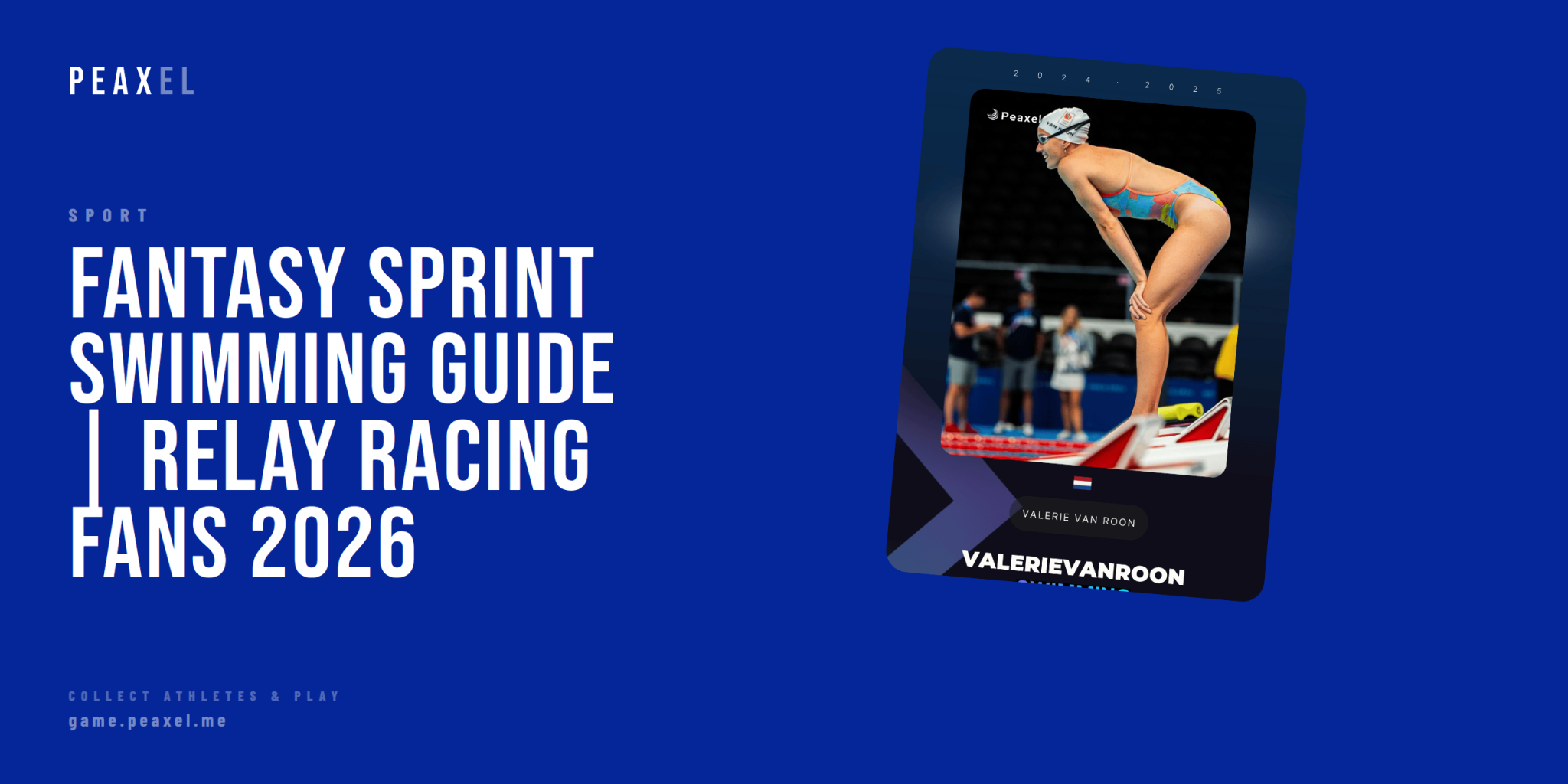
World-class relay swimmers like Valerie van Roon of the Netherlands demonstrate why relay specialists deserve fantasy attention. Van Roon was part of the Dutch 4x50m freestyle relay team that set a world record of 1:33.91 at the 2017 European Short Course Championships—a record that stood as a benchmark for relay excellence.
Key Metrics Fantasy Swimmers Should Track
Successful fantasy swimming requires understanding which statistics actually predict performance. Reaction time off the blocks typically ranges from 0.60 to 0.70 seconds for elite sprinters—any swimmer consistently under 0.65 gains a measurable advantage in close races.
Stroke rate and distance per stroke are equally important. Sprint freestylers typically maintain 50-60 strokes per minute while covering 2.0-2.3 meters per stroke. Swimmers who can increase stroke rate without sacrificing distance per stroke often perform best in championship finals where adrenaline runs high.
Turn efficiency matters more in short course (25m pool) events where swimmers complete more turns per race. Fantasy platforms focusing on European Short Course Championships weight turn times more heavily than those covering Olympic long course events.
Building Your First Fantasy Swimming Roster
Most fantasy swimming formats use a salary cap system where fans select 4-8 swimmers across multiple events. Sprint specialists typically cost more than distance swimmers due to the higher volume of sprint events at major championships.
Diversification across nationalities helps manage risk. The United States, Australia, and the Netherlands consistently produce sprint talent, but emerging swimming nations like Italy and Hungary have developed competitive relay programs. Rostering swimmers from multiple countries ensures you’re covered regardless of which national team peaks at a given competition.
For relay-focused fantasy formats, identifying teams likely to medal matters as much as individual talent. The Dutch women’s relay program, featuring athletes you can follow on platforms like Peaxel, has consistently medaled at European and World Championships—making their roster members reliable fantasy selections.
Competition Calendar and Timing Strategy
Fantasy swimming scoring varies dramatically based on the competition. World Championships and Olympic Games offer the deepest fields and highest point ceilings, but European Championships and World Cup stops provide more frequent scoring opportunities throughout the season.
Short course season (October through December) features different specialists than long course season (March through August). Some swimmers excel in 25-meter pools where more turns reward technique, while others peak in Olympic-distance 50-meter pools where raw speed dominates.
Smart fantasy managers track taper schedules. Elite swimmers rarely race at full speed outside major championships—they train through smaller meets and only rest fully for target competitions. Understanding when a swimmer is tapered versus training through an event helps predict realistic scoring outcomes.
The Data Revolution in Swimming Fantasy
Swimming’s quantifiable nature makes it ideal for fantasy formats. Unlike subjective sports where judging affects outcomes, swimming produces objective times that translate directly into rankings and points.
Advanced analytics platforms now track underwater dolphin kicks, breakout distances, and velocity curves throughout races. Fantasy formats incorporating these metrics reward fans who study biomechanics, not just results. A swimmer who consistently covers 15 meters underwater off each wall gains tactical advantages that basic split times don’t capture.
Real-time scoring during competitions adds engagement. Fans can watch a relay unfold and see their fantasy points accumulate as each leg completes—creating the same live stakes that make fantasy football compelling during Sunday games.
Why Sprint Swimming Fans Are Discovering Fantasy Platforms
Traditional swimming fandom peaks during Olympic years and fades between Games. Fantasy sports solves this engagement problem by giving fans reasons to follow World Cups, national championships, and continental events year-round.
The format also deepens appreciation for lesser-known athletes. Fantasy managers researching relay rosters discover swimmers who rarely make highlight reels but consistently deliver crucial splits. This knowledge transforms casual viewers into informed fans who understand the sport’s depth beyond medal ceremonies.
Platforms like Peaxel connect fantasy engagement with real athlete support, allowing fans to collect digital cards and track performance across multiple sports including swimming. The combination of fantasy competition and athlete connection creates sustainable fandom that extends beyond quadrennial Olympic cycles.
Getting Started With Fantasy Swimming in 2026
The 2026 swimming calendar offers multiple entry points for new fantasy players. The World Short Course Championships in December provide concentrated sprint action ideal for learning relay dynamics. European Championships in the summer feature continental rivalries and emerging talent worth tracking.
Begin by following 10-15 sprint specialists across major swimming nations. Track their season progressions, note which swimmers taper effectively for championships, and observe relay lineup decisions that coaches make as competitions approach.
Fantasy swimming rewards patient study over reactive roster moves. The sport’s precision means small advantages compound over time—just like the hundredths of seconds that separate world record holders from the rest of the field.