FMX Freestyle Motocross Is Expanding Faster Than Ever
Freestyle motocross has always been about pushing boundaries. Athletes launch motorcycles 30 feet into the air, executing backflips, double flips, and gravity-defying tricks that seemed impossible just a decade ago. But in 2026, the sport itself is pushing a different kind of boundary—geographical ones.
FMX is no longer confined to its traditional strongholds in the United States and Australia. New competitions are launching across Asia, the Middle East, and South America at an unprecedented rate. The discipline that once existed primarily on the X Games circuit is now a genuinely global phenomenon, attracting new audiences, sponsors, and athletes from regions that had minimal exposure to freestyle motocross just five years ago.
This expansion represents one of the most significant shifts in action sports geography since skateboarding went mainstream in the 2000s. And the momentum shows no signs of slowing down.
X Games and Nitro World Games Lead the Charge
The X Games franchise has been instrumental in FMX’s global push. After decades of primarily North American events, X Games has aggressively expanded its international footprint. The 2025 X Games Shanghai marked a watershed moment, bringing elite FMX competition to mainland China for the first time with full broadcast coverage across Asian streaming platforms.
Nitro World Games, founded by action sports legend Travis Pastrana, has taken a different approach—creating a touring competition model that brings FMX to multiple continents each season. The 2025-2026 tour included stops in Japan, Brazil, and the United Arab Emirates, each event drawing sellout crowds eager to witness FMX tricks live.
These events serve dual purposes. They satisfy existing fans in new markets while creating entirely new audiences who may never have seen a freestyle motocross competition before. The result is a feedback loop: more events create more fans, which attracts more sponsors, which funds more events.
The Middle East Emerges as a New FMX Hotspot
Perhaps no region has embraced FMX more enthusiastically than the Middle East. Saudi Arabia’s Vision 2030 initiative has poured significant investment into entertainment and sports infrastructure, and extreme sports have been a major beneficiary. Red Bull X-Fighters events in Riyadh have drawn massive crowds, while the UAE has hosted multiple FMX exhibitions as part of broader sports entertainment festivals.
The appeal is straightforward. FMX offers spectacular visual entertainment that transcends language barriers. A triple backflip speaks the same language whether you’re watching in California or Jeddah. The region’s investment in purpose-built venues with state-of-the-art ramp systems has created competition infrastructure that rivals anything in North America or Europe.
This Middle Eastern expansion has also opened new sponsorship opportunities. Regional brands seeking association with youth-oriented, high-energy sports have become significant investors in FMX competitions, creating revenue streams that simply didn’t exist a decade ago.
Asia-Pacific Growth Accelerates
Beyond China, the broader Asia-Pacific region is experiencing its own FMX boom. Japan has developed a domestic FMX scene with competitions in Tokyo and Osaka drawing respectable fields of local and international riders. South Korea’s growing extreme sports culture, fueled by government investment in youth recreation, has created demand for FMX content and events.
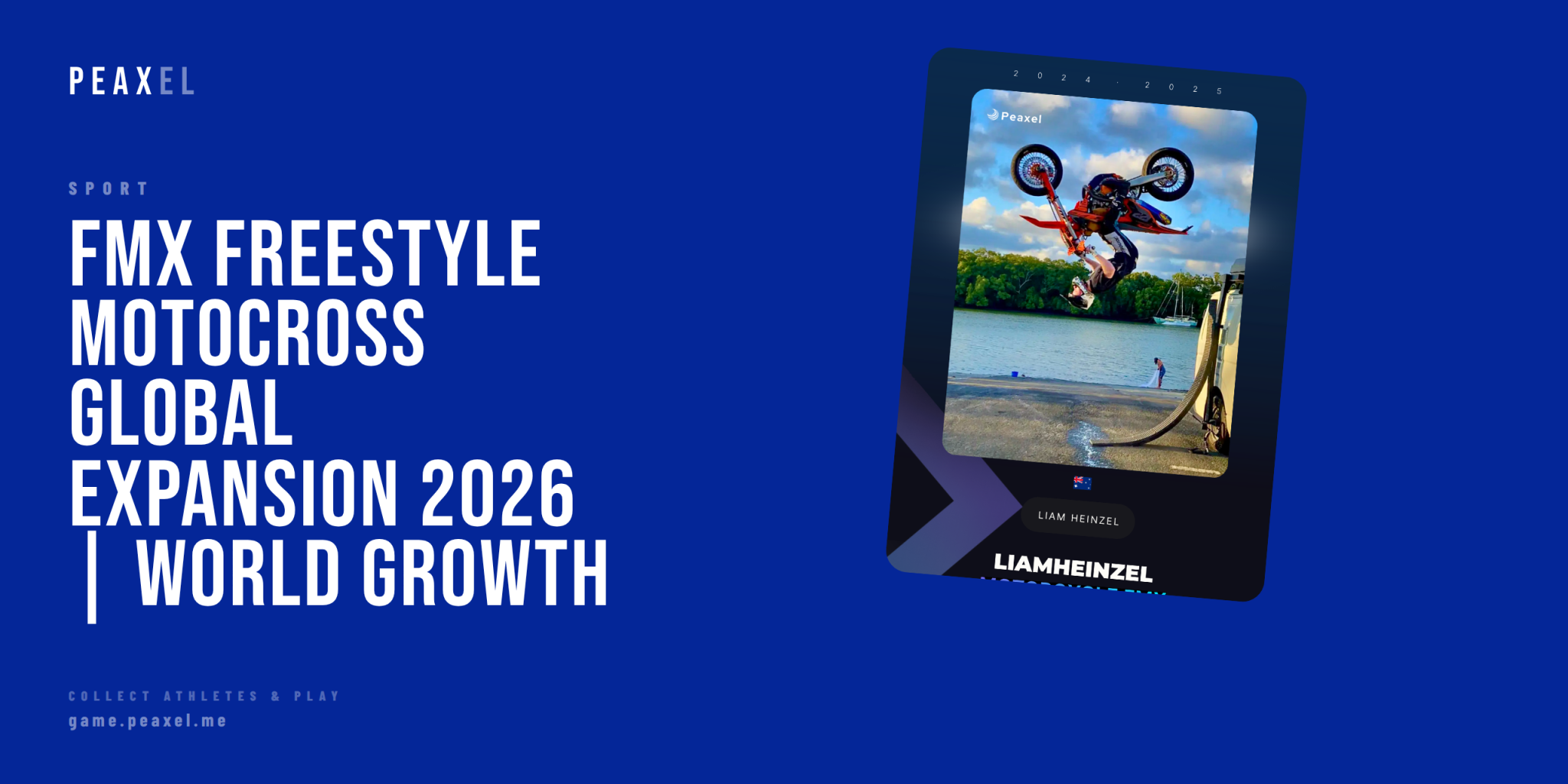
Australia remains a powerhouse, producing world-class athletes who have dominated international competition for years. Athletes like Liam Heinzel, the Australian FMX rider and founder of Mad Style Moto, represent a generation of riders who combine competitive performance with entrepreneurial ventures that expand the sport’s reach. Heinzel’s community platform has introduced thousands of fans to stunt riding culture, demonstrating how individual athletes can drive grassroots growth.
You can follow Liam Heinzel’s FMX career on Peaxel, where fans can engage with his athletic journey through the platform’s fantasy sports mechanics.
Digital Platforms Fuel Viewership Growth
FMX’s expansion isn’t just about physical events—digital viewership has exploded. YouTube channels dedicated to freestyle motocross routinely generate millions of views per video. Instagram and TikTok have become essential platforms for FMX athletes to build audiences, with trick clips going viral and reaching demographics that traditional sports broadcasts miss entirely.
ESPN’s expanded X Games coverage has brought FMX to mainstream sports audiences, while dedicated streaming platforms have created on-demand access to competitions worldwide. A fan in Indonesia can now watch the same FMX event in real-time as a fan in Arizona, eliminating the geographical barriers that once limited the sport’s audience.
This digital accessibility has created a new generation of FMX fans who may never attend a live event but engage deeply with the sport through social media and streaming. These fans drive merchandise sales, sponsor engagement, and demand for more content—all factors that encourage further investment in global expansion.
New Talent Pipelines Are Emerging
Global expansion means global talent development. While the United States and Australia have traditionally produced the majority of elite FMX athletes, new talent pipelines are developing in unexpected places. Brazil’s motocross culture has begun producing freestyle specialists, while European riders from France, Germany, and Spain have established themselves on international circuits.
The emergence of riders from non-traditional FMX countries adds competitive depth and creates local heroes who can attract national audiences. When a Brazilian rider competes at Nitro World Games, Brazilian viewership spikes. This dynamic incentivizes competition organizers to cultivate talent from diverse regions.
Training facilities have followed this pattern. FMX-specific compounds with foam pits and progressive ramp systems have opened in Japan, Brazil, and several European countries, giving aspiring riders access to the infrastructure needed to develop world-class skills without relocating to traditional FMX hubs.
The Business Case for Global FMX
Behind every expansion decision is a business calculation. FMX competitions require significant investment in venue infrastructure, athlete appearance fees, and broadcast production. The willingness of sponsors and event organizers to make these investments in new markets reflects confidence in the sport’s commercial viability.
Energy drink brands, automotive companies, and apparel manufacturers see FMX’s young, engaged demographic as highly valuable. The sport’s visual nature makes it ideal for social media marketing, where sponsors can generate significant impressions from a single spectacular trick clip. This alignment between FMX’s content characteristics and modern marketing needs has attracted sponsor investment that funds global expansion.
What’s Next for FMX’s Global Reach
The trajectory is clear: FMX will continue expanding into new markets throughout 2026 and beyond. Rumored events in India, South Africa, and additional Latin American countries suggest the sport’s geographical footprint will keep growing. The question isn’t whether FMX will become more global—it’s how quickly.
For fans interested in following this expansion and engaging with FMX athletes worldwide, platforms like Peaxel offer ways to connect with the sport beyond passive viewership. Peaxel features freestyle motocross among its extensive list of sports, allowing fans to build teams and support real athletes as the discipline conquers new territories.
FMX’s global expansion represents more than business growth—it’s the democratization of an extreme sport that once existed only in specific pockets of the world. As more fans witness their first backflip and more athletes discover the discipline, freestyle motocross cements its place as a truly worldwide phenomenon.