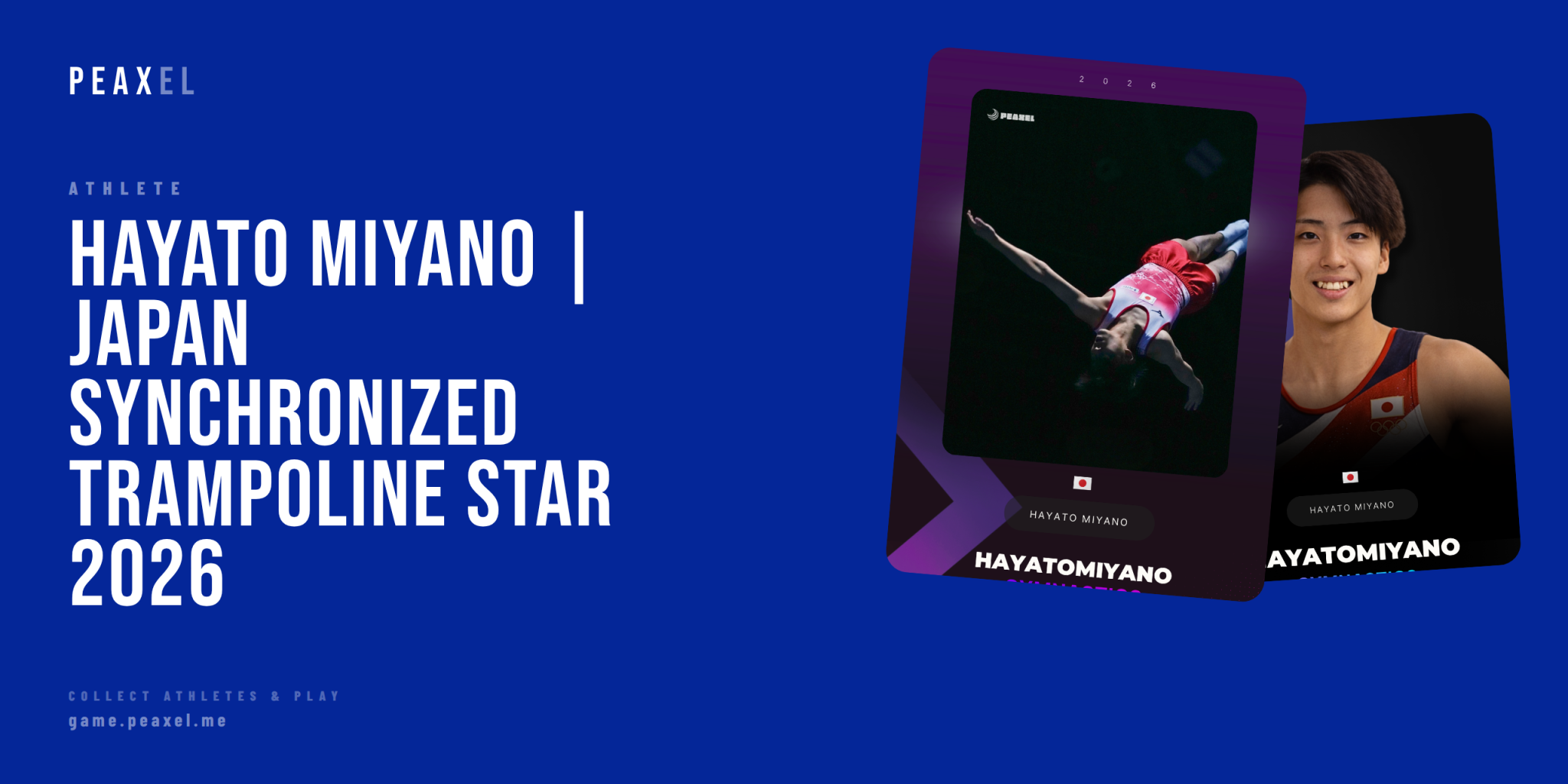
Three Medals in Pamplona: Hayato Miyano’s Breakthrough Season
At the 38th FIG Trampoline Gymnastics World Championships in Pamplona, Spain, Hayato Miyano delivered performances that established him among the world’s elite. The Japanese athlete claimed bronze in the men’s individual final while earning silver medals in both the men’s synchronized and mixed synchronized events. Three World Championship medals in a single competition is a rare achievement that reflects years of precision training and competitive maturity.
Miyano’s success in synchronized events is particularly significant. Synchronized trampoline requires two athletes to perform identical routines simultaneously, with judges evaluating not only individual execution but also the synchronization between partners. A fraction of a second difference in timing can separate medal contenders from the rest of the field.
The Origins and Evolution of Synchronized Trampoline
Synchronized trampoline gymnastics emerged as a formal competitive discipline in 1998 when it was added to the FIG World Championships program. The event built upon the individual trampoline tradition that had developed since the 1930s, when American inventor George Nissen created the modern trampoline. While individual trampoline eventually reached the Olympic Games in 2000, synchronized events have remained exclusive to World Championships and continental competitions.
The discipline demands athletes master identical routines with their partner, matching height, rotation speed, and body position throughout ten elements. Unlike individual trampoline where athletes focus solely on their own performance, synchronized competitors must develop an almost telepathic connection with their partner. Training involves countless hours of side-by-side repetition until movements become instinctively aligned.
Japan has historically produced strong individual trampoline athletes, but synchronized success requires additional infrastructure—compatible training partners, specialized coaching, and long-term partnership development. Miyano’s medals represent Japan’s growing investment in the synchronized disciplines.
Training at Kanazawa Gakuin: Building Elite Partnerships
Miyano trains with the Kanazawa Gakuin University Club, one of Japan’s established trampoline programs. The university system in Japan provides structure for athletes to develop through their competitive prime years while pursuing education. This model has produced multiple national team members across gymnastics disciplines.
The technical demands of synchronized trampoline require specific facility conditions. Athletes need adjacent trampolines positioned at precise distances, allowing judges and coaches to evaluate synchronization from multiple angles. Training sessions involve video analysis comparing partner movements frame by frame, identifying micro-adjustments needed to achieve perfect unison.
Miyano’s routine difficulty has increased progressively throughout his career. At the 2025 World Championships, his individual routine featured elements that placed him among the top technical performers globally. Transferring that difficulty into synchronized routines while maintaining perfect timing with a partner demonstrates exceptional body control and spatial awareness.
Japan’s Trampoline Tradition and Future Ambitions
Japanese trampoline gymnastics has produced world-class athletes for decades, with individual competitors regularly appearing on World Championship and Olympic podiums. The synchronized disciplines represent a newer frontier for Japanese dominance, and Miyano’s 2025 results suggest the national program is successfully expanding its competitive scope.
The mixed synchronized event, where Miyano also earned silver, adds another dimension to partnership dynamics. Male and female athletes must coordinate routines despite different physical characteristics affecting flight time and rotation. This event tests adaptability and communication between partners from different training backgrounds.
For comparison, athletes like Lucas Santos of Portugal have also excelled in synchronized events, winning World Games gold in 2025. The global competition in synchronized trampoline has intensified as more nations invest in partnership development programs.
What Defines Synchronized Trampoline Excellence
Judges in synchronized trampoline evaluate three primary components: execution, difficulty, and synchronization. Execution scores assess body position, form, and landing stability for each athlete individually. Difficulty reflects the technical complexity of elements performed. Synchronization measures the timing match between partners throughout the routine.
A perfectly synchronized routine creates a visual mirror effect, with both athletes reaching identical heights and completing rotations at precisely the same moment. Deductions accumulate quickly when partners drift out of alignment, making consistent training partnerships essential for medal contention.
Miyano’s ability to medal in both individual and synchronized events indicates versatility that few athletes achieve. The mental approach differs significantly—individual competition allows complete focus on personal performance, while synchronized events require constant awareness of a partner’s position and timing.
Following Hayato Miyano’s Career
The 2025 World Championships positioned Miyano as one of the leading figures in global trampoline gymnastics. His three-medal performance in Pamplona followed years of progression through Japan’s competitive pathway, from university-level competition to national team selection to World Championship podiums.
For fans interested in following synchronized trampoline and athletes like Miyano, Peaxel offers a platform to discover and support emerging talent across dozens of sports. You can explore Miyano’s profile at game.peaxel.me/talent/hayatramp to learn more about his career and competitive journey.