What Is Artistic Roller Skating?
Artistic roller skating combines the grace of figure skating with the unique dynamics of quad roller skates. Athletes perform jumps, spins, footwork sequences, and choreographed routines on specialized rink surfaces. The sport is governed internationally by World Skate and features multiple competitive disciplines including figures, freestyle, pairs, and dance.
Unlike ice skating, roller skating requires athletes to manage different friction dynamics and wheel grip patterns. This creates distinct technical challenges that judges must evaluate carefully. The scoring system has evolved significantly over recent decades to reward both technical difficulty and artistic expression.
The Main Competition Categories
Artistic roller skating competitions feature several distinct categories, each with specific judging criteria. Understanding these categories is essential for fans wanting to follow the sport properly.
Figures
Figures competition requires skaters to trace precise patterns on the floor, demonstrating edge control and body alignment. Judges evaluate accuracy, posture, and the quality of tracings left on the skating surface. This discipline tests fundamental skating skills that form the foundation of all artistic roller skating.
Freestyle
Freestyle is the most visually spectacular category. Skaters perform choreographed programs featuring jumps, spins, and step sequences set to music. Programs have time limits and must demonstrate a balance of technical elements and artistic interpretation. This is where most fans encounter artistic roller skating for the first time.
Pairs and Dance
Pairs skating involves two athletes performing synchronized movements, lifts, and throws. Dance competition emphasizes rhythm interpretation, partnering skills, and musical expression. Both categories require exceptional coordination between athletes and have specific required elements that judges score individually.
How the Scoring System Works
Modern artistic roller skating uses a points-based scoring system similar to the International Judging System used in ice skating. Scores come from two main components: the Technical Score and the Program Components Score.
Technical Score
The Technical Score evaluates specific elements performed during a routine. Each jump, spin, and footwork sequence has a base value determined by its difficulty level. A technical panel identifies each element and assigns the appropriate base value.
Judges then apply Grades of Execution (GOE) ranging from -5 to +5 to reflect execution quality. A perfectly executed triple jump earns bonus points, while a fall or stumble results in deductions. The final technical score combines all base values adjusted by GOE assessments.
Program Components Score
The Program Components Score (PCS) evaluates five categories: Skating Skills, Transitions, Performance, Composition, and Interpretation of Music. Each component receives a score from 0.25 to 10.00 from multiple judges.
Skating Skills assess edge quality, speed, and flow across the surface. Transitions evaluate movements connecting technical elements. Performance measures projection and emotional engagement with the audience. Composition considers choreographic structure and ice coverage. Interpretation scores how well the skater expresses musical character and timing.
Understanding Deductions
Beyond GOE penalties, judges apply specific deductions for rule violations. Falls result in mandatory point deductions. Time violations, costume malfunctions, and illegal elements also trigger penalties. These deductions are subtracted from the combined Technical and Program Components scores to produce the final result.
Skaters who exceed time limits face progressive deductions. Music with lyrics may be penalized in certain categories. Illegal lifts or dangerous moves result in element nullification plus additional deductions. Understanding these rules helps fans appreciate why certain performances score lower despite appearing impressive.
The Judging Panel Structure
International competitions use a panel system designed to ensure fairness and reduce scoring bias. The panel typically includes a Technical Controller, Technical Specialist, and multiple judges evaluating components and GOE.
The Technical Controller oversees element identification and ensures correct base values are assigned. The Technical Specialist calls elements in real-time as skaters perform. Component judges score independently, with statistical trimming applied to remove outlier scores before calculating averages.
What Makes a Champion?
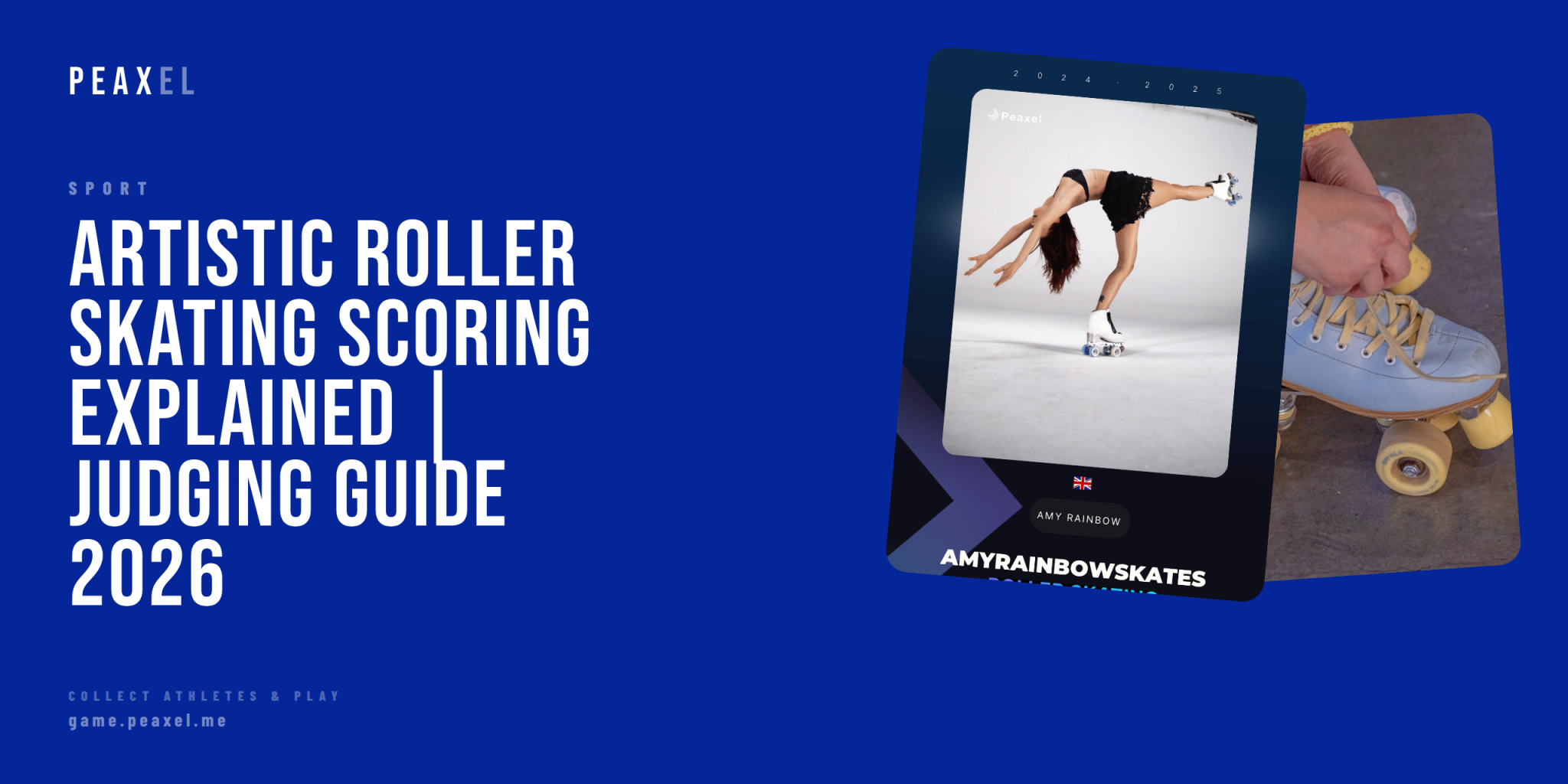
Elite artistic roller skaters master both technical difficulty and artistic presentation. Athletes like Amy Rainbow, who won four consecutive British Championship titles from 2012 to 2015 and competed internationally for Great Britain, exemplify this balance. Her career demonstrates how sustained excellence across both scoring components creates championship-level performances.
Today, Amy continues contributing to the sport as an instructor and content creator, helping new generations understand artistic roller skating’s technical demands. Athletes like her bridge competitive excellence with community building, expanding the sport’s reach globally.
Following Artistic Roller Skating in 2026
World Skate organizes international championships and continental competitions throughout the year. National federations run domestic circuits that qualify athletes for international events. The sport continues growing, particularly in Europe and South America where roller skating culture remains strong.
For fans wanting to engage more deeply with artistic roller skating and other niche sports, platforms like Peaxel offer ways to discover athletes, follow their careers, and participate in fantasy sports formats that bring fans closer to the action. You can explore Amy Rainbow’s profile and add her to your team to support her continued contribution to the sport.