What Makes Synchronized Trampoline Unique
Synchronized trampoline is one of the most visually spectacular disciplines in gymnastics. Two athletes perform identical ten-bounce routines on adjacent trampolines, executing complex aerial skills while maintaining perfect timing with each other. Unlike individual trampoline where athletes compete alone, synchro demands an additional layer of coordination that transforms the event into a partnership built on trust, repetition, and shared rhythm.
The discipline has grown significantly within the FIG calendar over the past decade. Mixed synchronized trampoline was added as a competitive event, pairing male and female athletes together. This expansion has created new pathways for athletes and increased the tactical complexity of team selection for national federations.
The Club Foundation: Where Synchronized Careers Begin
Every synchronized trampoline athlete starts at a local club, typically learning individual trampoline fundamentals before progressing to partner work. The transition from solo training to synchronized routines usually begins around ages 10 to 14, once an athlete has mastered basic aerial awareness and consistent execution.
Club coaches identify potential synchro pairings based on physical compatibility and technical style. Height, body type, and natural rhythm all influence partner selection. Two athletes who bounce slightly out of phase will struggle to achieve the synchronization scores needed at international level, making early pairing decisions crucial.
In Japan, the Ishikawa Prefecture has emerged as a notable region for trampoline development. Athletes like Matsumoto Yusei and Hayato Miyano both hail from this area, suggesting strong regional coaching infrastructure and club systems that feed into national team pathways.
Training Volume at Club Level
Young synchronized trampoline athletes typically train 15 to 25 hours per week at competitive club level. Sessions split between individual skill development, partner synchronization drills, and physical conditioning. The repetition required to achieve perfect timing means pairs may perform the same routine hundreds of times before competition.
Conditioning work focuses on core stability, leg power, and body tension. Unlike some gymnastics disciplines, trampoline requires athletes to maintain rigid body positions while absorbing and redirecting significant forces through the bed. This demands specific strength profiles that clubs develop through structured programs.
National Team Selection and Development Squads
The pathway from club to national team varies by country but follows consistent principles. Athletes typically progress through age-group competitions, national championships, and development squads before earning senior national team selection.
National federations identify synchronized pairs through domestic competition results and training camp assessments. Some countries maintain dedicated synchro development programs while others integrate synchronized training within broader trampoline structures. Japan has historically produced strong synchronized pairs, benefiting from a deep talent pool and systematic development approach.
The Role of National Championships
Domestic championships serve as primary selection events for international competition. Athletes who perform well at nationals earn consideration for World Cup assignments, European or Asian Championships, and ultimately World Championships. The pressure of national competition tests whether pairs can maintain synchronization under competitive stress.
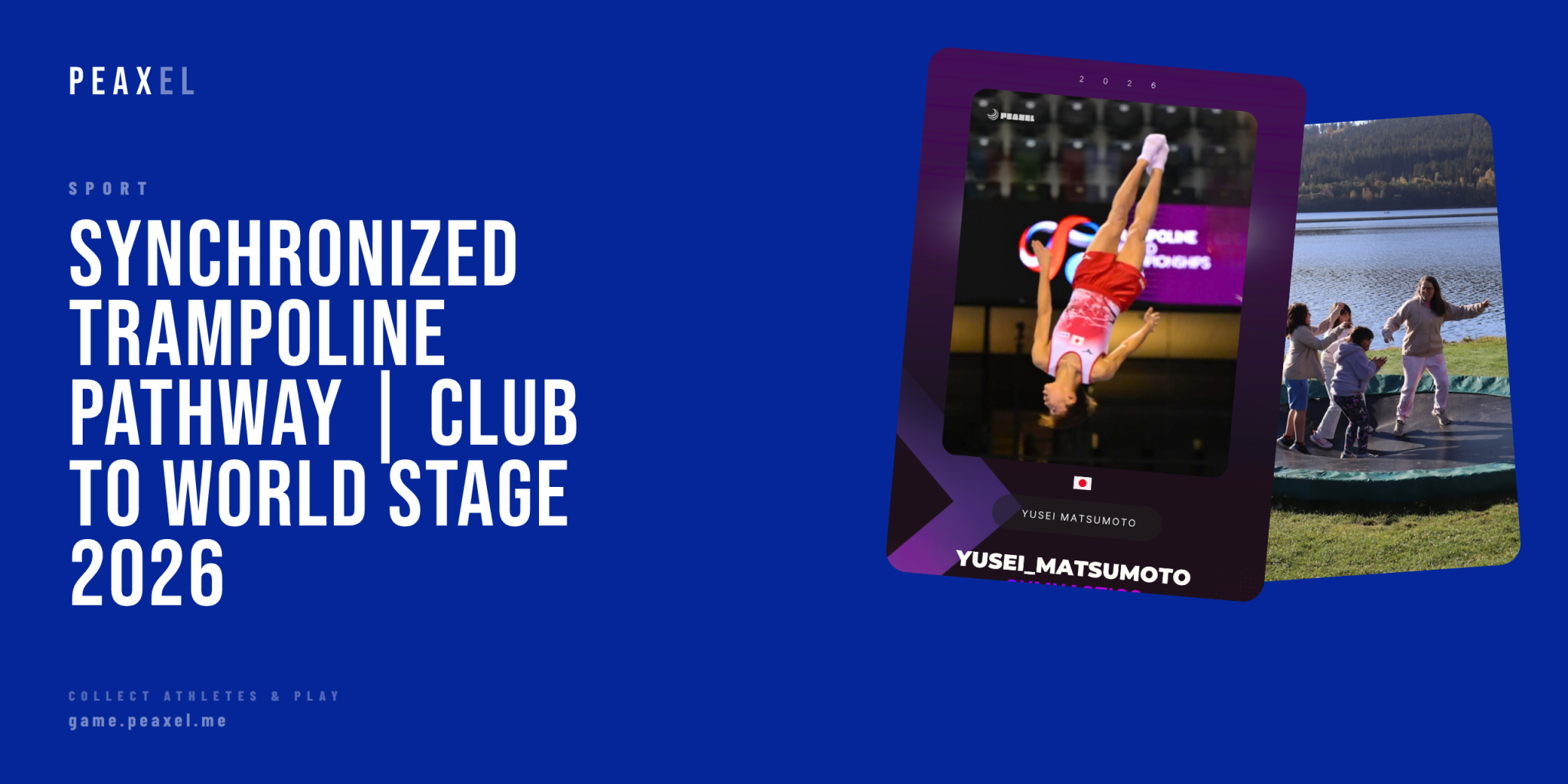
For Japanese athletes, national selection opens doors to the FIG World Cup circuit. Matsumoto Yusei competed at senior World Cup level while still a teenager, demonstrating how accelerated pathways exist for exceptional talents. His progression from junior competition to senior medals within a few seasons illustrates what systematic development can achieve.
Breaking Through at International Level
The FIG World Cup circuit provides the primary international platform for synchronized trampoline athletes. Events held across Europe, Asia, and the Americas allow pairs to accumulate ranking points, gain experience against global competition, and prepare for major championships.
At the September 2025 FIG World Cup in Varna, Bulgaria, Matsumoto Yusei achieved a breakthrough performance. Partnering with Hayato Miyano, he won gold in men’s synchronized trampoline. He then claimed another gold in mixed synchronized alongside six-time world champion Hikaru Mori, scoring 50.330. The same event saw him earn silver in the individual competition.
This triple-medal performance came after Matsumoto had finished fourth at multiple previous World Cup events. The breakthrough in Varna demonstrated how consistent development eventually translates to podium results when execution peaks at the right moment.
World Championships as Career Milestones
The FIG Trampoline World Championships represent the pinnacle of the sport outside Olympic years. Synchronized events at Worlds carry significant prestige and determine world rankings that influence future selection. Athletes spend entire quadrennials preparing for these moments.
Both Matsumoto and Miyano were selected for the 2025 World Championships in Pamplona, Spain. Their performances at this event will shape their trajectories toward potential Olympic consideration as synchronized trampoline continues to grow within the gymnastics family.
What Separates Elite Synchronized Pairs
At the highest level, synchronized trampoline judging evaluates both difficulty and synchronization. Pairs receive separate scores for execution, difficulty, and sync, with the synchronization score carrying substantial weight. Even technically brilliant routines fail without precise timing.
Elite pairs develop what coaches describe as “shared breath” — an intuitive sense of each other’s rhythm that goes beyond visual cues. This requires years of partnership, often with the same pair training together from youth through senior competition. Changes in partnership can set athletes back significantly as they rebuild timing with new partners.
Physical and Technical Demands
Synchronized routines require identical skill selection, meaning both athletes must master the same elements to the same standard. If one partner excels at triple somersaults while the other struggles, the pair cannot include that skill. This creates a balancing act where pairs choose routines that maximize their combined abilities rather than individual strengths.
The physical demands are substantial. Ten consecutive bounces with complex aerial skills generate significant cardiovascular load while requiring precise body control. Athletes must maintain spatial awareness not only of their own position but also their partner’s location throughout the routine.
The Future of Synchronized Trampoline
Mixed synchronized trampoline has expanded competitive opportunities and created new strategic considerations for national teams. Pairing male and female athletes requires different approaches to matching height, power, and timing. The format has proven popular with audiences and may continue to gain prominence in the FIG calendar.
For fans interested in following synchronized trampoline athletes, platforms like Peaxel offer ways to discover and support emerging talents. The complete list of sports on Peaxel includes trampoline gymnastics alongside dozens of other disciplines where athletes are building their careers from club level to world stage.
Japanese synchronized trampoline continues to produce world-class pairs. Athletes like Matsumoto Yusei represent the next generation, combining technical excellence with the partnership skills that define the discipline. Their pathway from Ishikawa Prefecture clubs to FIG World Cup podiums illustrates how synchronized trampoline develops its champions.