What Is Hydrofoil Kiteboarding?
Hydrofoil kiteboarding, commonly called kitefoiling, is one of the fastest-growing disciplines in water sports. Unlike traditional kitesurfing where the board skims across the water’s surface, kitefoiling uses an underwater wing called a hydrofoil to lift the rider completely out of the water. The result is a near-silent, incredibly smooth ride that feels closer to flying than sailing.
The hydrofoil consists of a mast extending down from the board and a wing structure beneath the water. As speed increases, the wing generates lift, raising the board and rider above the surface. This reduces drag dramatically, allowing kitefoilers to reach speeds exceeding 35 knots in optimal conditions while requiring significantly less wind than conventional kiteboarding.
How Kitefoiling Works: The Basic Mechanics
Understanding kitefoiling starts with the hydrofoil itself. The foil wing operates on the same aerodynamic principles as an airplane wing, but underwater. Water is approximately 800 times denser than air, meaning the foil generates substantial lift at relatively low speeds.
Riders control their height above the water by shifting their weight and adjusting their stance. Leaning back lifts the board higher; leaning forward brings it closer to the surface. This constant micro-adjustment creates the characteristic smooth, floating sensation that defines the sport.
The kite provides propulsion, but the power requirements differ from traditional kiteboarding. Because the foil eliminates most water resistance, riders can use smaller kites and still achieve impressive speeds. This efficiency is why kitefoiling works in lighter wind conditions that would leave conventional kiteboarders stuck on the beach.
Equipment Essentials for New Fans
A complete kitefoil setup includes several key components. The board is typically shorter and narrower than a standard kiteboard, designed specifically for foil attachment. The mast length varies—shorter masts offer stability for beginners while longer masts provide more clearance and performance for advanced riders.
The foil wing itself comes in different sizes measured in square centimeters. Larger wings offer more lift and stability at lower speeds, making them ideal for learning. Smaller wings sacrifice ease of use for higher top speeds and sharper handling.
Kites for foiling tend to be smaller than those used in traditional kiteboarding. A rider who might use a 12-meter kite for regular kitesurfing could achieve similar performance on a foil with an 8-meter or 9-meter kite, thanks to the reduced drag.
Why Kitefoiling Has Captivated Water Sports Fans
The appeal of hydrofoil kiteboarding extends beyond pure performance metrics. The sensation of gliding above the water creates an experience unlike any other board sport. Riders describe it as meditation in motion—the absence of chop and spray produces an almost surreal calmness despite the speed.
From a practical standpoint, kitefoiling has expanded when and where riders can get on the water. Sessions that would be marginal or impossible for conventional kiteboarding become viable with foil equipment. This extended riding window has made the sport particularly popular in regions with inconsistent wind patterns.
The Competitive Scene: GKA Kitefoil Racing
Competitive kitefoiling has evolved rapidly since the discipline emerged. The GKA Kite World Tour now features dedicated foil racing events alongside freestyle and Big Air competitions. These races pit riders against each other on technical courses, testing both speed and tactical decision-making.
Foil racing demands a different skill set than freestyle kiteboarding. Competitors must read wind shifts, choose optimal lines through course gates, and manage their equipment across varying conditions. The tactical depth has attracted athletes from sailing backgrounds, creating an interesting crossover between traditional yacht racing and action sports.
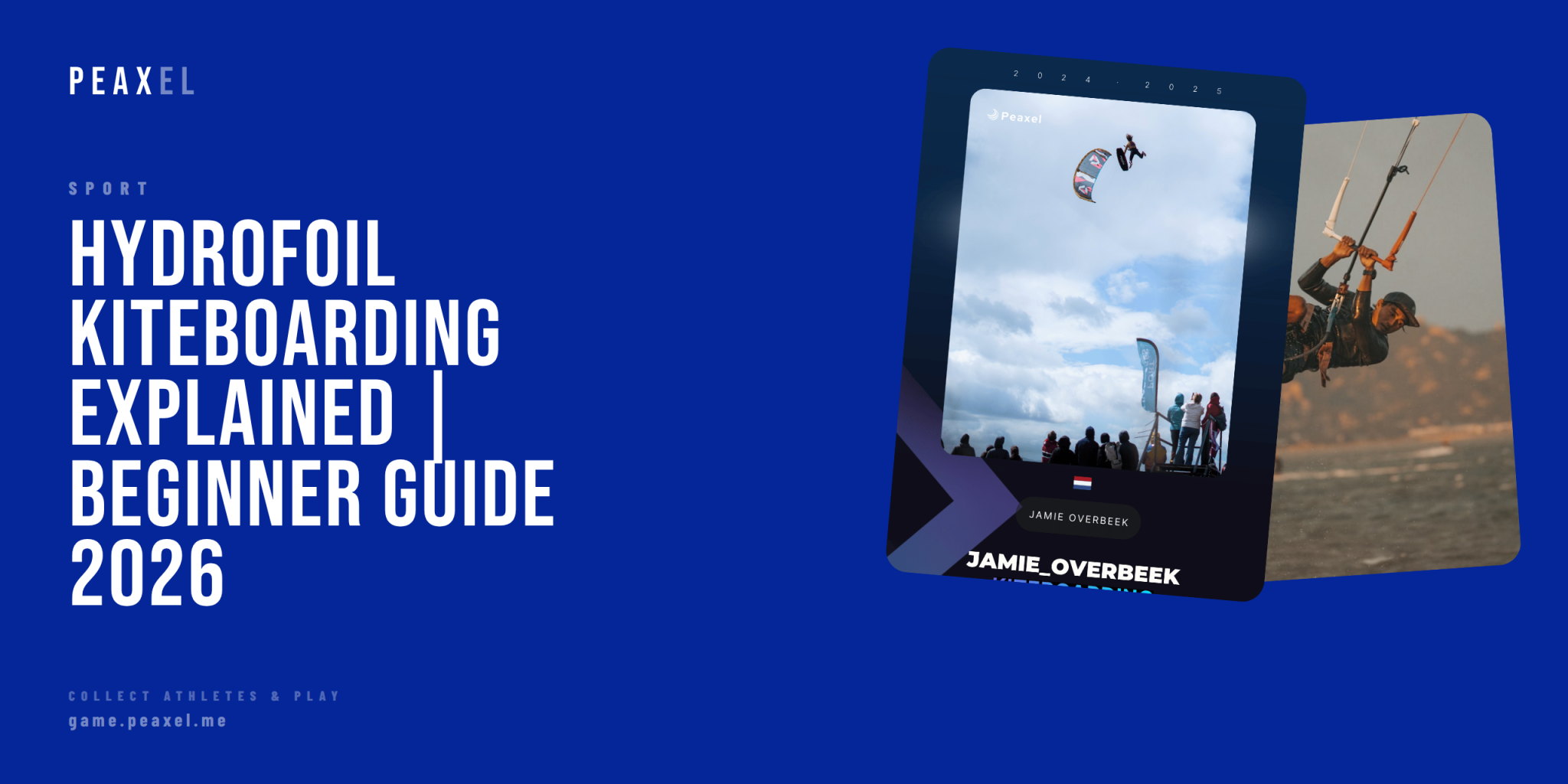
Athletes like Jamie Overbeek demonstrate the versatility required at the top level. The Dutch rider competes in both Big Air—where he set records with jumps exceeding 35 meters—and hydrofoil disciplines, showcasing the breadth of modern kiteboarding competition. You can follow his journey on Peaxel.
Kitefoiling and the Olympics: A New Chapter
The inclusion of kitefoiling in Olympic sailing programs has accelerated the sport’s mainstream recognition. Formula Kite, the Olympic class for kitefoiling, features standardized equipment to ensure competition focuses on athlete skill rather than equipment advantages.
Olympic kitefoil racing uses a fleet format where multiple competitors race simultaneously around a course marked by buoys. The combination of high speeds—often exceeding 30 knots—tight tactical battles, and spectacular visuals has made it one of the most viewer-friendly sailing events.
This Olympic pathway has created a structured development system for young athletes. National federations now invest in kitefoil programs, and the sport has gained access to funding and facilities previously reserved for traditional sailing classes.
The Crossover with Wingfoiling
Hydrofoil kiteboarding shares technical DNA with wingfoiling, another rapidly growing foil discipline. Both sports use similar hydrofoil equipment, and many athletes compete across both formats. Italian rider Gregorio Pugliese exemplifies this crossover, having built his career in wingfoil racing while drawing on his windsurfing background.
The shared equipment ecosystem means skills transfer between disciplines. Riders who learn kitefoiling often find wingfoiling accessible, and vice versa. This interconnection has created a broader foiling community where athletes push innovation across multiple sports.
Where to Watch Kitefoiling in 2026
The GKA Kite World Tour remains the premier showcase for elite kitefoiling talent. Tour stops span global locations known for consistent wind and spectacular backdrops—from Tarifa in Spain to Cape Town in South Africa. Events typically feature multiple disciplines across several days, giving fans extended opportunities to watch competition.
Olympic qualifying events and national championships provide additional viewing opportunities. These competitions often stream live, making the sport accessible to fans regardless of location.
For those wanting to understand the athletes competing at the highest level, Peaxel offers a platform to discover kiteboarders and foilers from around the world. The complete list of sports on Peaxel includes kiteboarding and related disciplines, allowing fans to follow their favorite athletes and build fantasy teams around real competition results.
The Future of Hydrofoil Kiteboarding
Equipment innovation continues to push kitefoiling performance boundaries. Carbon fiber construction has made foils lighter and stiffer, improving responsiveness. Wing profiles borrowed from aerospace engineering extract more lift from smaller surfaces, enabling ever-higher speeds.
The accessibility curve has also flattened. Early kitefoiling required exceptional skill and carried significant crash risk. Modern equipment with larger, more forgiving wings has made the learning process more approachable, opening the sport to a wider audience.
As Olympic exposure grows and equipment becomes more accessible, kitefoiling is positioned to become one of the defining water sports of the decade. For fans new to the discipline, there has never been a better time to start following the athletes redefining what’s possible on water.