The Invisible Battle: Why Mental Game Decides K-1 Fights
In K-1 kickboxing, the knockout can come in a fraction of a second. Three-minute rounds leave no room for recovery, no time to find rhythm slowly. The fighter who enters the ring with a fractured mindset has already lost half the battle.
This is why elite K-1 competitors dedicate as much energy to psychological preparation as they do to perfecting their combinations. The mental game in kickboxing is not supplementary—it is foundational. Champions understand that technical skill means nothing if fear, doubt, or adrenaline overload hijacks their nervous system when the bell rings.
K-1 kickboxing, with its emphasis on explosive striking and limited clinch work, amplifies mental pressure. Unlike disciplines that allow grappling resets, K-1 keeps fighters in the danger zone constantly. Managing that sustained threat requires specific psychological tools.
Visualization: Fighting the Bout Before It Happens
Visualization is the most widely used mental technique among combat sports athletes. K-1 fighters rehearse entire fights in their minds—seeing opponents, feeling the canvas, hearing the crowd. Research in sports psychology confirms that mental rehearsal activates the same neural pathways as physical practice.
Elite kickboxers visualize not just winning moments but adversity scenarios. They imagine getting hit clean, feeling wobbled, and recovering. This prepares the brain to respond rather than panic when real adversity strikes. A fighter who has mentally survived a difficult moment dozens of times will not freeze when it happens live.
The specificity matters. Visualizing a generic victory produces weaker results than visualizing exact sequences—slipping a jab, countering with a liver kick, reading the opponent’s rhythm. K-1 competitors study film of their opponents and build detailed mental maps of how exchanges will unfold.
Breathing and Arousal Control
Adrenaline is both ally and enemy in the ring. Too little and a fighter lacks explosiveness. Too much and fine motor control deteriorates, timing suffers, and cardio depletes faster than it should. The key lies in arousal regulation.
Controlled breathing techniques—particularly box breathing and tactical breathing—are standard practice in K-1 training camps. These methods activate the parasympathetic nervous system, bringing heart rate down and restoring cognitive clarity. Fighters often use breathing protocols in the locker room minutes before walking out.
During the fight itself, experienced kickboxers monitor their breathing between exchanges. Holding breath during combinations is a common amateur mistake that accelerates fatigue. Professionals train themselves to exhale on strikes and reset breathing during clinch breaks or referee stoppages.
Pre-Fight Routines and Anchoring
Every K-1 champion has a pre-fight routine. These rituals are not superstition—they are psychological anchoring techniques that trigger a familiar state of readiness. By repeating the same sequence of actions before every bout, fighters condition their brains to enter competition mode on command.
Routines vary widely. Some fighters listen to specific playlists. Others perform exact warm-up sequences. Many have rituals involving their corner team—specific words, handshakes, or gestures. The content of the routine matters less than its consistency. Repetition builds the neurological association between ritual and optimal performance state.
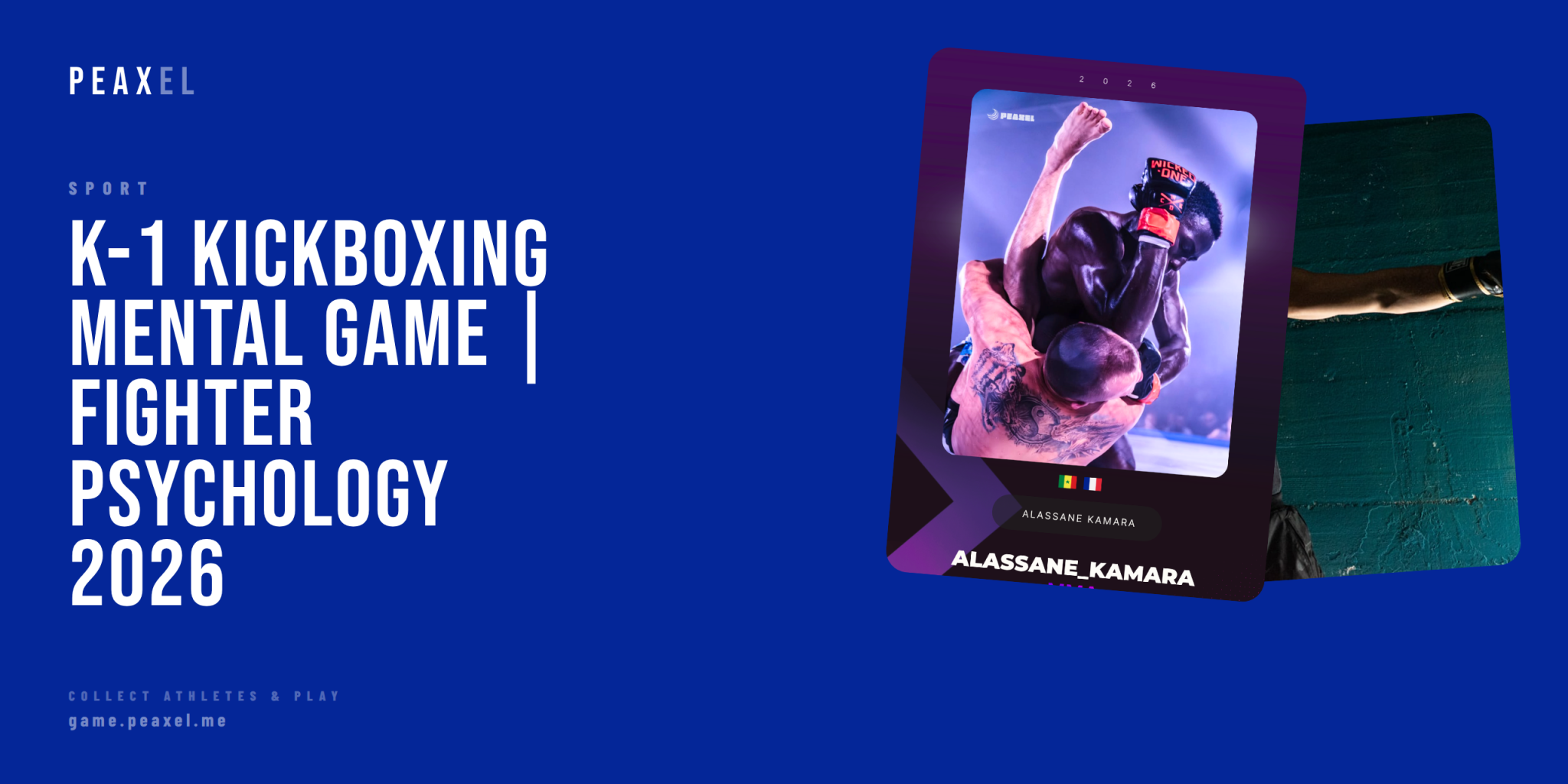
French K-1 fighter Alassane Kamara, who competed at K-1 World MAX 2025 and is scheduled to face Japanese veteran Daizo Sasaki at K-1 GENKI 2026, exemplifies the new generation applying these methods. Fighters like Kamara balance Savate footwork heritage with modern psychological preparation, understanding that international-level K-1 demands complete mental readiness. You can follow his journey on Peaxel.
Managing Fear and the Knockout Threat
Fear in K-1 is rational. Getting knocked unconscious is a real possibility in every fight. The goal is not to eliminate fear but to reframe it. Sports psychologists working with combat athletes focus on transforming fear into heightened awareness rather than paralysis.
Cognitive reframing techniques help fighters interpret pre-fight nerves as excitement rather than dread. The physiological sensations are identical—elevated heart rate, sweaty palms, heightened alertness. The difference lies entirely in interpretation. Athletes who label these sensations as readiness perform better than those who label them as anxiety.
Acceptance-based approaches have gained traction in recent years. Rather than fighting fear, athletes acknowledge it and act anyway. This prevents the secondary anxiety that comes from being afraid of being afraid—a psychological trap that derails many promising fighters.
Between Rounds: Mental Reset Under Pressure
The sixty seconds between K-1 rounds are a psychological battlefield. Fighters must process what just happened, absorb corner instructions, regulate breathing, and prepare mentally for the next three minutes—all while physically recovering.
Elite athletes develop systematic approaches to these breaks. The first fifteen seconds are typically devoted to physical recovery—sitting, drinking water, controlled breathing. The middle portion involves listening to one or two specific instructions from the corner, not attempting to process complex strategies. The final seconds focus on mental reset—a brief visualization or mantra that re-establishes focus.
Corners that overload fighters with information between rounds often do more harm than good. The best coaching teams understand that psychological bandwidth is limited under stress and prioritize ruthlessly.
Building Mental Toughness Over Time
Mental strength in K-1 is not innate—it is trained. Just as fighters develop technical skills through repetition, they develop psychological resilience through deliberate practice. This includes exposure to pressure situations in training, simulated adversity drills, and working with sports psychologists.
Progressive overload applies mentally as well as physically. Fighters who consistently train in uncomfortable conditions—tired, under pressure, against difficult stylistic matchups—build the mental calluses necessary for championship performance. Those who only train in optimal conditions crumble when real adversity arrives.
The K-1 ecosystem increasingly recognizes this. Top gyms now integrate mental performance coaches alongside striking trainers. The stigma around psychological support in combat sports has diminished significantly as champions openly discuss its role in their success.
The Future of Mental Performance in K-1
As K-1 kickboxing continues its global expansion, the mental demands on fighters will only increase. International travel, unfamiliar venues, and larger audiences add psychological variables that domestic competitors never face.
Technology is beginning to play a role as well. Biofeedback devices that track heart rate variability during training help fighters understand their stress responses. Virtual reality systems allow mental rehearsal in simulated fight environments. These tools are still emerging but point toward a future where mental preparation is as data-driven as physical conditioning.
For fans watching K-1, understanding the mental dimension adds depth to the viewing experience. When a fighter stays composed after getting hurt, that represents years of psychological training. When another competitor visibly tightens up as a bout slips away, the mental battle has been lost before the physical one ends.
The ring reveals everything. Technical skill can be hidden in sparring. Cardio can be masked in training. But mental strength—or its absence—becomes visible the moment real stakes arrive. This is what makes K-1 kickboxing endlessly compelling: it tests the complete athlete, mind and body alike.
Discover K-1 kickboxing and other combat sports on Peaxel, where fans can follow rising fighters and experience the world of athlete management firsthand.