The Universal Gateway to Professional Motorsport
Every Formula 1 world champion of the modern era started their career the same way: behind the wheel of a kart. From Lewis Hamilton dominating British karting circuits as a child to Max Verstappen winning European championships before his teenage years, karting has served as the proving ground where future stars learn racecraft, develop reflexes, and compete against their peers.
In 2026, karting is experiencing its most significant global expansion in decades. New circuits are opening across continents that previously had limited access to professional-grade facilities. International championships are adding rounds in emerging motorsport markets. And crucially, the pathway from local karting to professional single-seater racing has never been more clearly defined.
This growth matters not just for the sport’s future but for fans who want to identify the next generation of racing talent before they reach the global spotlight.
CIK-FIA Championship Expansion
The Fédération Internationale de l’Automobile’s karting commission, CIK-FIA, governs the highest levels of international karting competition. Their world and European championships serve as the ultimate proving grounds for young drivers seeking professional careers.
The 2025-2026 calendar reflects deliberate geographic expansion. New rounds in Saudi Arabia and China have joined traditional European strongholds in Italy, Belgium, and Spain. Brazil returned to the world championship calendar in 2025 after a multi-year absence, acknowledging South America’s deep karting tradition and its role in developing talents like Ayrton Senna.
The OK and OK-Junior categories remain the primary international classes, attracting drivers aged 12-17 from over 60 countries. These championships now feature live streaming, professional broadcast production, and significant media coverage—a far cry from the amateur presentation of karting even a decade ago.
The Rotax Max Challenge: Democratizing International Competition
While CIK-FIA championships represent the elite level, the Rotax Max Challenge has arguably done more to globalize karting participation. The series uses spec engines that level the playing field financially, making international competition accessible to drivers without factory support.
The Rotax Max Challenge Grand Finals, held annually in different locations worldwide, attracted over 400 drivers from more than 70 countries in 2024. Qualification comes through national series, meaning drivers from Romania, South Africa, Thailand, or Mexico compete on equal footing with those from traditional karting powerhouses.
This model has proven particularly effective for developing motorsport in emerging markets, where the cost barrier of high-end CIK-FIA equipment would otherwise exclude talented drivers.
Regional Growth Stories
Middle East Infrastructure Investment
The Middle East has invested heavily in motorsport infrastructure as part of broader entertainment and tourism strategies. Bahrain, UAE, Saudi Arabia, and Qatar now host Formula 1 races, but the grassroots investment in karting is equally significant.
New karting facilities meeting FIA Grade A specifications have opened across the Gulf states, providing young drivers access to world-class tracks without traveling to Europe. Regional championships have grown in prestige, and several Middle Eastern drivers have successfully transitioned from local karting to European single-seater series.
Asian Market Development
Asia represents the largest growth opportunity for karting globally. China’s motorsport federation has prioritized youth karting development, establishing academies and supporting participation in international championships. Japan maintains its historically strong karting culture, while Southeast Asian nations including Thailand, Malaysia, and Indonesia are building competitive karting ecosystems.
The 2026 karting calendar includes more Asian rounds than any previous year, reflecting both infrastructure improvements and commercial interest from manufacturers seeking market presence.
European Dominance Continues
Despite global expansion, Europe remains karting’s competitive heart. Italy’s karting circuits, particularly the South Garda Karting facility in Lonato, continue hosting the most prestigious events. Belgium, France, Spain, and increasingly Eastern European nations produce champions at every level.
The infrastructure advantage is significant: Europe offers year-round racing, dense circuit networks reducing travel costs, and established pathways connecting karting success directly to Formula 4 opportunities.
The Pathway to Professional Racing
Karting’s value extends beyond the discipline itself. It serves as the essential development phase where drivers learn skills that translate directly to formula cars: late braking, defensive positioning, racecraft in close quarters, and managing tire degradation across race distances.
The typical progression sees drivers begin in cadet categories around age 8-10, advance through OK-Junior by 12-14, and compete in senior OK classes by 15-16. The most successful then transition to Formula 4 championships, with many karting champions signing directly to professional academy programs.
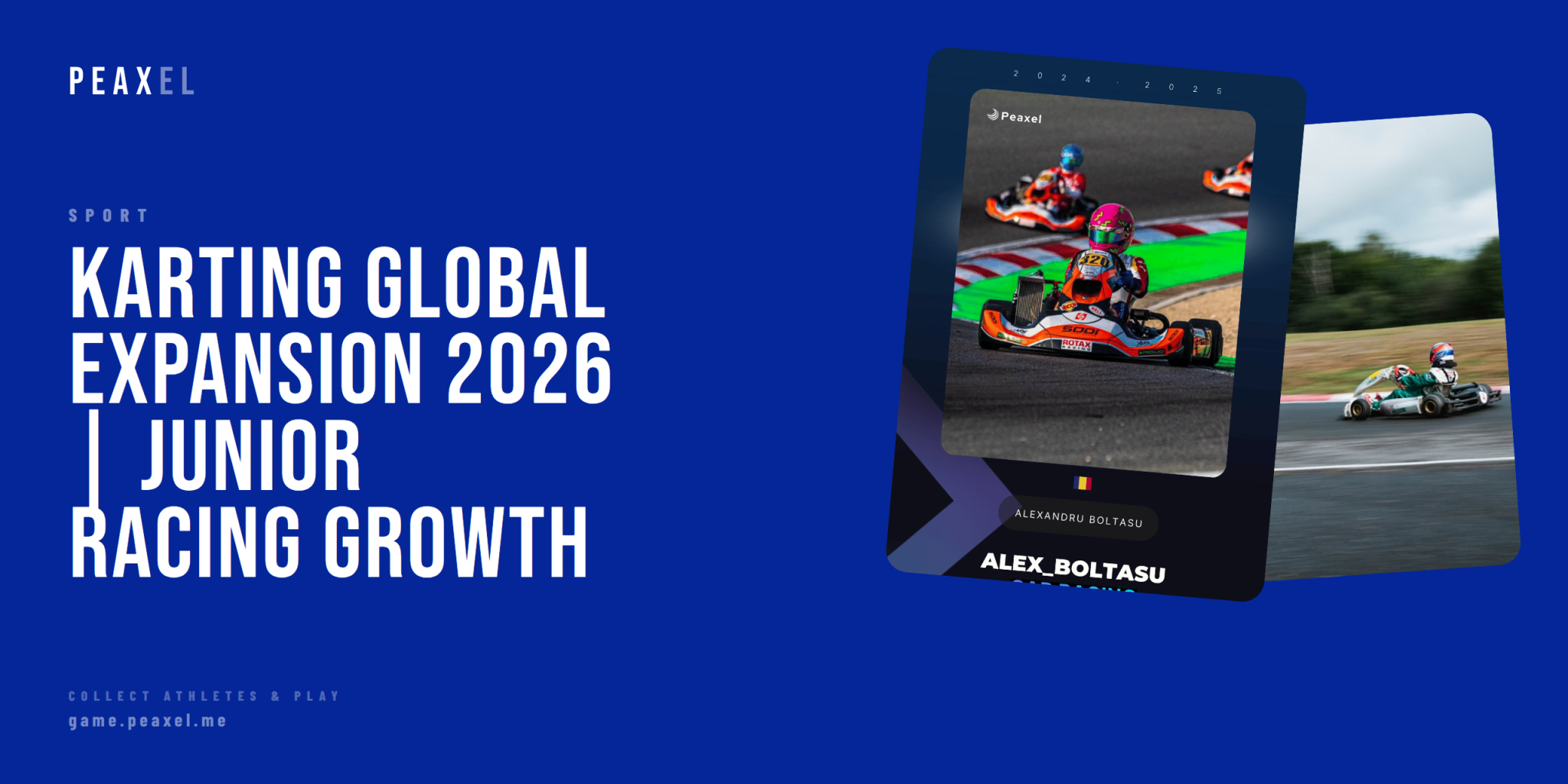
Romanian driver Alexandru Boltasu exemplifies this pathway. Beginning karting at 13—later than many competitors—he rapidly climbed through Mini and Junior categories to claim the Romanian national championship in 2023. His seventh-place finish at the 2024 Rotax Max Challenge Grand Finals, competing against 400 international drivers, demonstrated the level achievable through focused development. His progression into auto racing with podium finishes shows how karting success translates to four-wheel competition. Fans can follow his continued development on Peaxel.
Technology and Data in Modern Karting
Modern karting has embraced technology that would be unrecognizable to previous generations. Data logging systems capture telemetry comparable to professional racing: speed traces, steering input, throttle application, and sector times measured to hundredths of seconds.
Young drivers now review data with coaches and engineers, learning analytical skills that prove essential in data-driven professional motorsport. This technical education, combined with physical driving development, creates more complete competitors than karting produced in previous eras.
Sim racing integration has also accelerated. Many top karting talents maintain sim racing profiles, using virtual competition to refine racecraft and build competitive mentality during off-track hours.
Economics of Global Karting
The financial landscape of competitive karting varies dramatically by region and competitive level. Entry-level club racing remains accessible, with used equipment and local series keeping costs manageable for families testing their children’s interest.
At international championship level, budgets escalate significantly. A season competing in CIK-FIA European and World Championships can exceed €200,000 including equipment, travel, and team support. This reality drives the importance of spec series like Rotax Max, which reduce costs while maintaining competitive standards.
Sponsorship at karting level has grown more sophisticated, with energy drink brands, gaming companies, and automotive manufacturers recognizing the marketing value of associating with future racing stars before they reach mainstream attention.
What This Means for Motorsport Fans
Understanding karting gives fans insight into future professional fields. Today’s dominant karters will populate Formula 4, Formula 3, and eventually Formula 1 grids within the next decade. Following karting championships provides advance knowledge of which names to watch.
The global expansion also means more diverse talent pipelines. As quality infrastructure spreads across continents, drivers from previously underrepresented regions gain opportunities to demonstrate their abilities against established karting nations.
For fans interested in discovering rising motorsport talent, platforms like Peaxel track athletes across the full spectrum of racing disciplines, from karting through professional series. The complete list of sports on Peaxel includes car racing at every level, allowing fans to follow drivers throughout their career progression.
The Future of Karting Development
Karting’s trajectory points toward continued internationalization. Electric karting categories are gaining traction, particularly in regions where environmental considerations influence motorsport policy. Indoor karting facilities are professionalizing, offering controlled environments for year-round development regardless of climate.
The pathway clarity continues improving. Partnerships between karting series and Formula 4 championships guarantee opportunities for champions, removing some uncertainty from the transition to single-seaters.
For the sport’s long-term health, grassroots participation matters most. Every professional racing career begins with a child discovering the thrill of competition on a karting circuit. The global expansion of quality facilities and accessible competition formats ensures that discovery can happen anywhere in the world, not just in traditional motorsport strongholds.