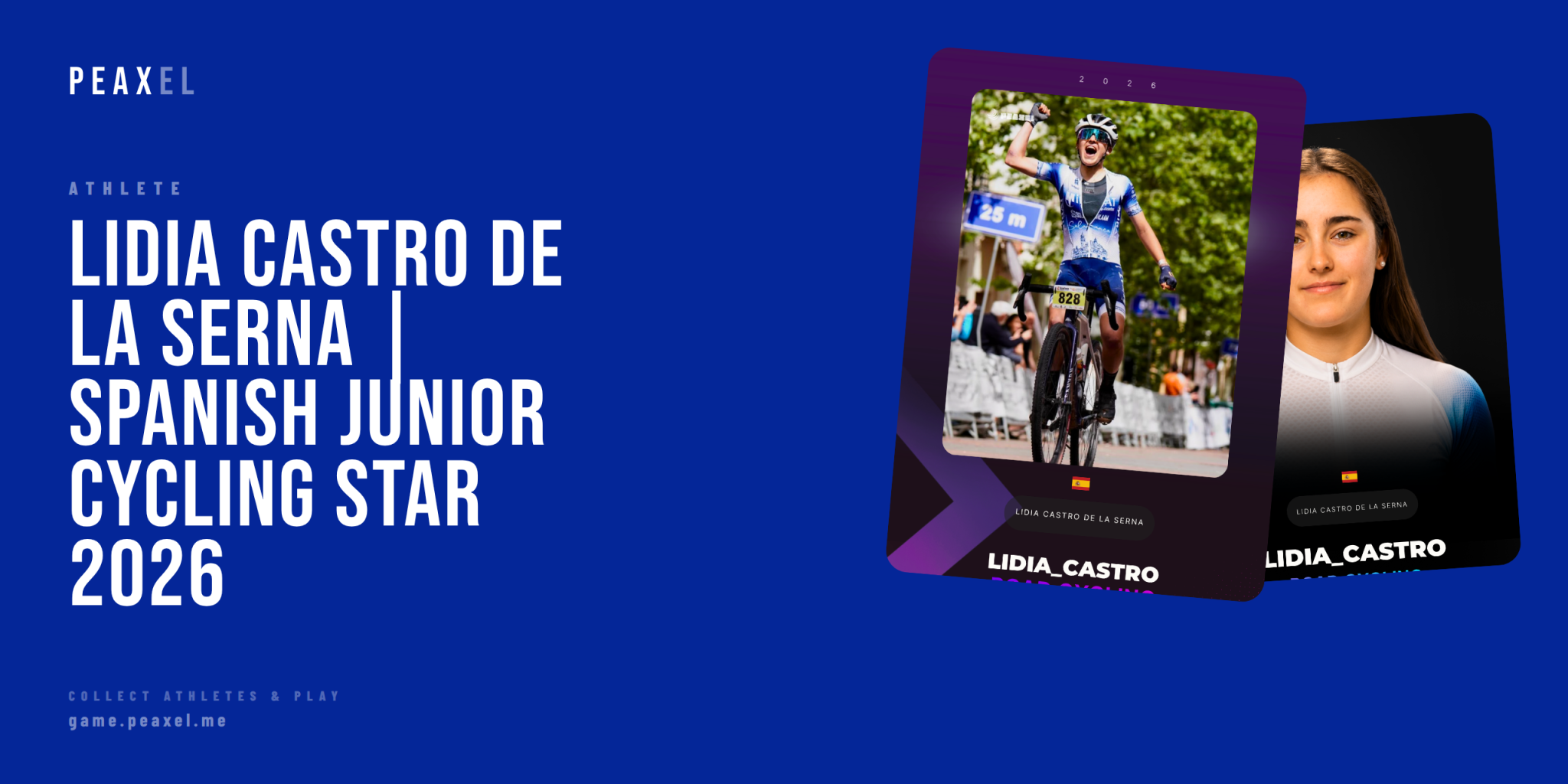
The 17-Year-Old Making World Tour Teams Take Notice
In December 2025, something unusual happened in Spanish cycling. Lidia Castro de la Serna, still months away from her eighteenth birthday, received an invitation to the Jayco AlUla World Tour women’s team training camp in Dénia. For a junior rider competing with Mirat Team in Salamanca, this was extraordinary validation of a talent that professional cycling scouts had been tracking for over a year.
The invitation came after a season that announced Castro de la Serna as the most promising Spanish junior cyclist of her generation. Her third-place finish at Tour de Valromey—the most prestigious junior women’s stage race in the world—confirmed what UAE Team Emirates had already noticed when they began monitoring her development in 2024.
From Valladolid to the European Stage
Born on February 21, 2008, in Valladolid, Lidia Castro de la Serna started cycling at age six with Club Ciclista Arroyo under coach Juan Carlos Domínguez. Growing up in Arroyo de la Encomienda in Castile and León, she developed as a versatile rider capable of competing on both road and cyclocross. By 2024, racing as a cadet for Mirat Team, she dominated Spanish competition.
Her 2024 season included a complete sweep of the Vuelta a Cantabria cadet category, winning every stage en route to the overall title. She also claimed the Copa de España Féminas, establishing herself as the strongest junior rider in Spanish women’s cycling. These results did not go unnoticed at the sport’s highest level.
How World Tour Interest Begins
The pathway from junior cycling to World Tour contracts is notoriously difficult to navigate. Unlike men’s cycling, where development teams and structured academies provide clear progression routes, women’s cycling often requires junior athletes to make significant leaps between competition levels without institutional support.
For Castro de la Serna, that pathway opened through exceptional race results. UAE Team Emirates—the team of Tadej Pogačar and one of the wealthiest organizations in professional cycling—added her name to their monitoring list in 2024. This meant scouts would track her results, training data, and development trajectory as she progressed through junior competition.
The monitoring status reflects how World Tour teams now approach junior talent identification. Rather than waiting for riders to reach elite level, top organizations build databases of promising juniors years before they become eligible for professional contracts. Castro de la Serna entered that database before she could legally sign a professional deal.
The Tour de Valromey Breakthrough
In 2025, competing in her first year as a junior, Castro de la Serna represented the Spanish national team at multiple international events. The Tour de Valromey provided the defining moment of her season. Racing against the strongest junior women from across Europe, she finished third overall while helping Mirat Team claim second place in the team classification.
The Tour de Valromey result carried particular significance because the race serves as a proving ground for future professionals. Previous editions have featured riders who went on to World Tour careers, making strong performances there valuable currency in sponsorship and contract negotiations.
At the European Championships junior road race in France, Castro de la Serna finished eighth, entering the final chase group of six riders behind eventual winner Paula Ostiz. She then competed at the Junior World Championships in Rwanda, further building her international profile against global competition.
The Business of Junior Cycling Development
The sponsorship ecosystem in junior cycling operates differently from the professional ranks. Junior riders typically compete for club teams supported by regional sponsors and national federation programs. Mirat Team, based in Salamanca, has developed into one of Spain’s premier junior development squads through a combination of local business support and federation partnerships.
For athletes like Castro de la Serna, the sponsorship pathway involves demonstrating value to potential professional teams through consistent results and quantifiable performance data. Power meter files, race analytics, and physiological testing all contribute to the evaluation process World Tour teams use when assessing junior talent.
The Jayco AlUla training camp invitation represented a significant step in that process. Training camps allow professional teams to assess junior riders’ fitness, technical skills, and integration potential before committing to contract offers. For Castro de la Serna, the December 2025 camp provided direct exposure to World Tour infrastructure and training methods.
Family Influence and Regional Support
The Castro de la Serna cycling story extends beyond Lidia alone. Her brother Pedro Castro also races at elite level, creating a family dynamic where competitive cycling forms part of daily life. This environment provides both practical support—shared knowledge, training partners, and equipment access—and psychological reinforcement for the demands of athletic development.
The Castile and León region has invested in cycling infrastructure and development programs that benefit emerging talents. Regional championships, training facilities, and coaching networks create pathways for young riders to progress from recreational cycling to competitive sport. Castro de la Serna has benefited from this ecosystem while also outgrowing its competitive boundaries.
What Multiple World Tour Teams See
Reports indicate that multiple World Tour teams beyond UAE Team Emirates are now tracking Castro de la Serna’s development heading into 2026. The attributes that attract professional interest include her climbing ability, race intelligence, and tactical awareness demonstrated in international competition.
Her versatility across road and cyclocross formats suggests adaptability to different race types—a valuable characteristic for teams building rosters capable of competing across varied terrain and calendar events. Junior riders who demonstrate range rather than single-discipline specialization often attract broader professional interest.
Among her generation of junior cyclists, Castro de la Serna shares the spotlight with riders like Oda Aune Gissinger of Norway, who won the 2025 Norwegian Junior National Championship in time trial and claimed bronze at the World Championships junior women’s individual time trial.
The Path Forward
As Castro de la Serna enters 2026, she faces the transition from dominant junior to developing professional. The attention from World Tour organizations validates her talent but also creates expectations that must be managed alongside continued development.
Her story illustrates how junior cycling sponsorship and development now operates at the sport’s highest level. Early identification, systematic monitoring, and strategic camp invitations have replaced the traditional model of waiting for athletes to prove themselves at senior level before offering professional opportunities.
For fans following emerging cycling talent through platforms like Peaxel, Castro de la Serna represents exactly the kind of athlete whose trajectory can be tracked from junior breakthrough to potential World Tour career. Her profile is available for those building fantasy teams around cycling’s next generation at Peaxel’s sports directory.