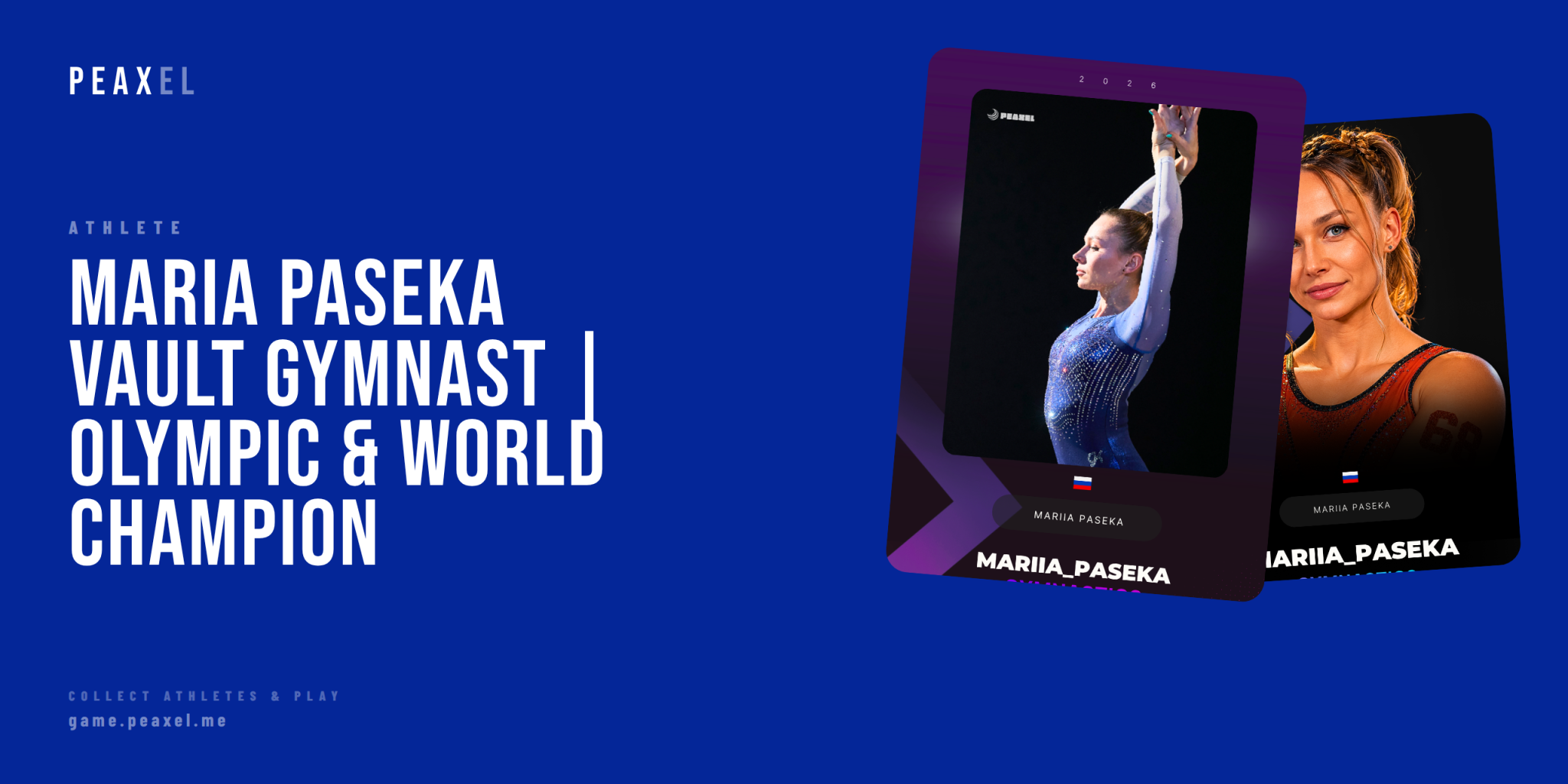
The Making of a Vault Specialist
Maria Paseka discovered gymnastics at age six in Moscow, captivated by a television program featuring a young girl on a trampoline at the Dynamo club. Her mother initially resisted, but Maria’s persistence won out. She began training at the MGFSO Dynamo youth sports school under coaches Nadezhda Galtsova and Vyacheslav Selifanov, where her natural power and explosive ability quickly became apparent.
By 2009, Paseka had moved to the prestigious Round Lake national training centre outside Moscow, where she would train under Marina Gennadyevna Ulyankina for the remainder of her elite career. This environment, which has produced generations of Russian gymnastics champions, provided the technical foundation that would make her one of the sport’s greatest vault specialists.
Junior Breakthrough and Early Promise
Paseka announced herself on the international stage at the 2010 European Championships, contributing to Russia’s team gold medal while claiming individual silver on vault. At just 14 years old, she demonstrated the explosive power and fearless approach that would define her career. Her Amanar vault—a roundoff onto the springboard, back handspring onto the vault, and two-and-a-half twisting back somersault—was already among the most difficult in the world.
Her junior performances signaled that she was destined for senior success. The combination of raw athletic ability and technical precision made her a standout even among Russia’s deep pool of gymnastics talent.
Olympic Bronze at London 2012
At just 16 years old, Maria Paseka competed at the London 2012 Olympics and delivered on the world’s biggest stage. She won bronze on vault with a combined score that reflected both the difficulty of her elements and the quality of her execution. She also contributed to Russia’s team silver medal, demonstrating her value beyond the individual apparatus.
The London performance established Paseka as a global name in artistic gymnastics. While many specialists fade after a single Olympic appearance, she was only beginning her ascent to the top of the vault rankings.
World Championship Dominance
Between the London and Rio Olympic Games, Paseka became the world’s undisputed vault queen. At the 2015 World Championships in Glasgow, she claimed her first World Championship gold on vault, outscoring the field with her signature combination of power and precision. The victory confirmed what the gymnastics community already knew: no one could match her on this apparatus.
She defended that title at the 2017 World Championships, becoming a two-time World Champion on vault. Her consistency across multiple quadrennials was remarkable in a sport where careers often peak briefly. European Championship gold medals in 2015 and 2019 further padded a resume that placed her among the all-time greats.
Olympic Silver at Rio 2016
Returning to the Olympic stage in Rio de Janeiro, Maria Paseka upgraded her vault medal from bronze to silver. At 20 years old, she was in the prime of her career, executing vaults with a level of difficulty that few competitors could attempt, let alone land consistently.
The Rio silver medal cemented her legacy as a two-time Olympic vault medalist. Only a handful of gymnasts in history have medaled on the same apparatus at consecutive Olympic Games, placing Paseka in elite company alongside the sport’s most celebrated specialists.
Overcoming Physical Adversity
Paseka’s career was not without significant obstacles. In early 2011, she underwent two surgeries on her heels, threatening to derail her trajectory before the London Olympics. The rehabilitation process tested her determination, but she returned stronger and more focused than before.
Throughout her career, she also battled ongoing spinal issues—a common challenge for vault specialists who absorb enormous forces during takeoff and landing. Despite these physical burdens, she maintained elite-level performance for over a decade, a testament to both her resilience and her dedication to the sport.
The Technical Legacy
What set Maria Paseka apart was her mastery of the Amanar vault, one of the most difficult and prestigious vaults in women’s artistic gymnastics. The element requires extraordinary power to generate the necessary height and rotation, combined with precise body control to stick the landing. Paseka’s version was consistently among the highest-scoring in any competition she entered.
Her influence on the apparatus extended beyond her own performances. A generation of young vault specialists studied her technique, attempting to replicate the combination of explosive power and controlled execution that made her performances so dominant.
Retirement and Legacy
Maria Paseka officially retired in July 2022, closing a career that spanned three Olympic cycles and produced two Olympic medals, two World Championship titles, and multiple European Championship golds. Her retirement marked the end of an era for vault specialists, as few athletes have ever achieved such sustained excellence on a single apparatus.
Her legacy endures in the continued evolution of vault difficulty. Athletes today attempt elements that build on the technical foundations Paseka helped establish, pushing the apparatus toward ever-greater complexity while maintaining the execution standards she exemplified.
Discover Maria Paseka on Peaxel
Maria Paseka represents the pinnacle of vault specialization in women’s artistic gymnastics. Her career offers a blueprint for how dedication to a single apparatus can produce historic results. Fans of gymnastics and elite athletic achievement can explore her profile on Peaxel and discover the full roster of sports and athletes available on the platform.