Stop Building Random Lineups
Here’s the difference between fantasy road cycling players who occasionally win and those who consistently finish near the top: they understand how scoring actually rewards certain rider profiles. If you’ve been playing Peaxel for a few weeks but your lineups feel like educated guesses, this guide changes that.
Road cycling isn’t like fantasy football where every match produces similar conditions. A flat sprint stage rewards completely different athletes than a mountain summit finish. Your job is matching rider strengths to race profiles before results come in.
Understanding What Actually Scores Points
Peaxel’s road cycling scoring rewards real-world performance. Riders earn points through race placements, stage wins, classification jerseys, and breakaway involvement. The key insight most players miss: consistency compounds faster than occasional brilliance.
A rider who finishes in the top 20 across five consecutive stages often outscores someone who wins one stage then abandons. This is why your lineup strategy should balance ceiling (potential big scores) with floor (reliable minimum returns).
Time trial specialists offer something valuable here. Their scoring tends to be more predictable because individual effort translates directly to placement without the chaos of bunch sprints or mechanical failures in the peloton.
Building Around Rising Talent: The Oda Gissinger Example
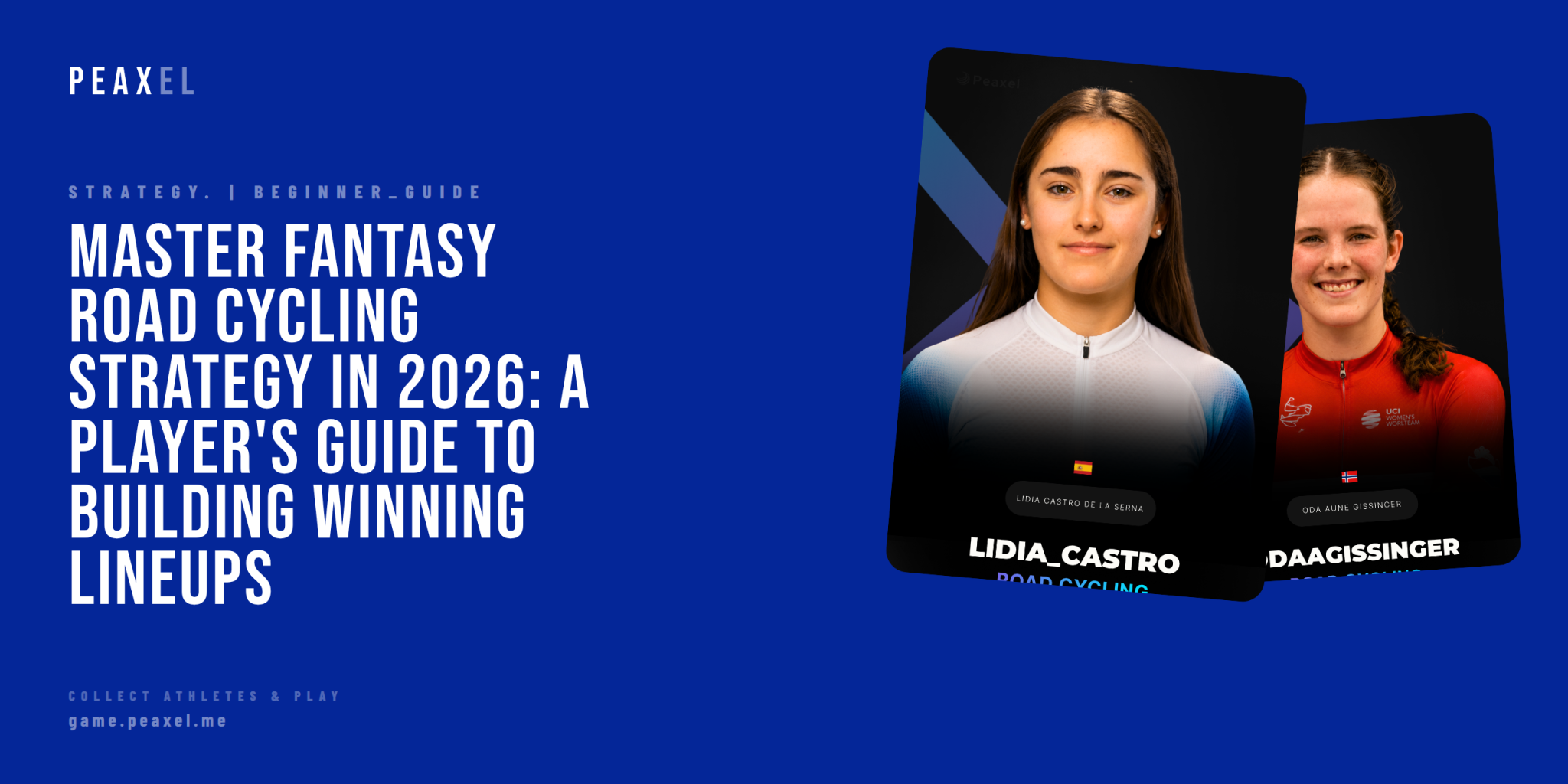
Oda Aune Gissinger represents the exact profile strategy-focused players should target. She’s 19, already riding for Hitec Products-Fluid Control at continental level, and her 2025 results read like a highlight reel: World Championship bronze in the junior ITT, Norwegian national TT champion, winner of Tour de l’Abitibi Féminin.
What makes her interesting for fantasy isn’t just past results — it’s predictability. Time trialists score when they race against the clock. No crashes, no positioning errors, no sprint timing failures. Gissinger rode 110km in a breakaway at Vuelta a Burgos and took the mountain jersey. That’s scoring opportunity in multiple categories from a single stage.
Add her card to your collection and you’re getting consistent floor scoring with genuine ceiling whenever ITT stages appear on the calendar.
Spotting Value Before It Disappears
This is where strategy separates from luck. Lidia Castro de la Serna is 18, racing junior events for Mirat Team, and most Peaxel players haven’t noticed her yet. That’s the opportunity.
Third overall at Tour de Valromey — the most prestigious junior stage race in the world. Second at Copa de Naciones Bizkoloreak. Selected for Junior World Championships. Invited to Jayco AlUla’s WorldTour camp as a junior, which almost never happens.
UAE Team Emirates started tracking her in 2024. When a WorldTour team monitors a teenager’s development, they’re seeing trajectory. Her Peaxel card value today reflects junior-level competition. Her value in 12 months will reflect WorldTour contract speculation. The time to acquire is before that transition becomes obvious.
Tactical Lineup Construction
Winning lineups in road cycling fantasy aren’t about picking five climbers and hoping for mountains. They’re about coverage across race scenarios.
Build your core around one or two reliable scorers — riders who’ll finish races and place consistently. Gissinger fits this role. Then add speculative picks with higher variance: younger riders, breakaway specialists, or athletes targeting specific upcoming races.
Check the upcoming calendar before setting lineups. Stage race heavy? Prioritize GC contenders and ITT specialists. One-day classics season? Punchy riders and cobblestone specialists matter more. Peaxel covers athletes across the full sports spectrum, so your cycling lineup doesn’t exist in isolation — balance it against your other active cards.
The Scoring Pattern Most Players Miss
Breakaway points. Seriously. Many fantasy players focus entirely on final results and ignore intermediate scoring opportunities. A rider who enters early breakaways, contests intermediate sprints, or accumulates KOM points before getting caught often scores more than a domestique who finishes 40th in the bunch.
Gissinger’s Vuelta a Burgos performance illustrates this perfectly. Mountain jersey from breakaway activity. Points accumulated before the stage even finished. That’s the kind of scoring efficiency that compounds across a season.
When to Hold and When to Rotate
Active players often over-rotate their lineups. Road cycling rewards patience. A rider struggling in one race type might dominate the next when terrain suits them better.
Castro de la Serna’s cyclocross background means she handles adverse conditions — wet roads, technical descents, late-season fatigue — better than pure road specialists. That versatility becomes valuable when autumn racing arrives and conditions turn unpredictable.
Hold cards through form slumps unless the athlete signals genuine problems: injury reports, team changes, or extended absences. Short-term underperformance often precedes recovery if the underlying talent remains.
Your Next Move
Start with the riders who match your strategy, not the ones with the biggest names. Gissinger and Castro de la Serna won’t stay under the radar forever — WorldTour contracts change valuations fast. If you’re serious about road cycling fantasy on Peaxel, now’s the moment to build around rising talent before the rest of the player base catches up.