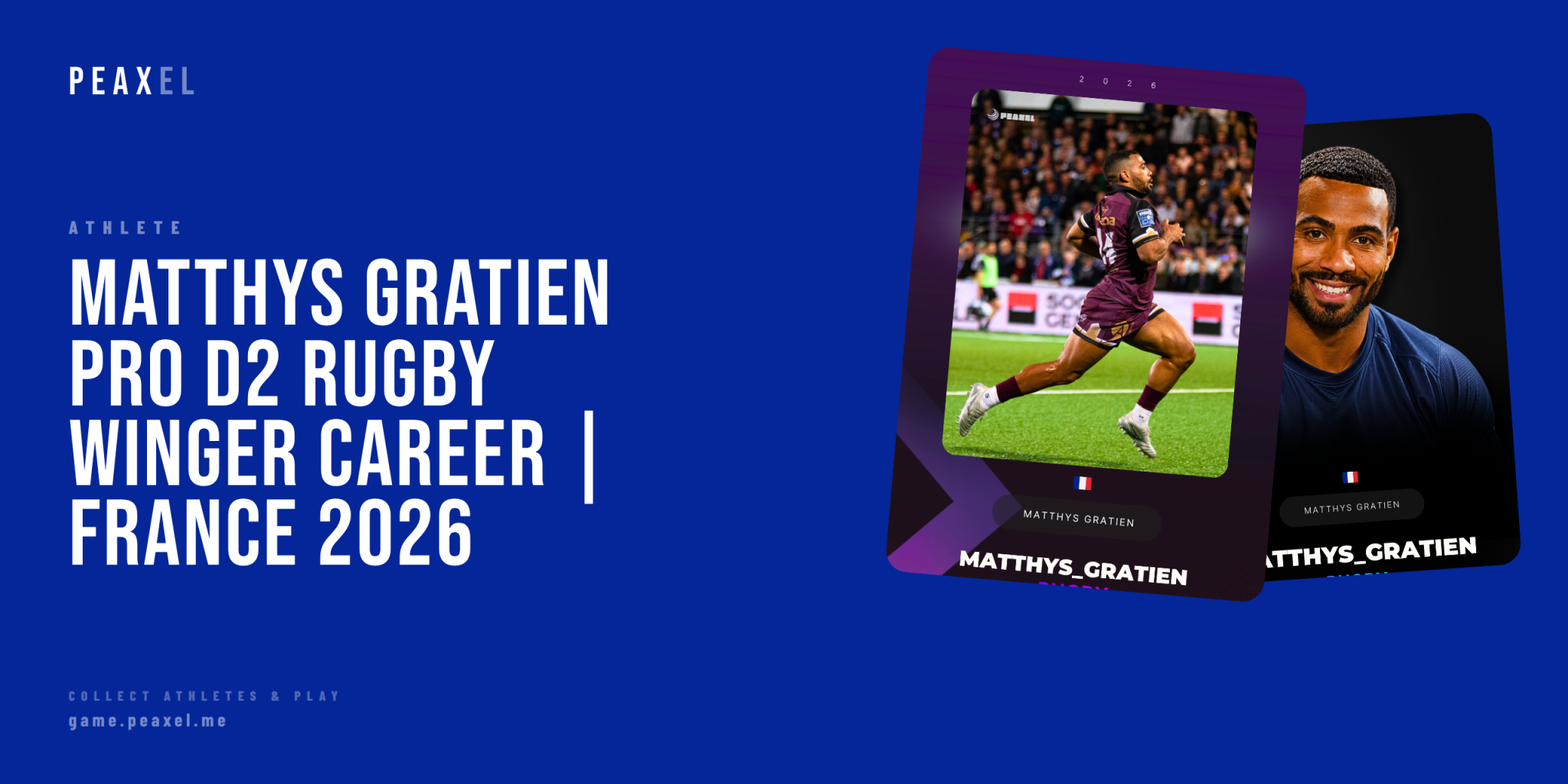
From Bondy to Professional Rugby: The Making of a Pro D2 Winger
Matthys Gratien represents everything that makes French rugby’s development system one of the most effective in world rugby. Born on February 15, 1999, in Bondy — the same Parisian suburb that produced football star Kylian Mbappé — Gratien chose a different path, discovering rugby at La Roche-sur-Yon at age 13 and never looking back.
Standing 1.72m and weighing 86kg, Gratien is not the prototypical power winger that dominates modern professional rugby. Instead, he has built his career on pace, finishing instinct, and the relentless work ethic that defines JIFF players — those formed entirely within the French rugby system. His journey from academy hopeful to established Pro D2 professional offers a blueprint for aspiring wingers navigating France’s competitive rugby landscape.
The RC Vannes Years: Academy to First Team
Gratien joined the RC Vannes academy in 2016, entering one of Brittany’s most ambitious rugby programmes. The club, based in the coastal town of Vannes in the Morbihan department, had been steadily climbing French rugby’s pyramid and offered young talent a genuine pathway to professional contracts.
Three years of academy development culminated in Gratien’s professional debut in 2019 against Stade Aurillacois. For a young winger from the Parisian suburbs, earning first-team minutes in Pro D2 — France’s fiercely competitive second tier — represented the validation of years of sacrifice and dedication.
The transition from academy rugby to professional competition is notoriously difficult. Pro D2 features 16 teams fighting for two promotion spots to the Top 14, creating an intensity that rivals any second-tier league in world rugby. Gratien adapted quickly, using his pace to stretch defences and his work rate to earn the trust of coaching staff.
Overcoming Adversity: The Facial Fracture Setback
Just as Gratien was establishing himself as a regular in the RC Vannes squad, disaster struck. A multiple facial fracture — the kind of injury that can end careers — kept him off the pitch for three months. For a winger whose game depends on confidence and spatial awareness, the psychological recovery proved as challenging as the physical rehabilitation.
Returning from facial trauma requires a particular kind of courage. Every contested high ball, every collision in the tackle zone, tests an athlete’s willingness to put their body on the line again. Gratien fought his way back into the team, demonstrating the mental resilience that separates professional athletes from talented amateurs.
The injury period also offered perspective. Gratien used the downtime to analyse his game, studying footage and working on aspects of his play that didn’t require full contact. When he returned, teammates and coaches noticed a more complete player — one who had used adversity as a catalyst for growth.
SA XV Charente: A Fresh Start in Angoulême
In the summer of 2023, Gratien made the strategic decision to leave RC Vannes for Soyaux Angoulême XV, commonly known as SA XV Charente. The move to southwestern France represented both a geographical and career shift, trading Brittany’s Atlantic coast for the Charente department’s rugby heartland.
The transfer proved inspired from the very first match. Gratien scored a brace on his debut against Béziers, announcing his arrival at his new club in the most emphatic fashion possible. Two tries in a single Pro D2 match is impressive for any player; doing so on debut demonstrated both his quality and his ability to perform under pressure.
His first season at SA XV Charente saw Gratien play 18 matches with 17 starts — numbers that reflect both his consistency and his importance to the team. In a league where squad rotation is common and competition for places intense, earning 17 starts speaks to the trust placed in him by the coaching staff.
The Economics of Pro D2 Rugby
Understanding Matthys Gratien’s career requires understanding the economic realities of French second-tier rugby. Pro D2 operates in a challenging financial environment, caught between the massive budgets of Top 14 clubs and the semi-professional structures below.
For players like Gratien, Pro D2 offers genuine professional wages but rarely the transformative contracts available in the top flight. Success requires balancing on-field performance with off-field professionalism, building a reputation that could attract Top 14 interest while contributing to a club’s promotion ambitions.
The JIFF designation — Joueur Issu des Filières de Formation — carries particular value in French rugby. Regulations require clubs to field minimum numbers of homegrown players, making JIFF-qualified athletes like Gratien inherently valuable to squad planning. His French formation provides career security that imported players simply cannot access.
Playing Style: Pace and Finishing on the Wing
Gratien’s game is built on the fundamental winger attributes: pace and finishing. At 1.72m, he lacks the physical dominance of larger wingers but compensates with acceleration, footwork, and an instinctive understanding of space.
Modern professional rugby demands more from wingers than simple try-scoring. Gratien contributes in defence, covers at fullback when required, and works tirelessly in support play. His work rate off the ball creates try-scoring opportunities for teammates while stretching defensive systems.
The brace against Béziers on his SA XV debut showcased his finishing ability — the composure to execute under pressure when try-scoring opportunities arrive. In Pro D2, where matches are often decided by fine margins, clinical finishing separates good wingers from valuable ones.
The Pro D2 Landscape in 2026
France’s Pro D2 has evolved into one of European rugby’s most compelling competitions. The promotion-relegation dynamic with Top 14 creates genuine stakes throughout the season, while the league’s geographic spread — from Vannes in Brittany to Béziers in the south — generates passionate regional rivalries.
For Matthys Gratien, the 2025-26 season represents another opportunity to prove his value in this environment. SA XV Charente’s ambitions align with his own: consistent performance, improvement, and the possibility of promotion to French rugby’s top tier.
The pathway from Pro D2 to Top 14 remains viable for players who demonstrate sustained excellence. Gratien’s age — still only 27 — means his best years could still be ahead, whether in Angoulême or at a higher level.
What Gratien’s Journey Teaches Aspiring Players
Matthys Gratien’s career offers lessons for any young rugby player dreaming of professional status. His journey demonstrates that the path rarely runs straight — injuries interrupt, transfers reshape careers, and success requires constant adaptation.
The importance of the French academy system cannot be overstated. Gratien’s JIFF status, earned through years of development at La Roche-sur-Yon and RC Vannes, provides structural advantages that foreign players cannot replicate. For French youth, committing to the formation pathway offers career benefits beyond pure rugby development.
Perhaps most importantly, Gratien’s story shows that setbacks need not be permanent. The multiple facial fracture that threatened his career became instead a chapter in a continuing story — one that includes professional contracts, memorable debuts, and the ongoing pursuit of excellence in French rugby.
Following Gratien’s Career
Rugby fans interested in following emerging talents like Matthys Gratien can explore athlete profiles on Peaxel, where the platform connects fans with athletes across multiple sports. Gratien’s journey from Bondy to Pro D2 professional represents the kind of authentic athletic story that resonates with fans who appreciate determination, skill, and the human drama of professional sport.