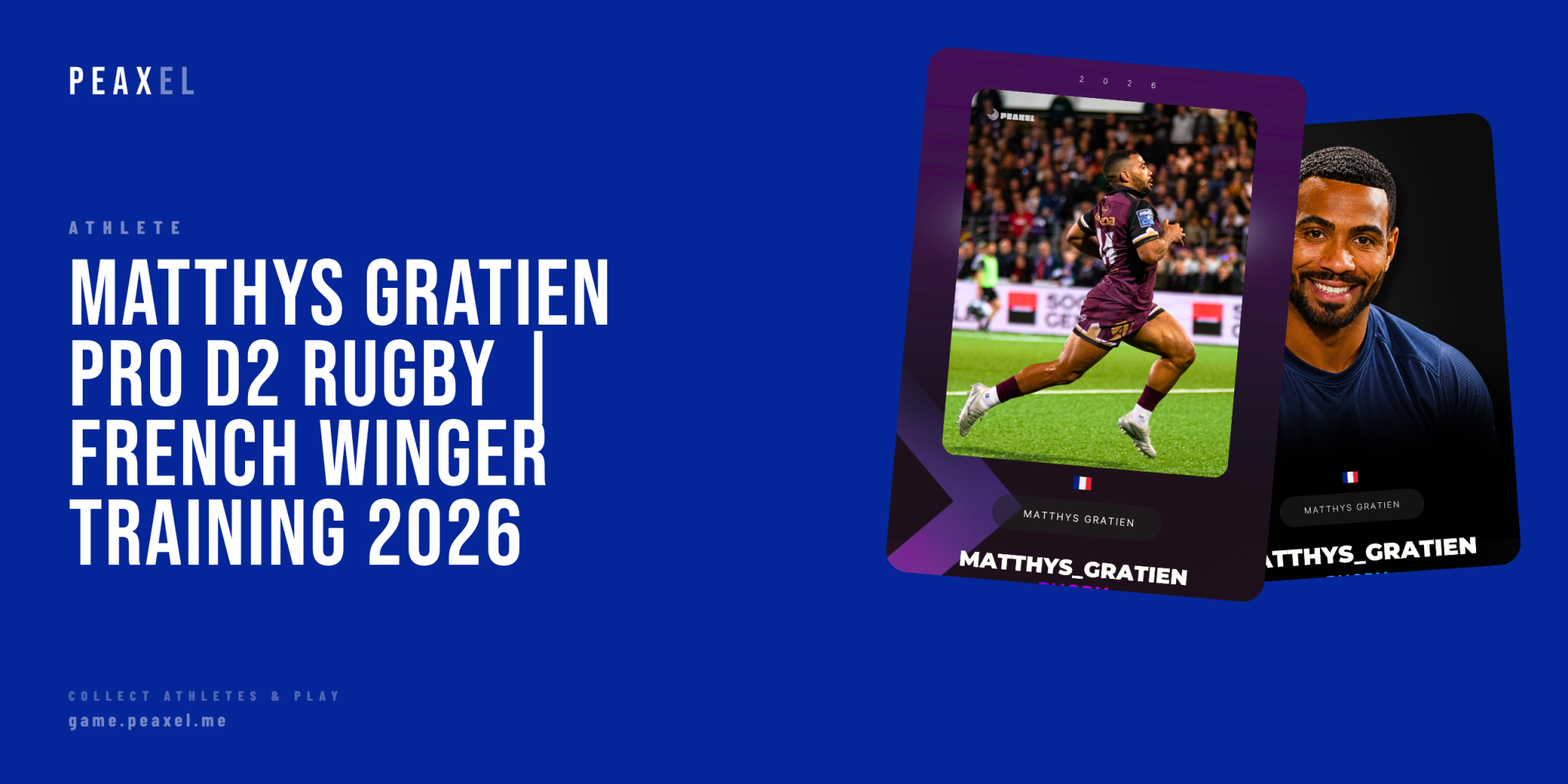
From Bondy to Brittany: Matthys Gratien’s Rugby Origins
Matthys Gratien was born on February 15, 1999, in Bondy, a commune in the northeastern suburbs of Paris. Unlike many French rugby players who grow up in the sport’s traditional heartlands of the southwest, Gratien discovered the game further west. At age 13, he began playing at La Roche-sur-Yon in the Vendée department, laying the foundation for what would become a professional career.
By 2016, his talent had attracted the attention of RC Vannes, one of the rising clubs in Breton rugby. Joining their academy marked a pivotal moment. The structured development environment at Vannes allowed Gratien to refine his skills as a winger—building the pace, positioning, and finishing ability that would define his playing style.
Standing 1.72m and weighing 86kg, Gratien is compact for a winger but explosive off the mark. His status as a JIFF player (Joueur Issu des Filières de Formation) confirms his pathway through the French rugby development system, a credential that clubs value highly under league regulations.
Professional Debut and Early Career at RC Vannes
Matthys Gratien made his professional Pro D2 debut in 2019, taking the field against Stade Aurillacois Cantal. Pro D2, France’s second-tier professional rugby championship, sits just below the Top 14 and features 16 clubs competing across a grueling 30-match regular season. For a young winger, earning minutes in this environment demands immediate physical and tactical readiness.
At Vannes, Gratien established himself as a regular in the squad. The Breton club had been building momentum in Pro D2, and Gratien’s finishing ability on the wing contributed to their competitive campaigns. His pace allowed him to stretch defenses, while his work rate in defense showed the discipline required at professional level.
However, professional rugby’s physical toll soon tested him. A multiple facial fracture—a severe injury that sidelined him for three months—forced Gratien to rebuild not just physically but mentally. Returning from facial trauma requires careful management, and the psychological challenge of contact sports after such an injury is significant.
The Move to Soyaux Angoulême XV
In the summer of 2023, Gratien made a decisive career move, joining Soyaux Angoulême XV (SA XV Charente). The club, based in the Charente department of southwestern France, competes in Pro D2 and offered Gratien a fresh start and increased responsibility.
His impact was immediate. On debut against Béziers, Gratien scored twice—a statement performance that announced his arrival. That season, he went on to play 18 matches with 17 starts, becoming a fixture on the wing for SA XV Charente. For a player who had recently returned from significant injury, such consistency demonstrated both his physical recovery and his value to the squad.
Pro D2 rugby demands durability. The season runs from late August through May, with matches nearly every weekend. Travel across France, combined with the physicality of each contest, makes squad depth and individual resilience essential. Gratien’s ability to start 17 of 18 matches speaks to his conditioning and reliability.
Inside the Training Life of a Pro D2 Winger
What does daily life look like for a Pro D2 winger like Matthys Gratien? The rhythm of a professional rugby season structures everything. Training typically runs five to six days per week, with sessions divided between skills work, team tactics, strength and conditioning, and recovery.
Wingers focus heavily on sprint mechanics and acceleration. Gratien’s role requires him to finish chances created by the team’s structure, which means repeated high-speed efforts in training. Agility drills, plyometrics, and short-distance speed work form the core of his athletic development.
Strength work is equally critical. While wingers are not expected to match the mass of forwards, they must absorb contact in defensive situations and break tackles in attack. Gratien’s 86kg frame is optimized for explosive power rather than bulk, requiring a training approach that balances speed with functional strength.
Recovery protocols—cold water immersion, massage, and sleep optimization—are non-negotiable at professional level. After his facial fracture, Gratien would have worked closely with medical staff to ensure his return to full contact was managed carefully, likely involving protective equipment and phased reintroduction to tackling drills.
Pro D2: The Competitive Reality
Pro D2 occupies a unique space in world rugby. It is fully professional, highly competitive, and serves as both a destination league and a pathway to the Top 14. Clubs like Bayonne, Perpignan, and Oyonnax have moved between the divisions, demonstrating the fine margins separating the tiers.
For players like Gratien, Pro D2 offers sustained professional opportunity. The league’s intensity prepares athletes for potential Top 14 opportunities while providing a viable long-term career for those who remain. Match fees, salaries, and media exposure are lower than the top tier, but the standard of rugby is unquestionably professional.
SA XV Charente, Gratien’s current club, operates within this competitive ecosystem. The club’s ambitions, facilities, and coaching staff all influence a player’s development trajectory. For Gratien, the environment has allowed him to accumulate professional experience and refine his game.
What Defines Matthys Gratien’s Playing Style
Gratien is known for his pace and finishing ability. As a winger, his primary job is to convert opportunities into tries—whether through support lines, kick-chase pressure, or exploiting overlaps. His compact frame gives him a low center of gravity, useful for riding tackles and staying on his feet through contact.
Defensively, wingers must cover significant ground. The modern game requires back-three players to sweep across the field, cover kicks, and make try-saving tackles. Gratien’s work rate off the ball has been noted as a strength, reflecting the all-round demands placed on professional wingers.
His brace on debut for SA XV Charente against Béziers illustrated his predatory instincts near the try line. Scoring twice in your first match for a new club requires composure, positioning, and the confidence to back yourself in decisive moments.
The Homegrown French Rugby Pathway
Gratien represents the new generation of homegrown French talent progressing through the country’s structured club academy system. The JIFF designation is more than administrative—it reflects a development journey within French rugby’s ecosystem, from youth programs through academy structures into professional contracts.
This pathway matters for French rugby’s depth. While Top 14 clubs attract international stars, the national team and domestic leagues depend on players like Gratien who have learned the game within France. His progression from La Roche-sur-Yon to Vannes to Angoulême traces a typical route for talented French players outside the traditional rugby strongholds.
Following Matthys Gratien on Peaxel
For fans interested in following Matthys Gratien’s career, Peaxel offers a platform to engage with athletes across a wide range of sports. You can explore Gratien’s profile and card at game.peaxel.me/talent/matthysgrt, or discover the full roster of rugby and other sports athletes at Peaxel’s sports directory.