What Is Men’s Artistic Gymnastics?
Men’s artistic gymnastics is one of the most demanding sports in the world, requiring athletes to master strength, flexibility, coordination, and mental focus across six different apparatus. Unlike women’s artistic gymnastics, which uses four apparatus, men compete on floor exercise, pommel horse, still rings, vault, parallel bars, and high bar.
Each apparatus tests different physical attributes. The rings demand extraordinary upper body strength. The pommel horse requires precise balance and circular swinging movements. The high bar showcases dynamic releases and catches that leave audiences breathless.
For fans new to the sport, understanding what separates a good routine from a great one starts with knowing how each apparatus works and what judges look for.
The Six Apparatus Explained
Floor Exercise
The floor exercise takes place on a 12×12 meter spring floor. Athletes perform tumbling passes, leaps, and strength elements in routines lasting 50 to 70 seconds. Unlike women’s floor, men’s routines have no music. The focus is pure athleticism—explosive tumbling, controlled strength holds, and seamless transitions.
Pommel Horse
Often considered the most technically difficult apparatus, the pommel horse requires continuous circular swinging motions while supporting the body on the hands. Athletes must flow through scissors, flairs, and spindles without pausing. Any break in rhythm or wobble results in significant deductions.
Still Rings
The rings test static strength more than any other apparatus. Athletes must hold positions like the iron cross and maltese while keeping the rings perfectly still. Swinging elements and dismounts add dynamic components, but the strength holds define ring specialists.
Vault
Vault is the fastest event—athletes sprint down a 25-meter runway, launch off a springboard, push off the vaulting table, and perform aerial skills before landing. Difficulty comes from rotations and twists. A clean landing without steps or falls is critical for high scores.
Parallel Bars
On parallel bars, gymnasts swing between two horizontal bars, performing releases, handstands, and strength transitions. The apparatus rewards fluidity and control. Athletes must maintain momentum while executing difficult elements with precision.
High Bar
The high bar is the most spectacular apparatus for audiences. Athletes swing in giant circles, release the bar for aerial skills, and catch it again—often with multiple flips and twists in between. The dismount typically features the highest difficulty of any element in the routine.
How Scoring Works in Artistic Gymnastics
Since 2006, artistic gymnastics has used an open-ended scoring system. Each routine receives two scores that are added together: the D-score (Difficulty) and the E-score (Execution).
D-Score: Difficulty Value
The D-score reflects the technical difficulty of the routine. Each skill has a value ranging from A (easiest) to J (most difficult). Judges count the ten highest-value elements plus connection bonuses to calculate the difficulty score. There is no maximum—athletes can increase difficulty indefinitely, though risk increases with complexity.
E-Score: Execution
The E-score starts at 10.0 and judges deduct for errors. Small wobbles cost 0.1 points. Falls cost 1.0 point. Bent arms, flexed feet, and poor body position all reduce the score. A perfect E-score of 10.0 is rare at elite level.
The final score combines both: a gymnast with a 6.5 D-score and 8.7 E-score finishes with 15.2. This system rewards both difficulty and clean execution, creating strategic decisions about risk versus reliability.
Competition Formats
All-Around
The all-around competition tests versatility. Athletes compete on all six apparatus, and their scores are totaled. The gymnast with the highest combined score wins. All-around champions must excel everywhere—weakness on any apparatus is costly.
Apparatus Finals
The top eight qualifiers on each apparatus advance to individual finals. Here, specialists shine. A pommel horse expert who struggles on other events can still win a world title on their best apparatus.
Team Competition
Team finals feature three gymnasts per country per apparatus, with all three scores counting. This format demands depth—one fall can drop a team from gold to fourth place.
What to Watch For as a New Fan
Watch for height and form on tumbling passes. Look for still rings that stay motionless during strength holds. Notice whether landings are stuck or require steps. These details separate elite performers from the rest.
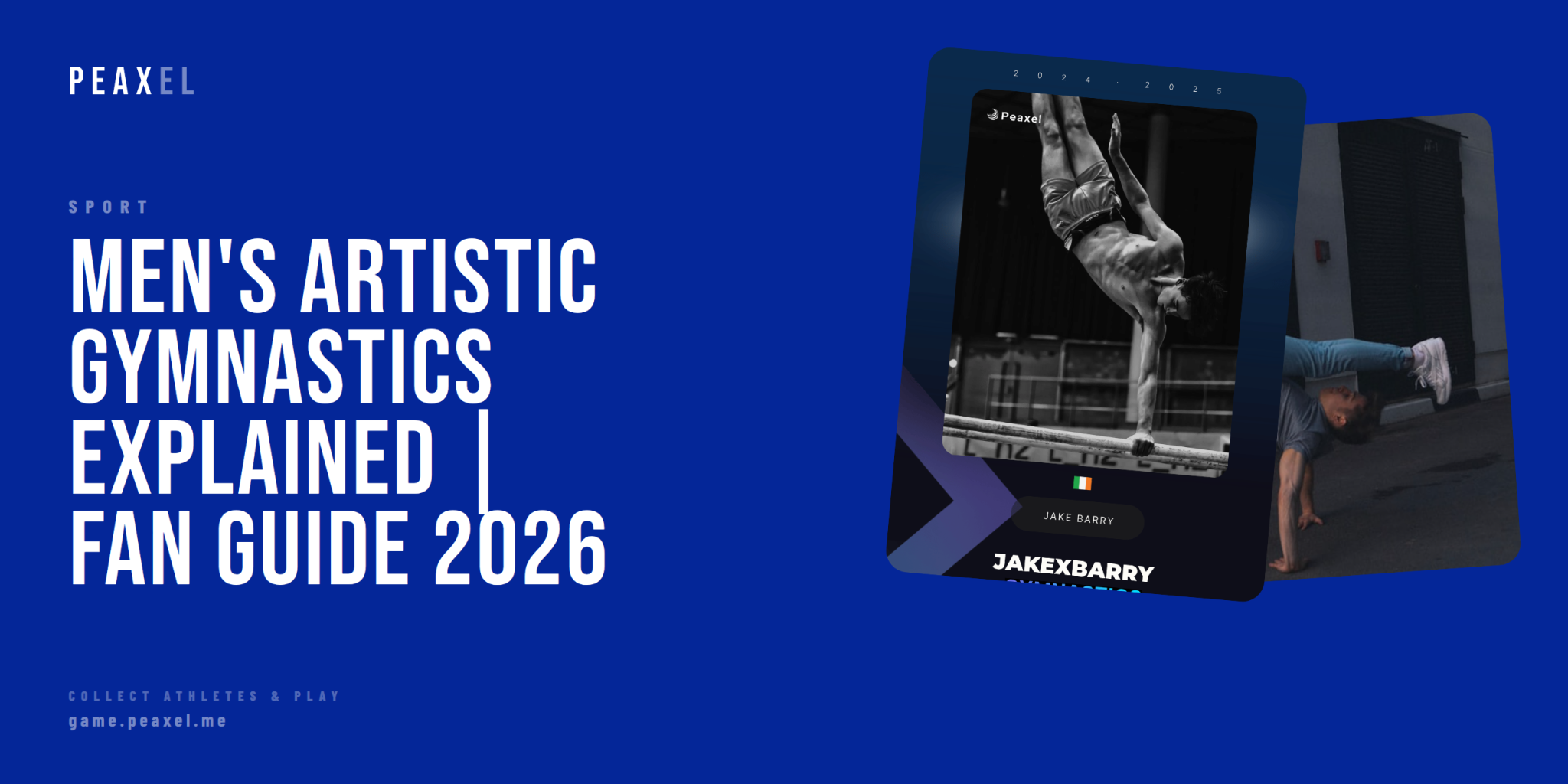
Athletes from nations like Japan, China, and the United States consistently dominate, but emerging gymnasts from countries like Ireland are contributing to the sport’s growth. Jake Barry, competing for Ireland, represents the next generation working to put smaller gymnastics nations on the international map.
Where to Follow Gymnastics
Major competitions include the World Championships, European Championships, and the Olympic Games. The FIG (International Gymnastics Federation) oversees the sport globally. For fantasy sports fans, platforms like Peaxel offer ways to engage with gymnastics athletes and follow their competitive journeys. Explore the full list of sports on Peaxel to discover athletes across dozens of disciplines.