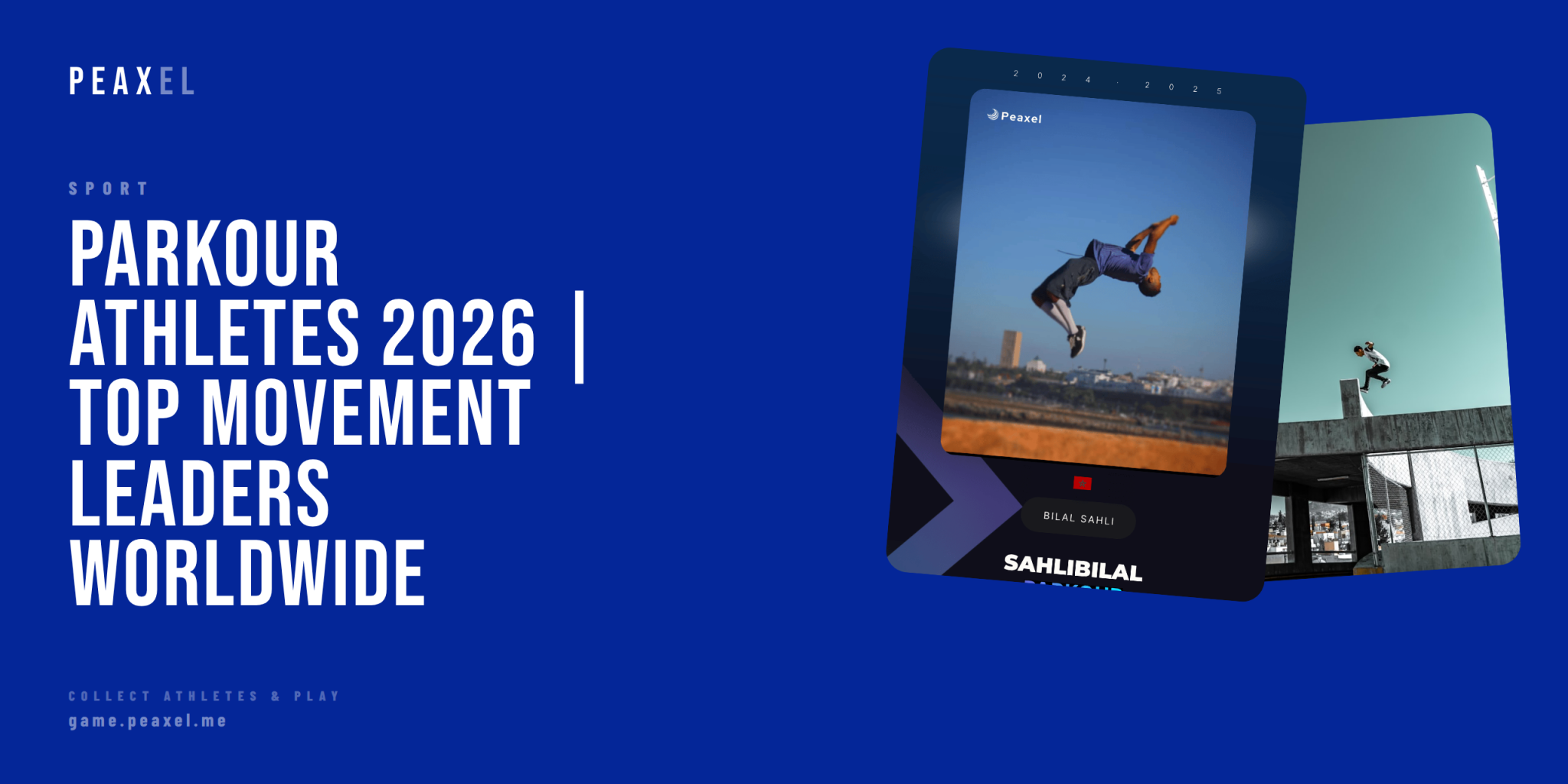
Parkour in 2026: A Global Movement Sport Coming of Age
Parkour has evolved from underground urban culture to a recognized competitive discipline with athletes training full-time and federations organizing international championships. What began in the suburbs of Paris with David Belle and the Yamakasi has spread across continents, producing traceurs who combine athletic precision with artistic expression.
The sport now encompasses multiple formats: speed runs through obstacle courses, freestyle performances judged on creativity and execution, and the hybrid challenges popularized by obstacle course television shows. Each format demands different skills, but all share the core philosophy of efficient movement through any environment.
In 2026, parkour athletes are more visible than ever. International governing bodies continue developing competition standards, while individual practitioners build global followings through social media and live events. The athletes leading this movement come from diverse backgrounds but share an obsession with pushing physical limits.
Bilal Sahli: Morocco’s Parkour Pioneer
Bilal Sahli, known as “Shuriken” in the parkour community, represents the sport’s grassroots growth in North Africa. Starting his journey in Kenitra, Morocco, in 2005, he was inspired by footage of David Belle—the same videos that sparked parkour movements worldwide. Training alone initially, Sahli eventually connected with other practitioners and formed “Helala Parkour” in 2007.
His breakthrough moment came in 2017 when he became the first Arab athlete to surpass the initial stage of Ninja Warrior Arabia, a performance that introduced parkour to millions of viewers across the Middle East and North Africa. The achievement demonstrated that world-class movement athletes could emerge from anywhere with dedication and creativity.
Beyond competition, Sahli has built institutional foundations for parkour in Morocco. In 2015, he co-founded “UP Movement,” which became the first Moroccan team sponsored by the World Freerunning Parkour Federation (WFPF). He now serves as head of the Parkour committee and technical director of the Fédération Royale Marocaine de Skate, Roller, Trottinette et Sports Urbains (FRMSU), working to develop the next generation of Moroccan traceurs.
Follow his athletic journey on Peaxel where fans can collect his athlete card and track his performances.
Jesús Ocaña: Spanish Speed Specialist
While some parkour athletes focus on creative expression, Jesús Ocaña has built his reputation on pure velocity. The Spanish athlete competes in both speed and freestyle disciplines but excels particularly in timed obstacle courses where fractions of seconds determine rankings.
At the Parkour Spain Series in Madrid in October 2022, Ocaña secured second place in the speed category with a run of 28.45 seconds. The result placed him among Spain’s elite competitive traceurs and demonstrated the depth of talent emerging from the Spanish parkour scene.
Speed parkour requires explosive power, precise spatial awareness, and the ability to read complex courses instantly. Athletes must commit fully to each movement—hesitation costs precious time. Ocaña’s consistent placement in national competitions reflects years of training these specific skills alongside broader parkour fundamentals.
His competitive profile is available on Peaxel’s game platform, where fans can add him to their fantasy rosters.
Matthias von Radeck: German Precision
Matthias von Radeck brings German precision to parkour’s creative side. Based in Germany, he has developed a style characterized by dynamic jumps, exact landings, and seamless flow between obstacles. His performances at various events have impressed audiences with their technical difficulty and aesthetic quality.
The German parkour scene has grown significantly in recent years, with dedicated training facilities and organized competition circuits supporting athlete development. Von Radeck represents this maturation, approaching parkour with the systematic training methodology more common in traditional sports while maintaining the discipline’s improvisational spirit.
His approach emphasizes pushing limits—a core parkour value—while respecting the physical demands of high-level movement. Each performance builds on years of conditioning, technique refinement, and mental preparation. Track his progress through Peaxel’s athlete tracking features.
Competition Formats and the Evolution of Parkour Sport
Parkour competition has diversified to accommodate the sport’s different expressions. Speed events measure pure athletic performance—the fastest clean run wins. Freestyle competitions evaluate creativity, difficulty, and execution, with judges scoring runs on multiple criteria similar to skateboarding or snowboarding contests.
The World Freerunning Parkour Federation and other governing bodies have developed standardized competition formats that maintain parkour’s identity while creating fair competitive structures. Athletes now train specifically for competition, analyzing courses, developing signature moves, and building the consistency required to perform under pressure.
Television shows like Ninja Warrior have introduced parkour-adjacent challenges to mainstream audiences, though purists note differences between obstacle course racing and traditional parkour. Still, these programs have expanded awareness and inspired new practitioners to explore movement disciplines.
The Global Parkour Community
What distinguishes parkour from many sports is its community ethos. Despite competition’s growth, the discipline retains strong values around sharing knowledge, supporting fellow practitioners, and respecting training environments. Athletes like Bilal Sahli exemplify this by building institutional structures that benefit their entire national communities.
Social media has connected parkour practitioners globally, allowing athletes from Morocco, Spain, Germany, and dozens of other countries to share techniques, inspire each other, and collaborate on projects. This digital community complements local training groups where the day-to-day work of skill development happens.
The sport’s accessibility—requiring minimal equipment and available in any urban environment—continues attracting new participants worldwide. From professional athletes competing internationally to weekend practitioners exploring their neighborhoods, parkour’s appeal spans demographics and geographies.
Following Parkour Athletes
For fans interested in tracking parkour’s top performers, Peaxel offers a platform to discover athletes across dozens of action and emerging sports. Collecting athlete cards, building fantasy teams, and following competition results brings fans closer to the sport’s global community—including the traceurs defining parkour’s future in 2026 and beyond.