What Is Taekwondo and Why Should You Watch It?
Taekwondo is a Korean martial art that became an official Olympic sport at the 2000 Sydney Games. The name translates to “the way of the foot and fist,” but modern competition emphasizes spectacular kicking techniques over punching. If you have ever watched combat sports and wondered why athletes spin through the air delivering head kicks, taekwondo is your answer.
The sport combines explosive athleticism with tactical precision. Matches are fast, often decided in split seconds when a perfectly timed spinning kick connects with an opponent’s head guard. Unlike boxing or wrestling, taekwondo rewards technical creativity and aerial acrobatics alongside raw power.
World Taekwondo, headquartered in Seoul, governs international competition. The organization oversees the World Championships, Grand Prix series, and Olympic qualification. With over 210 member nations, taekwondo ranks among the most practiced martial arts globally.
The Basic Rules Every New Fan Needs to Know
Olympic taekwondo matches consist of three two-minute rounds with one-minute rest periods between them. Athletes compete on an octagonal mat measuring 8 meters in diameter. The objective is simple: score more points than your opponent through legal strikes to the trunk protector or head.
Only kicks are permitted to the head. Punches can only target the trunk protector covering the torso. Strikes below the waist, attacks to the back, and grabbing or pushing opponents result in penalties called “Gam-jeom.” Accumulating 10 Gam-jeom results in automatic disqualification.
If neither athlete secures a 20-point lead during regulation, the match goes to points. In the event of a tie, a fourth “golden point” round determines the winner—the first athlete to score wins immediately.
How the Electronic Scoring System Works
Taekwondo revolutionized combat sports judging when it introduced the Protector and Scoring System (PSS) at the 2012 London Olympics. Athletes wear electronic trunk protectors and head guards embedded with sensors. Foot protectors contain transmitters that register valid strikes when they impact the sensors with sufficient force.
The system eliminates much of the subjectivity that plagued earlier taekwondo judging. A kick either registers or it does not. This technology-driven approach has increased transparency and reduced controversial decisions, though judges still score techniques like spinning kicks that require human verification.
The force threshold for scoring varies by weight category, ensuring lighter athletes compete on equal terms with heavier competitors. Each piece of equipment undergoes calibration before competition to maintain consistency.
Understanding Point Values in Taekwondo
Not all techniques score equally in taekwondo. The current World Taekwondo scoring system rewards difficulty and risk:
Punch to trunk protector: 1 point. Punches are legal but rarely used strategically because they require close range and score minimally.
Kick to trunk protector: 2 points. Standard roundhouse kicks and front kicks to the body form the foundation of most athletes’ scoring.
Kick to head: 3 points. Landing any kick to the head guard demonstrates superior technique and timing.
Turning kick to trunk: 4 points. Spinning techniques like back kicks and spinning hook kicks carry bonus value because they require the athlete to turn away from their opponent, creating vulnerability.
Turning kick to head: 5 points. The highest-scoring technique combines the difficulty of spinning with the precision required to target the head. A single successful spinning head kick can completely shift momentum in a match.
Weight Categories and Competition Format
Olympic taekwondo features four weight categories per gender. For men: 58kg, 68kg, 80kg, and over 80kg. For women: 49kg, 57kg, 67kg, and over 67kg. World Championships include additional divisions, typically eight per gender, allowing more athletes to compete at their natural weight.
Tournaments use single-elimination brackets. Lose once and you are out unless you lose to a finalist, which qualifies you for bronze medal repechage. This format creates high-stakes drama from the opening rounds—every match matters.
The Grand Prix series operates differently, using a ranking system where the world’s top athletes accumulate points across multiple events. Grand Prix standings factor into Olympic qualification, making consistent performance across the season essential.
What Makes Elite Taekwondo Athletes Special
Elite taekwondo demands a unique combination of attributes. Flexibility allows athletes to deliver head kicks without telegraphing their intentions. Explosive power generates the force needed to trigger electronic scoring. Timing and distance management determine whether techniques land cleanly or miss entirely.
The best athletes read their opponents within seconds, identifying habits and tendencies to exploit. Matches become chess games played at combat speed, with each athlete probing defenses and setting traps.
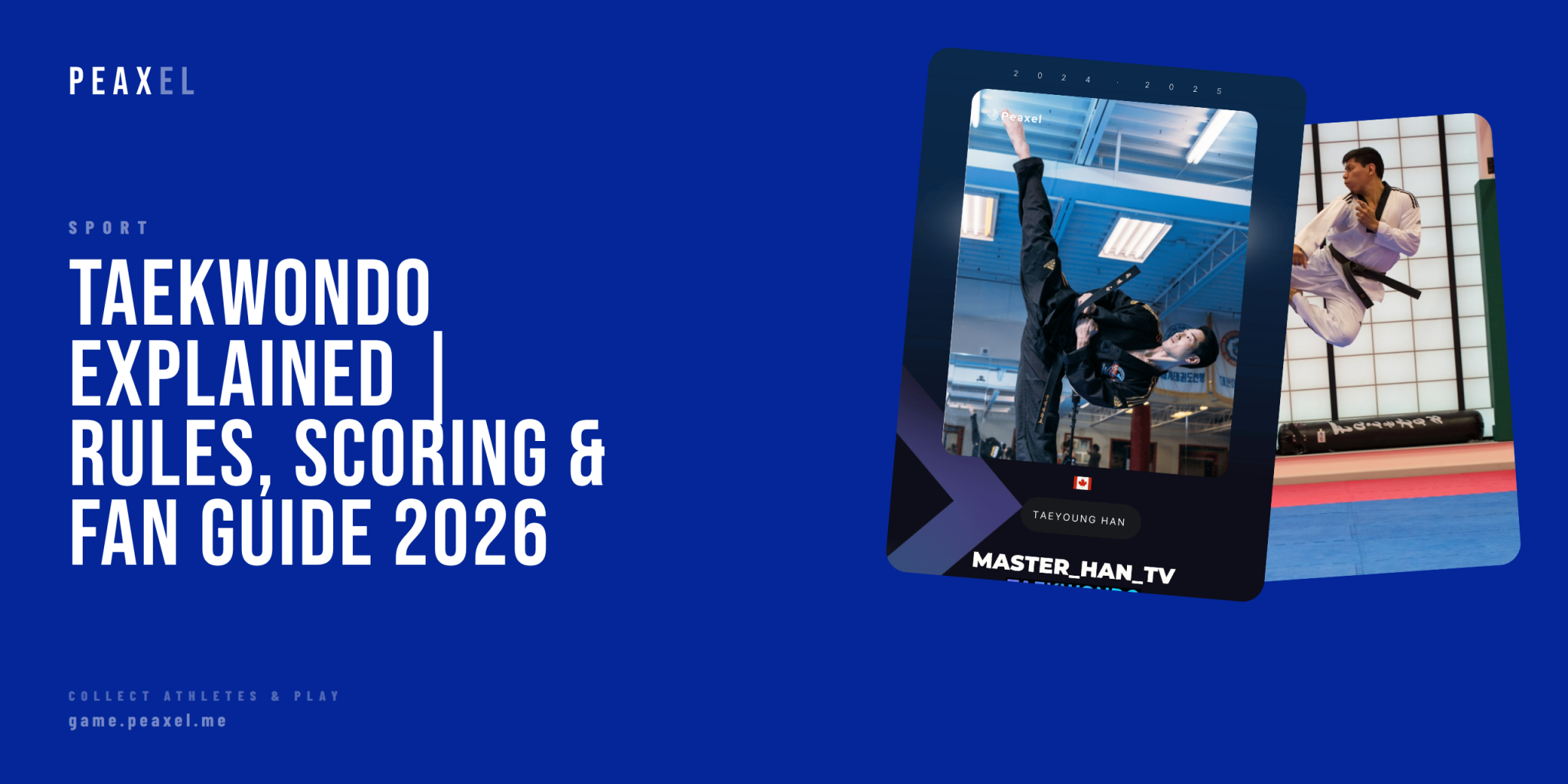
Athletes like Master Taeyoung Han, a former Korean National Champion and current coach for Canada’s national team, represent the depth of knowledge required at elite level. His transition from competitor to coaching athletes at events like the World Taekwondo Grand Slam demonstrates how the sport demands both physical excellence and tactical intelligence. You can follow his coaching journey on Peaxel.
Key Tournaments to Follow in 2026
The World Taekwondo calendar offers multiple entry points for new fans. The Grand Prix series visits different continents throughout the year, with events typically held in Asia, Europe, and the Middle East. Each Grand Prix attracts the world’s top-ranked athletes competing for ranking points and prize money.
World Championships represent the pinnacle outside Olympic years. The event crowns world champions across all weight categories and serves as a qualification pathway for major games. Nations send their best athletes, and the competition intensity rivals the Olympics.
Continental championships—European, Asian, Pan American, and African—provide additional high-level competition. These events often feature emerging talent alongside established stars, offering insight into the next generation of Olympic contenders.
How to Watch Taekwondo Like an Insider
New fans often focus solely on the scoreboard, but experienced viewers watch footwork. Elite athletes constantly adjust their distance, creating angles for attack while minimizing their exposure. The athlete controlling the center of the mat typically dictates the pace.
Watch for feints and setup techniques. Top competitors rarely throw naked attacks. Instead, they use hand movements, shifts in stance, and fake kicks to draw reactions before launching their real scoring attempts.
Listen for the electronic beep confirming a registered score. In close matches, that sound creates immediate tension as both corners check the scoreboard. The psychological impact of a successful technique extends beyond the points—it forces the trailing athlete to take risks.
Athletes like Oleksandr Yemelianenko from Ukraine showcase the dedication required at competitive level, sharing training routines and competition insights through social media. Following active competitors provides context for understanding technique development and competition preparation.
The Global Reach of Taekwondo
South Korea remains the sport’s traditional powerhouse, but the competitive landscape has diversified dramatically. Iran, China, Great Britain, and Russia have produced multiple Olympic and World champions. African nations including Côte d’Ivoire and Niger have emerged as serious contenders, while Mexico and the United States lead development in the Americas.
This global spread means taekwondo events feature genuine international competition rather than predictable outcomes. Any major tournament might produce breakthrough performances from unexpected nations, adding unpredictability to every bracket.
The pathway from local dojang to international podium exists in nearly every country. National federations affiliated with World Taekwondo operate development programs, coaching certifications, and competition structures that identify and nurture talent from grassroots to elite level.
Getting Started as a Taekwondo Fan
World Taekwondo broadcasts major events through its official channels and partner networks. The organization’s YouTube channel archives recent competitions, allowing new fans to study past matches and familiarize themselves with top athletes before live events.
Following the Grand Prix series provides the most consistent access to elite competition. Events occur regularly throughout the season, building toward championship climaxes. Social media accounts of national federations and individual athletes offer behind-the-scenes content that enriches the viewing experience.
For fans interested in building fantasy teams around combat sports athletes, Peaxel features taekwondo practitioners alongside athletes from dozens of other disciplines. The platform’s complete sports list demonstrates the breadth of action sports and martial arts represented, giving fans new ways to engage with athletes they discover through competition broadcasts.