Why Tennis Is the Ultimate Mental Sport
Tennis is often called the loneliest sport in the world. Unlike team sports where athletes can rely on teammates during difficult moments, tennis players stand alone on the court, facing their opponent with no coaching allowed during points. Every decision, every emotional response, every tactical adjustment happens in isolation. This reality makes mental game not just important in tennis—it makes it decisive.
In 2026, the integration of sports psychology into tennis training has reached unprecedented levels. From junior academies to ATP and WTA tour programs, mental conditioning is now treated with the same seriousness as physical fitness and technical development. The athletes who master their minds are the ones lifting trophies.
The Psychological Demands of Match Play
A professional tennis match can last anywhere from 45 minutes to over five hours. During that time, players must maintain focus through thousands of individual points, each one a mini-battle requiring split-second decisions. The mental load is enormous. Research from the International Tennis Federation shows that elite players make over 1,000 tactical decisions during a typical three-set match.
What makes tennis uniquely challenging is the constant momentum shifts. A player can be dominating one moment and struggling the next. Managing these emotional swings—staying composed after a bad call, recovering from a broken serve, maintaining confidence during a tiebreak—separates champions from talented players who never quite break through.
The Between-Point Battle
Tennis is structured around brief pauses between points, and these moments are where mental game becomes most visible. Players have roughly 20-25 seconds to process what just happened, reset emotionally, and prepare for the next point. The rituals you see—bouncing the ball a specific number of times, adjusting strings, taking deep breaths—are not superstition. They are carefully developed mental routines designed to control arousal levels and maintain focus.
Sports psychologists working with tour players report that the between-point routine is often the first area they address with struggling athletes. A consistent pre-serve or pre-return routine creates psychological anchors that help players stay present rather than dwelling on past errors or worrying about future outcomes.
Pressure Management at Every Level
The psychological pressures in tennis vary by level, but they never disappear. Junior players face unique challenges: the stress of building a ranking, the financial pressure on families investing in their development, the social isolation of traveling constantly, and the uncertainty of whether their investment will ever pay off professionally.
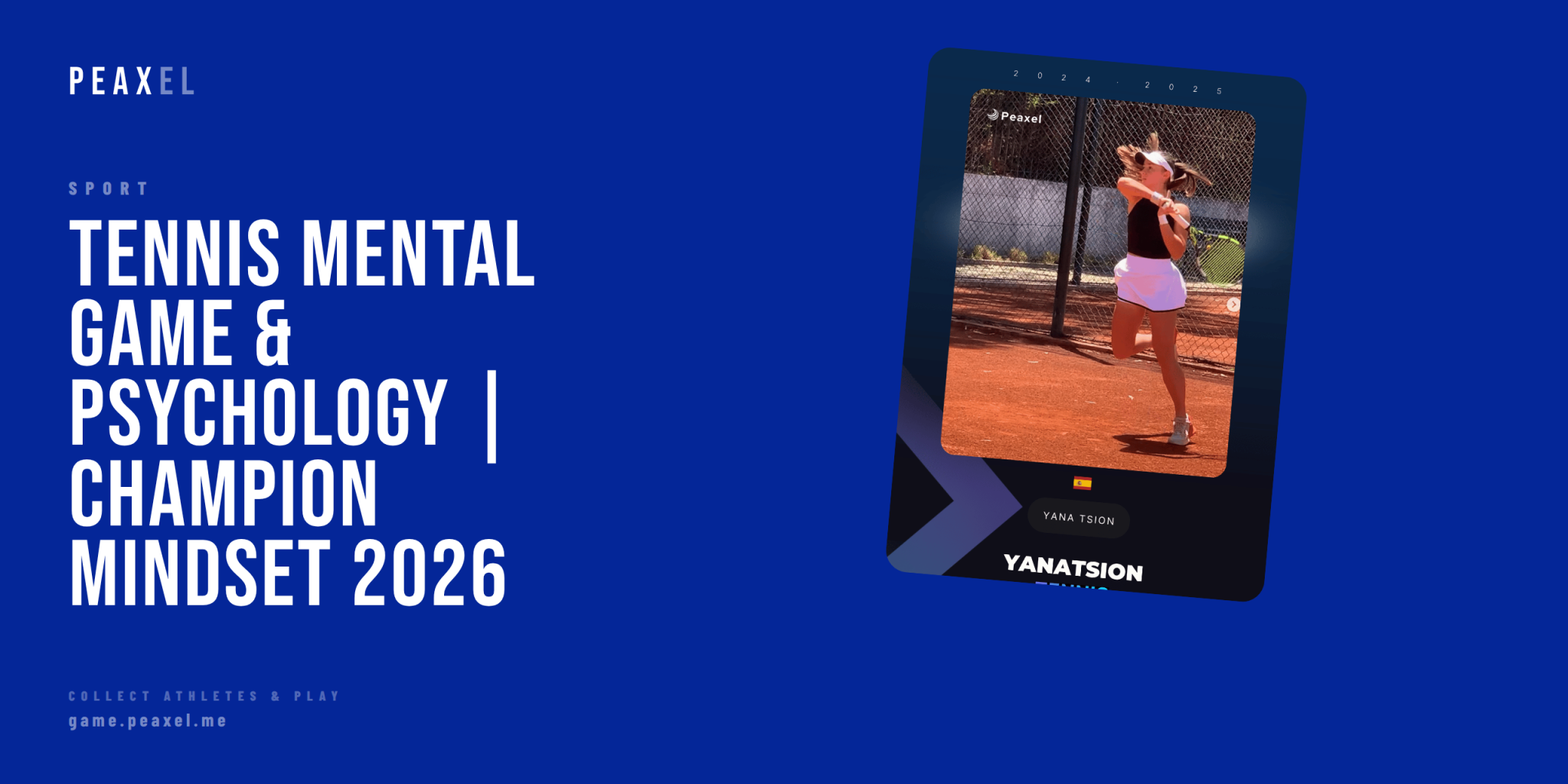
On the ITF junior and women’s circuit, young players like Yana Tsion navigate these pressures while still developing their games. The Spanish player, born in 2006, represents the generation of athletes for whom mental training is standard from the beginning of their competitive careers. Her aggressive baseline style and clay court preference require not just technical skill but the mental fortitude to construct points patiently and execute under pressure.
The Ranking Anxiety Problem
Tennis uses a points-based ranking system where results from the previous 52 weeks determine a player’s position. This creates constant anxiety—players are always defending points, always calculating, always aware that a bad stretch of results will send them tumbling down the rankings. Sports psychologists describe this as “ranking obsession,” a mental trap where players focus more on their number than on their tennis.
The most successful mental coaches help players shift focus from outcomes to process. Instead of thinking about winning matches or protecting ranking points, players learn to concentrate on executing their game plan point by point. This process-oriented mindset reduces anxiety and paradoxically leads to better results.
Mental Training Techniques Used by Elite Players
Modern tennis psychology draws from several evidence-based approaches. Visualization remains fundamental—players mentally rehearse matches, seeing themselves execute shots, handle adversity, and close out tight sets. Brain imaging studies show that visualization activates similar neural pathways as physical practice, making it a powerful training tool.
Breathing techniques are equally important. Controlled breathing directly affects the autonomic nervous system, helping players manage the physical symptoms of anxiety—elevated heart rate, muscle tension, shallow breathing—that can derail performance. Many players use specific breathing patterns during changeovers to reset their physiological state.
Self-Talk and Inner Dialogue
The conversation players have with themselves during matches significantly impacts performance. Negative self-talk—”I always choke at this stage,” “My backhand is terrible today”—creates self-fulfilling prophecies. Sports psychologists work with players to develop constructive self-talk patterns, using cue words and phrases that trigger desired responses.
Some players use instructional self-talk (“Watch the ball,” “Stay low”), while others prefer motivational phrases (“You’ve got this,” “One point at a time”). The key is developing personalized language that resonates and can be accessed automatically under pressure.
The Junior-to-Pro Transition
One of the most psychologically demanding periods in a tennis player’s career is the transition from junior competition to professional circuits. Players who dominated their age groups suddenly face adults with years more experience, physicality, and mental toughness. The adjustment can be brutal.
Statistics show that many highly-ranked juniors never succeed as professionals, and mental factors often explain the gap. The ability to handle the grind of professional tennis—the constant travel, the financial uncertainty, the loneliness—requires psychological resources that junior success doesn’t necessarily develop. Federations and academies now emphasize preparing players mentally for this transition, not just technically and physically.
Technology and Mental Performance in 2026
Technology is transforming how mental game is trained and measured in tennis. Wearable devices now track heart rate variability during matches, providing objective data on stress responses and recovery between points. This information helps players and coaches identify specific situations that trigger anxiety and develop targeted interventions.
Some training programs use neurofeedback, where players learn to recognize and control their brainwave patterns associated with optimal performance states. Virtual reality is being explored for exposure therapy, allowing players to mentally rehearse high-pressure situations—match points, tiebreaks, finals—in controlled environments.
Building Mental Resilience for the Long Term
Tennis careers can span decades, and sustained success requires mental resilience that goes beyond match-day performance. Players must cope with injuries, losses, criticism, and the inevitable decline that comes with age. The champions who compete at the highest levels into their thirties have typically developed sophisticated psychological support systems.
This includes not just working with sports psychologists but building broader support networks—coaches, family, friends—who provide perspective and emotional stability. The most mentally healthy players maintain identities beyond tennis, pursuing education, interests, and relationships that provide fulfillment regardless of results.
Why Mental Game Matters for Tennis Fans
Understanding the psychological dimension of tennis enriches the viewing experience. When you see a player’s body language change during a crucial game, you’re watching a mental battle as much as a physical one. The fist pumps, the quiet moments of self-talk, the way players carry themselves between points—all of these reveal the internal struggle that determines outcomes.
For fans who engage with tennis through platforms like Peaxel, mental game adds another dimension to evaluating athletes. Physical talent is visible, but mental toughness often only reveals itself in pressure moments. The players who consistently perform in big matches, who rise to occasions, who bounce back from adversity—these are the athletes whose mental game sets them apart.
Tennis in 2026 is a sport where psychology has moved from afterthought to central pillar. The champions emerging today are not just the most talented physically but the most complete mentally. For young players building their careers, and for fans following their journeys, understanding the mental game is essential to understanding modern tennis. Explore tennis and dozens of other sports on Peaxel’s complete sports list.