What Makes a Rugby Union Prop Different
The loosehead and tighthead prop positions in rugby union represent some of the most physically demanding roles in any team sport. These front-row forwards form the foundation of the scrum, absorbing and generating enormous forces while maintaining technical precision under extreme pressure.
Unlike backs who cover large distances at speed, props operate in confined spaces where raw power meets intricate technique. A single scrum engagement can generate forces exceeding 1.5 tons, making the prop position uniquely challenging from both strength and injury prevention perspectives.
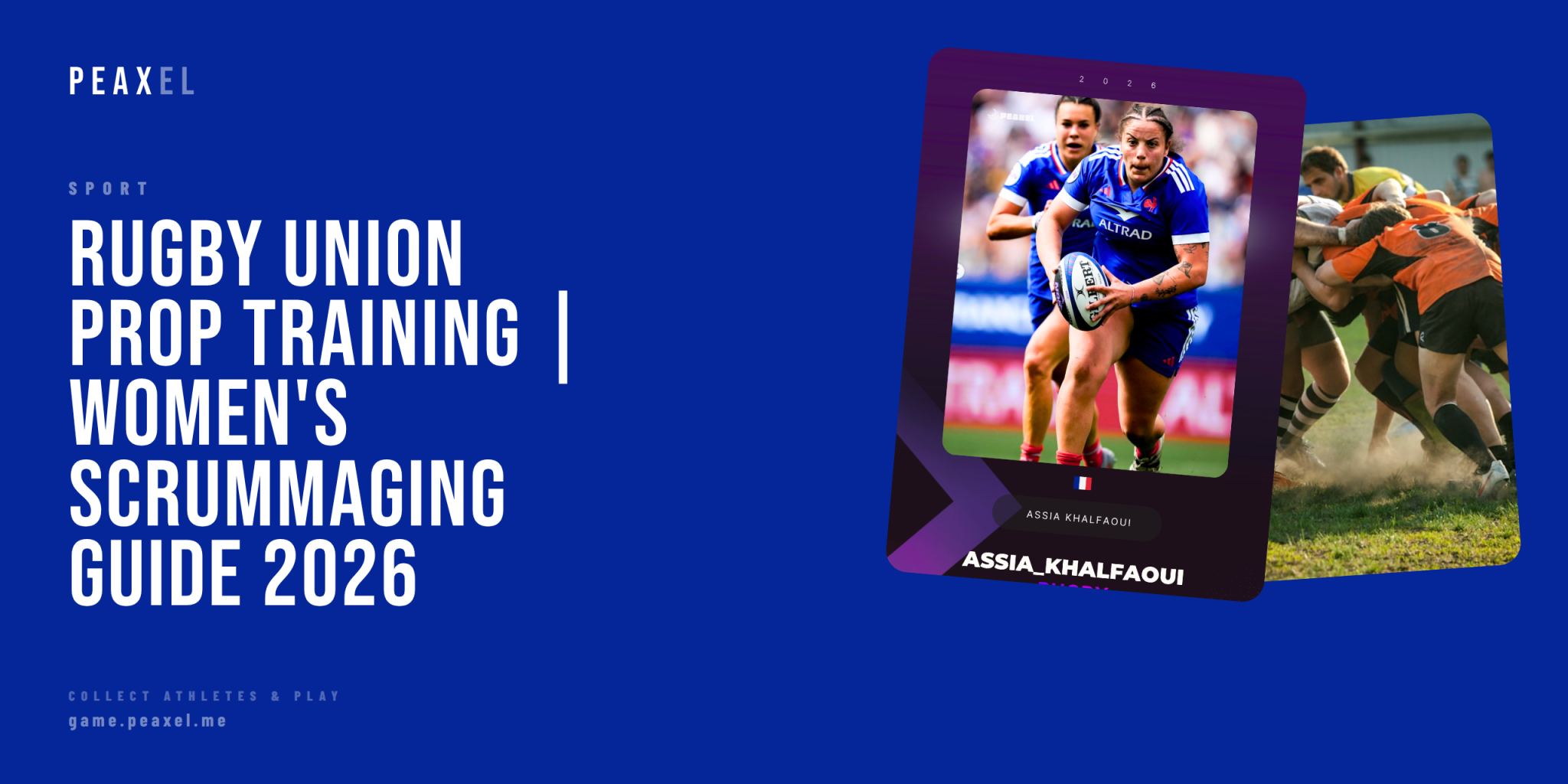
Women’s rugby union has seen explosive growth globally, with the 2025 Rugby World Cup in England showcasing the athleticism and skill of elite female players. Front-row specialists like Assia Khalfaoui demonstrate how modern props combine traditional scrummaging dominance with dynamic ball-carrying ability.
The Weekly Training Structure of an Elite Prop
Professional women’s rugby props typically train between 20 and 30 hours per week during the competitive season. This workload divides across strength sessions, technical scrummaging practice, skills work, and recovery protocols.
Monday sessions often focus on heavy compound lifting—squats, deadlifts, and bench press variations—targeting the maximal strength foundation that scrummaging demands. Props regularly work at 85 to 95 percent of their one-rep maximum during these sessions.
Mid-week training shifts toward scrummaging-specific technique. Live scrums against teammates, machine work, and individual body position drills occupy significant training time. Coaches use video analysis extensively, reviewing angles and timing from previous matches.
Friday sessions typically involve lighter movement preparation and team run-throughs before weekend fixtures. Recovery between training days includes physiotherapy, pool sessions, and targeted mobility work addressing the neck, shoulders, and lower back.
Scrummaging Technique: The Technical Foundation
Effective scrummaging begins with body position. Props must maintain a flat back, engaged core, and optimal hip angle throughout each engagement. The loosehead prop binds differently from the tighthead, creating asymmetric technical demands.
Foot positioning determines power transfer. Props practice driving angles repeatedly, learning to generate forward momentum while resisting lateral pressure from opponents. Weight distribution shifts constantly during a live scrum as both packs compete for dominance.
Binding technique—how a prop grips the hooker and opposing prop—affects both legal compliance and mechanical advantage. Modern coaching emphasizes legal binding positions that still allow effective power transmission through the scrum.
Neck strengthening receives particular attention given the forces involved. Props perform specific exercises targeting the trapezius, sternocleidomastoid, and deep cervical muscles that support the head during engagement.
Strength and Conditioning for Front-Row Forwards
Elite women’s props typically squat between 1.5 and 2 times their body weight for working sets. Deadlift numbers often exceed double bodyweight among international-level players. These strength standards provide the foundation for scrum dominance.
Power development complements maximal strength work. Olympic lifting variations, sled pushes, and weighted jumps develop the explosive capacity props need for effective ball-carrying and defensive tackles.
Core stability training differs from aesthetic-focused programs. Props require anti-rotation and anti-extension strength that transfers to maintaining body position under extreme pressure. Pallof presses, loaded carries, and asymmetric exercises feature prominently.
Conditioning protocols balance aerobic capacity with repeated high-intensity efforts. Matches demand that props recover quickly between scrums and breakdowns while maintaining effectiveness across 80 minutes. Interval training and position-specific game simulations address these demands.
Nutrition and Recovery for Optimal Performance
Front-row forwards maintain higher body mass than other positions, requiring careful attention to nutrition. Props typically consume between 2,500 and 3,500 calories daily during heavy training phases, with protein intake around 1.6 to 2.2 grams per kilogram of body weight.
Carbohydrate periodization matches training demands. Heavy strength days require more carbohydrate intake than recovery sessions. Many elite props work with team nutritionists to optimize timing and macronutrient ratios.
Sleep quality directly affects training adaptation and injury risk. Professional programs emphasize sleep hygiene, with most players targeting eight to nine hours nightly. Some clubs use sleep tracking technology to monitor recovery status.
Soft tissue management includes regular massage, foam rolling, and targeted stretching. The neck and shoulder complex receives particular attention given scrummaging demands. Many props maintain daily mobility routines addressing chronic tightness patterns.
The Mental Demands of Front-Row Play
Scrummaging involves complex psychological elements beyond physical preparation. Props must maintain focus through multiple reset scrums, managing frustration while staying technically precise. Mental lapses lead to penalties or, worse, dangerous collapses.
Communication within the front row requires constant attention. Props share information about opposition patterns, timing cues, and tactical adjustments throughout matches. This verbal coordination happens under extreme physical duress.
Pre-match preparation often includes visualization of key scrum scenarios. Elite props mentally rehearse engagement sequences, potential opposition tricks, and responses to different referee interpretations.
Career Development in Women’s Rugby Union
The pathway to professional women’s rugby has expanded significantly in recent years. Domestic leagues like the French Elite 1 provide full-time opportunities for front-row specialists. Clubs including ASM Clermont Auvergne and Stade Bordelais have developed comprehensive women’s programs.
International rugby offers the highest profile for elite props. World Cup selection represents the pinnacle of achievement, with the 2025 tournament in England attracting global attention to the women’s game.
For fans interested in following rugby union athletes and other sports professionals, Peaxel offers opportunities to discover and support emerging talent. The platform covers numerous sports including rugby union, allowing fans to engage with athletes throughout their careers.