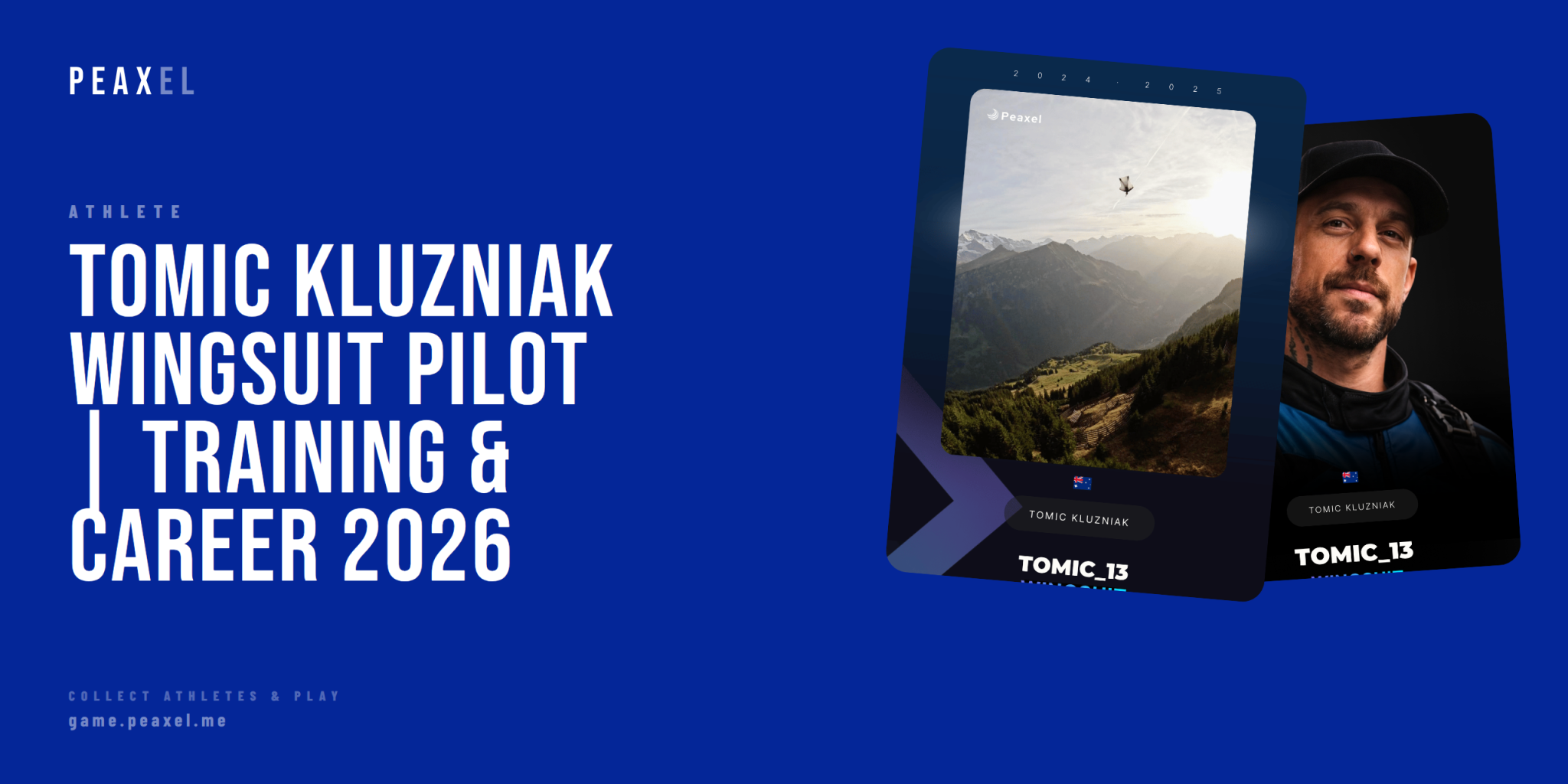
From Australian Skies to Stockholm’s Indoor Tunnels
Tomic Kluzniak represents a rare breed of athlete—one who has mastered the art of human flight both outdoors and within the controlled environment of indoor wind tunnels. Originally from Australia, this wingsuit pilot has built an international career that spans competitive flying, professional instruction, and event organization across multiple continents.
His path into wingsuit flying followed the traditional skydiving progression, but his dedication quickly set him apart. The precision required to navigate the air at speeds exceeding 160 kilometers per hour while maintaining body position demands years of focused training. Tomic embraced this challenge fully, eventually representing his home country at the highest level of international competition.
Competing at the FAI World Championships
In 2022, Tomic earned selection to represent Australia at the 4th FAI World Wingsuit Flying Championships. This competition brings together the world’s elite wingsuit pilots to compete in performance and acrobatic categories. Athletes are judged on distance traveled, speed achieved, and time spent in controlled flight—metrics that require both technical mastery and physical conditioning.
The FAI (Fédération Aéronautique Internationale) governs all air sports globally, and their wingsuit championships represent the pinnacle of competitive flying. Participating athletes must demonstrate consistent performance across multiple jumps while managing the mental pressure of international competition. Tomic’s participation confirmed his standing among the sport’s elite practitioners.
The Physical Demands of Competition Flying
Wingsuit competition requires athletes to maintain precise body positions for extended periods during freefall. Core strength, flexibility, and the ability to make micro-adjustments at high speeds separate podium finishers from the field. Training cycles typically involve hundreds of jumps annually, combined with indoor tunnel time and physical conditioning programs.
Flight Master at Indoor Wingsuit Stockholm
Tomic’s career took a significant turn when he assumed the role of Flight Master at Indoor Wingsuit Stockholm. This position places him at the forefront of wingsuit training innovation. Indoor facilities allow pilots to practice body positions and transitions in a controlled environment, accelerating skill development while reducing the risks associated with outdoor training.
As Flight Master, Tomic works with pilots across the entire skill spectrum. Beginners learn fundamental body positions and air awareness. Advanced flyers refine competition techniques and develop new maneuvers. The indoor environment provides immediate feedback—pilots can feel exactly how body position changes affect their flight path without the time pressure of a real skydive.
The Evolution of Indoor Wingsuit Training
Indoor wingsuit facilities represent a relatively recent development in the sport. Traditional training required expensive aircraft time and favorable weather conditions. Tunnel training removes these barriers, making the sport more accessible while allowing for more intensive practice sessions. A pilot can complete dozens of “flights” in a single tunnel session, compared to perhaps five or six actual skydives in a full day of outdoor jumping.
Tomic’s expertise in this environment has made him a sought-after instructor. His ability to communicate complex aerodynamic concepts in practical terms helps students progress faster and safer. The coaching role also keeps his own skills sharp—teaching forces continuous analysis of technique and movement.
Organizing Events and Building Community
Beyond competition and instruction, Tomic serves as a wingsuit load organizer for major events including the Xmas Boogie at Skydive Spain. These gatherings bring together hundreds of skydivers and wingsuit pilots for intensive flying sessions, coaching clinics, and community building. The load organizer role requires coordinating aircraft manifests, ensuring safety protocols, and creating progression opportunities for participants of varying skill levels.
The Skydive Spain facility near Seville has become a European hub for wingsuit activity. Consistent weather, professional infrastructure, and a welcoming atmosphere attract flyers from across the continent. Tomic’s involvement in these events strengthens connections within the global wingsuit community while providing him opportunities to observe and learn from other high-level pilots.
The Daily Reality of Professional Wingsuit Flying
A typical training week for Tomic involves a combination of indoor tunnel sessions, outdoor jumps when conditions permit, and physical conditioning work. Wingsuit pilots maintain demanding fitness regimens focused on core stability, shoulder mobility, and cardiovascular endurance. The sport taxes the entire body—holding flight positions against wind resistance requires sustained muscular effort.
Mental preparation occupies equal importance. Every wingsuit flight involves calculated risk management. Pilots must assess weather conditions, equipment status, and their own physical and mental readiness before each jump. This disciplined approach to decision-making separates professionals from recreational flyers and contributes to the sport’s improving safety record.
Equipment and Technical Development
Modern wingsuits have evolved significantly from early designs. Contemporary suits offer increased surface area, better arm wing articulation, and improved leg wing profiles. Pilots like Tomic work closely with manufacturers to test new designs and provide feedback that shapes future development. This collaboration between athletes and equipment makers drives continuous improvement in flight performance and safety.
A Global Perspective on Aerial Sports
Tomic’s career trajectory—from Australian competitor to European-based instructor and organizer—reflects the international nature of modern extreme sports. Athletes in wingsuit flying regularly train and compete across multiple countries, building networks that span continents. This global community shares knowledge, supports each other’s development, and collectively advances the sport.
Similar patterns exist across aerial disciplines. Athletes like Domitille Kiger, the French freefly world champion who co-founded the zerOGravity indoor skydiving center in Poitiers, demonstrate how competitors often transition into roles that grow their sports. The combination of competitive experience and teaching ability creates powerful advocates for these disciplines.
Following Tomic’s Journey
For fans interested in wingsuit flying and extreme aerial sports, Peaxel offers a unique way to connect with athletes like Tomic Kluzniak. The platform features profiles of competitors across dozens of disciplines, including many action and extreme sports that rarely receive mainstream coverage.
Tomic’s combination of competitive achievement, professional instruction, and community involvement makes him a compelling figure in wingsuit flying. His work at Indoor Wingsuit Stockholm continues to shape the next generation of pilots, while his event organizing strengthens the bonds within this tight-knit global community. Explore his full profile on Peaxel to follow his ongoing career in one of aviation’s most demanding disciplines.