What Makes Trick Slalom Equipment Different
Trick slalom inline skating is not your typical recreational skating discipline. Born in Japan and now practiced worldwide, it demands equipment specifically engineered for agility, precision, and creative expression. Unlike speed skating or aggressive inline, trick slalom prioritizes fluid cone navigation and stylistic flair over raw power or aerial tricks.
The discipline uses 15 soft rubber cones placed at 150mm intervals—a setup that requires skaters to weave, spin, and perform intricate footwork within extremely tight spaces. This unique format shapes every equipment decision, from boot stiffness to wheel diameter.
The Skate Boot: Foundation of Control
Trick slalom boots must balance responsiveness with ankle support. Most competitive skaters use hardshell boots with carbon fiber or fiberglass construction, providing the rigidity needed for precise weight transfers during complex maneuvers. Soft boots, common in recreational skating, lack the lateral support required for advanced trick execution.
Fit is paramount. Trick slalom demands instant feedback between foot movement and skate response. Many elite skaters heat-mold their liners for a custom fit, eliminating any internal movement that could delay response times during rapid cone transitions.
Boot Closure Systems
Most trick slalom boots feature a combination of laces, buckles, and 45-degree straps. This triple-closure system allows skaters to customize tightness across different zones of the foot—looser around the toes for flexibility, tighter at the ankle for stability.
Frames: The Rockered Advantage
The frame is where trick slalom equipment diverges most dramatically from other inline disciplines. Trick slalom frames are almost universally rockered, meaning the middle wheels sit slightly lower than the front and rear wheels. This configuration reduces the contact patch with the ground, enabling tighter turns and easier spinning.
Common rocker setups include the “banana” rocker (2mm front, flat middle, 2mm rear) and the “full” rocker where each wheel height differs progressively. Frame length typically ranges from 231mm to 243mm—shorter than speed skating frames but longer than aggressive frames.
Frame Materials
Aluminum frames dominate the competitive scene due to their combination of low weight and high stiffness. Some manufacturers offer carbon composite options for even greater weight savings, though these come at premium prices. Frame flex is generally undesirable in trick slalom, as it absorbs energy that should transfer directly into movement.
Wheels: Size and Durometer Matter
Trick slalom wheels typically range from 72mm to 80mm in diameter—smaller than speed skating wheels but larger than aggressive wheels. This size provides a balance between maneuverability and rolling stability. Many skaters run a mixed setup with slightly smaller wheels on rockered positions.
Durometer (hardness) is equally critical. Most trick slalom wheels fall between 84A and 88A. Softer wheels provide better grip on smooth surfaces but wear faster. Harder wheels last longer and slide more easily, which some skaters prefer for specific tricks.
Wheel Profiles
Round-profile wheels are standard in trick slalom, offering consistent contact regardless of lean angle. Flat or square profiles, common in speed skating, create unpredictable handling during the aggressive edging required in cone navigation.
Bearings: Smooth Rotation Essentials
While bearings receive less attention than boots or frames, they significantly impact trick slalom performance. ABEC-7 or ABEC-9 rated bearings are standard, providing the smooth, consistent rotation needed for controlled spins and slides. Some skaters prefer ceramic bearings for their durability and resistance to moisture.
Regular bearing maintenance—cleaning and lubrication—extends lifespan and maintains performance. Dirty or dry bearings create inconsistent rolling resistance, making precise speed control during cone runs more difficult.
The Cone Setup
Trick slalom cones are not ordinary traffic cones. The standard setup uses 15 soft, flexible cones measuring approximately 8cm tall and 5cm at the base. The soft construction prevents injury when skaters inevitably contact cones during practice or competition. Spacing is fixed at 150mm (approximately 6 inches) center to center.
This precise spacing creates the technical challenge that defines trick slalom. Athletes must execute their movements within extremely narrow windows, requiring the specialized equipment described throughout this guide.
How Athletes Like Riki Nakano Approach Equipment
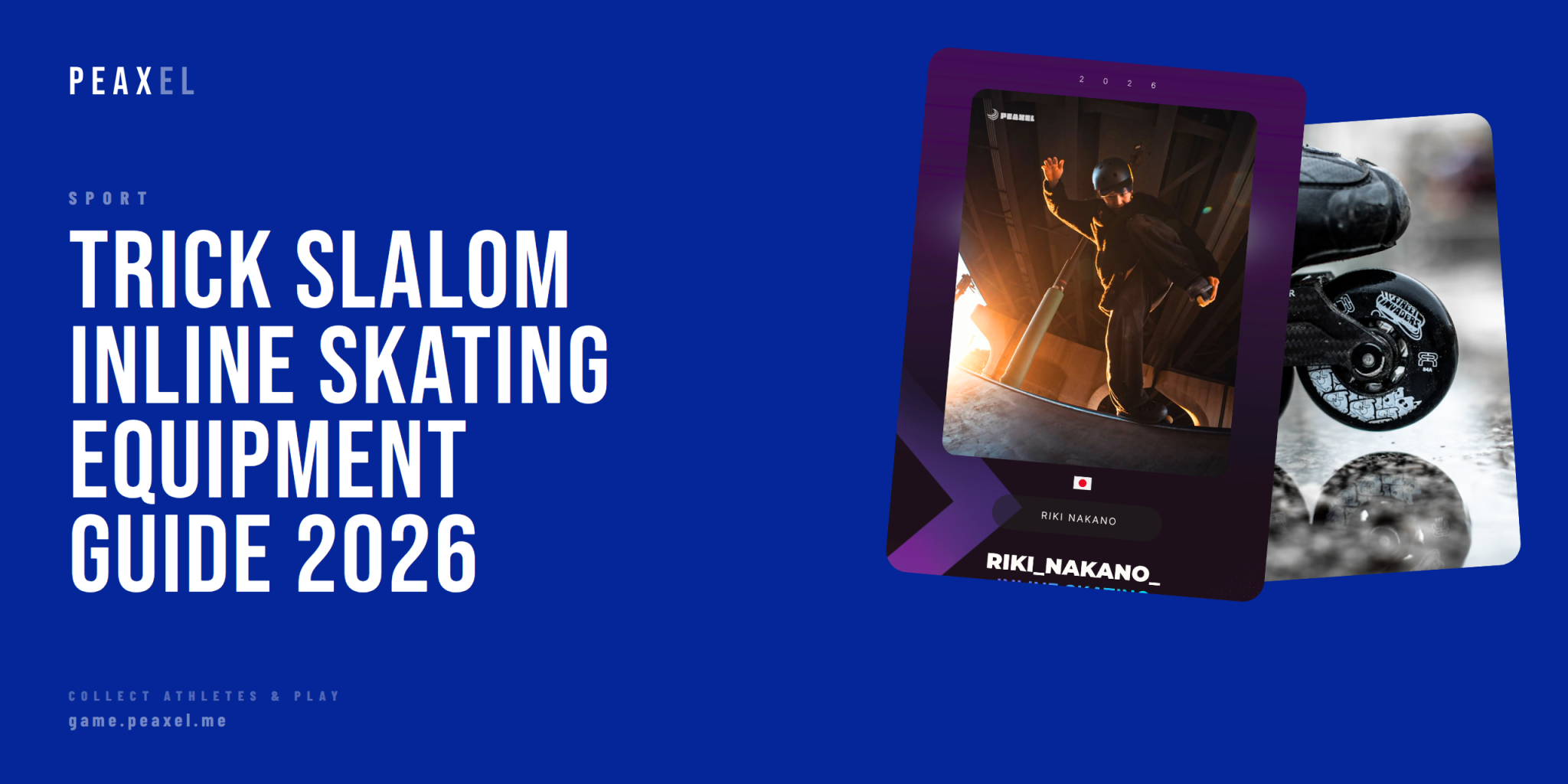
Riki Nakano, the Japanese trick slalom pioneer and official Rollerblade ambassador, exemplifies how equipment choice reflects skating philosophy. Having skated since age five in Tokyo, Nakano developed his style drawing from freestyle slalom, aggressive skating, and urban disciplines—each influencing his gear preferences.
His approach emphasizes creativity over competition-standard setups. While maintaining rockered frames and appropriate wheel sizes, Nakano experiments with configurations that enable his signature movements. This willingness to adapt equipment to personal style rather than strict convention reflects trick slalom’s emphasis on originality. Discover his athlete profile on Peaxel to follow his journey.
Building Your First Trick Slalom Setup
For newcomers to trick slalom, investing in proper equipment from the start prevents frustration and accelerates learning. A complete beginner setup should prioritize a well-fitting hardshell boot, a rockered aluminum frame, and 76mm-80mm wheels in the 85A-87A durometer range.
Avoid the temptation to use recreational skates or aggressive skates for trick slalom training. While technically possible, these setups lack the specific characteristics that make trick slalom movements achievable. The investment in proper equipment pays dividends in faster skill development.
Maintenance Considerations
Trick slalom equipment requires regular attention. Wheel rotation extends lifespan by distributing wear evenly. Frame bolts should be checked periodically as the lateral forces in trick slalom can loosen hardware over time. Boot liners benefit from removal after sessions to dry completely, preventing odor and material degradation.
Where Trick Slalom Fits in Inline Skating
Trick slalom occupies a unique position within inline skating’s broader ecosystem. Unlike speed skating’s pure athleticism or aggressive skating’s aerial focus, trick slalom celebrates style, creativity, and flow. The equipment reflects this philosophy—engineered for expression rather than maximum speed or impact resistance.
The discipline continues growing internationally, with Nakano and others working to establish competitive structures and spread awareness beyond Japan’s borders. Equipment manufacturers have responded with increasingly specialized offerings, making proper gear more accessible than ever. Explore all sports on Peaxel to discover how trick slalom fits alongside other action sports disciplines.
For fans wanting to understand or participate in trick slalom inline skating, equipment knowledge provides essential context. The gear choices athletes make directly shape what movements become possible, linking technical specifications to the creative expression that makes this discipline compelling to watch and practice.