What Is Tumbling Gymnastics?
Tumbling gymnastics is one of the most explosive disciplines in the gymnastics family. Athletes sprint down a 25-meter spring track and execute a series of connected acrobatic elements—flips, twists, and somersaults performed at high speed with extraordinary precision. Unlike artistic gymnastics floor routines, tumbling strips away the dance and music to focus purely on aerial power and technical execution.
The sport falls under the governance of the Fédération Internationale de Gymnastique (FIG) and features prominently at World Championships, European Championships, and the World Games. In 2026, tumbling continues to grow globally as fans discover its unique combination of athleticism and risk.
How Tumbling Scoring Works
Tumbling gymnastics uses the FIG Code of Points, which separates each routine into two primary components: the Difficulty Score (D-score) and the Execution Score (E-score). The final score combines both, rewarding athletes who balance ambitious skills with clean technique.
Difficulty Score (D-Score)
Every tumbling element receives a difficulty value ranging from A (0.1 points) to J (1.0 points) and beyond for the most advanced skills. A tumbling pass typically includes eight elements, and the D-score sums the difficulty values of all performed skills. Athletes strategically build passes to maximize this total while staying within their technical limits.
The most complex elements involve multiple rotations and twists. A double back somersault with a full twist might rate as an E or F element, while a triple somersault with twists can reach G, H, or higher. The rarest skills—like the historic full-full-full—push into territory that few humans can execute.
Execution Score (E-Score)
Judges award execution from a starting value of 10.0, then apply deductions for technical errors. Common deductions include bent knees, separated legs, insufficient height, poor body alignment, and landing errors. A step on landing costs 0.1 points; a fall costs 0.5 or more.
Elite tumblers train obsessively to minimize these deductions. The difference between a world championship podium and a mid-pack finish often comes down to fractions of a point in execution.
The Two-Pass Format
In international competition, athletes perform two tumbling passes. Each pass is scored independently, and the combined total determines final rankings. This format tests both consistency and peak difficulty—athletes must deliver twice under pressure.
Strategic decisions matter. Some athletes load their hardest elements into the first pass to build an early lead. Others save their most difficult skills for the second pass, gambling on a clean finale to overtake rivals.
Why Difficulty Innovation Matters
Tumbling gymnastics rewards athletes who push the boundaries of human capability. When a gymnast debuts a new element in competition, it can shift the entire competitive landscape. Judges must evaluate whether the skill meets FIG recognition standards, and if successful, it enters the Code of Points with an assigned difficulty value.
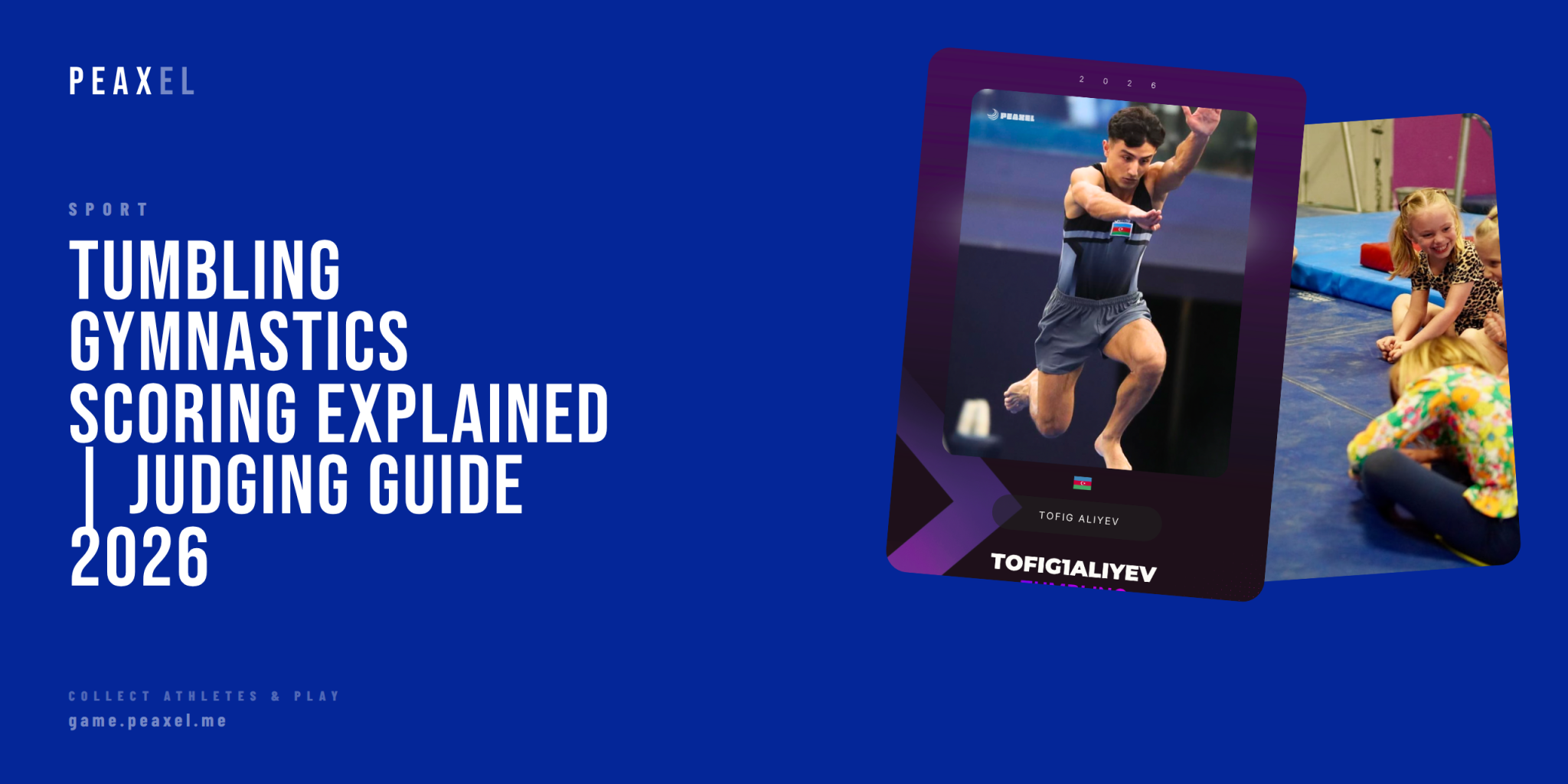
At the 2025 World Games in Chengdu, Tofig Aliyev of Azerbaijan made history by landing the first-ever full-full-full in official competition—a triple back somersault with a full twist in each rotation. This element had never been completed before, instantly establishing Aliyev among the most innovative tumblers in history. You can follow his career and collect his card on Peaxel.
Deductions That Cost Medals
Execution deductions follow strict FIG guidelines. Here are the most common errors and their approximate costs:
Body Position Errors: Bent knees (0.1–0.3), separated legs (0.1–0.3), poor toe point (0.1).
Height and Travel: Insufficient height (0.1–0.3), excessive horizontal travel (0.1–0.3).
Landing Errors: Small step (0.1), large step (0.2), fall (0.5+), landing out of bounds (0.3–0.5).
These deductions accumulate across eight elements per pass. An athlete with spectacular difficulty can lose to a cleaner competitor if execution errors pile up.
What Judges Look For
FIG-certified judges evaluate tumbling from specific positions along the track. They assess each element in real time, noting deductions as they occur. Video review may assist in close calls, but the primary scoring happens live.
Judges specifically watch for:
– Clean takeoffs with full extension
– Precise rotation speed and control
– Tight body positions throughout flight
– Controlled, stuck landings with minimal adjustment
The best tumblers make impossibly difficult skills look effortless. That combination of power and grace defines championship-level performance.
Tumbling vs. Other Gymnastics Disciplines
Tumbling differs significantly from artistic gymnastics floor exercise. Floor routines include dance, music, and performance elements alongside tumbling passes. Tumbling isolates the acrobatic component, demanding maximum difficulty and execution without artistic interpretation.
The spring track also differs from a standard floor. The specialized surface provides additional bounce, enabling higher flights and more rotations than a regular gymnastics floor allows. This equipment difference makes tumbling’s most advanced skills possible.
Following Tumbling in 2026
Major tumbling competitions in 2026 include the FIG Trampoline Gymnastics World Championships and continental championships across Europe, Asia, and the Americas. The sport also features at multi-sport events like the World Games, where it reaches broader audiences.
For fans new to the discipline, understanding scoring transforms the viewing experience. Watching athletes build difficulty while maintaining execution reveals the strategic depth beneath the explosive surface.
Peaxel covers tumbling gymnastics alongside dozens of other sports, letting fans discover athletes, collect digital cards, and engage with the sport in new ways. Explore the full list of sports on Peaxel to find your next favorite discipline.