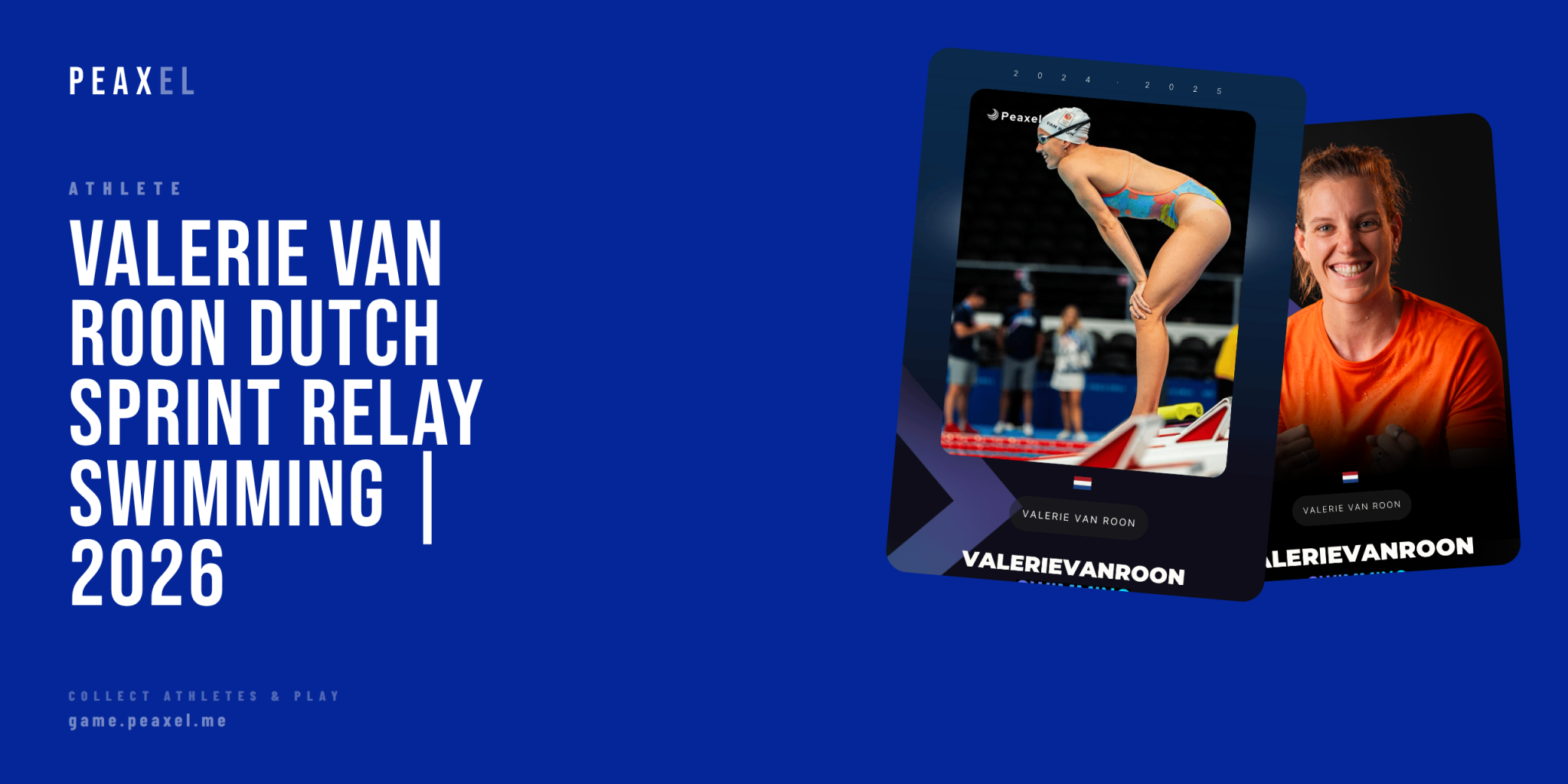
The Rise of Dutch Sprint Relay Swimming
When the Dutch women’s 4x50m freestyle relay team touched the wall at the 2017 European Short Course Championships, the clock read 1:33.91. It was a world record. At the center of that historic swim was Valerie van Roon, a sprinter from Delft who had already been carving out her place in Dutch swimming since her junior days.
That world record was not an isolated moment. It was the culmination of years of investment in Dutch sprint swimming infrastructure, coaching systems, and a relay culture that prizes synchronization and explosive speed over individual glory. The Netherlands, a country better known for speed skating and football, has quietly become a global force in short-course sprint relay swimming.
Valerie van Roon: The Relay Anchor
Born in Delft, Valerie van Roon began her international career at the 2014 European Junior Championships, where she claimed bronze in the 50m freestyle and the mixed freestyle relay. That early taste of relay success would define her trajectory.
By 2017, she was a senior world record holder. At the 2018 FINA World Championships, she contributed to silver medals in both the women’s 4x50m and 4x100m freestyle relays. In 2019, she added European gold in the 4x50m freestyle relay. In 2022, she earned individual bronze at the European Aquatics Championships in the 50m freestyle, proving she could perform under pressure in both relay and solo formats.
Her individual progression continued in 2024, when she set a personal best of 24.62 seconds in the 50m freestyle at the Eindhoven Qualification Meeting, securing her spot for the Paris 2024 Olympics. Yet it is in relay swimming where Valerie’s impact is most deeply felt.
Why Relay Swimming Demands a Different Athlete
Relay swimming is not simply four individual swims stitched together. It requires precise timing on exchanges, the ability to perform under collective pressure, and a willingness to subsume personal ambition for team success. The difference between a world record and a disqualification can be measured in hundredths of a second at the exchange.
Valerie van Roon has built her career on that precision. Her consistency in relay legs, her ability to deliver under pressure, and her seamless exchanges have made her indispensable to Dutch relay squads for nearly a decade.
Short-course relay swimming, in particular, amplifies these demands. The 25-meter pool means more turns, more walls, and more opportunities for small errors to compound. Dutch swimmers have embraced this complexity, turning it into a competitive advantage.
The Global Expansion of Short-Course Sprint Relay Swimming
For decades, relay swimming was dominated by the United States and Australia. But the landscape has shifted. The Netherlands, Sweden, Italy, and Poland have all emerged as contenders in short-course sprint relays, driven by targeted investment in sprint programs and relay-specific training.
The European Short Course Championships have become the proving ground for this expansion. Nations that once struggled to qualify relay teams are now competing for medals. The depth of competition has increased, and world records are falling more frequently.
This global expansion has been fueled by several factors: the professionalization of short-course swimming, the growth of the ISL (International Swimming League), and the increased visibility of relay events on broadcast and streaming platforms. Fans are discovering that relay swimming offers drama, strategy, and unpredictability that individual events sometimes lack.
What Makes the Dutch System Different
The Dutch swimming federation has invested heavily in sprint development pathways, identifying young athletes with explosive speed and nurturing them through age-group relay programs. By the time swimmers like Valerie van Roon reach the senior level, they have years of relay experience embedded in their racing instincts.
Coaching plays a crucial role. Dutch relay coaches focus on exchange timing, underwater dolphin kicks off the walls, and the psychological aspects of racing as a unit. The result is a relay culture where every swimmer understands their role and trusts their teammates implicitly.
This system has produced consistent results. Dutch relay teams have medaled at every major European and World Championship in recent years, and the pipeline of young sprinters suggests the dominance will continue.
The Road to 2028 and Beyond
With the Paris 2024 Olympics behind her, Valerie van Roon’s focus now shifts to the 2028 Los Angeles Games. The 4x100m freestyle relay remains a marquee Olympic event, and the Netherlands will be among the favorites for a medal if current form holds.
Beyond individual ambitions, Valerie’s career represents something larger: the globalization of sprint relay swimming. What was once the preserve of a few dominant nations is now a genuinely international contest. Athletes from smaller swimming nations are pushing the boundaries, and relay world records are under constant threat.
Discover Dutch Swimming on Peaxel
For fans who want to follow the next chapter of Dutch sprint relay swimming, Peaxel offers a way to engage directly with athletes like Valerie van Roon. Build your team, track performances, and compete as an athlete manager in a fantasy sports experience grounded in real athletic achievement. Explore the full roster of sports on Peaxel and discover athletes shaping the future of swimming and beyond.