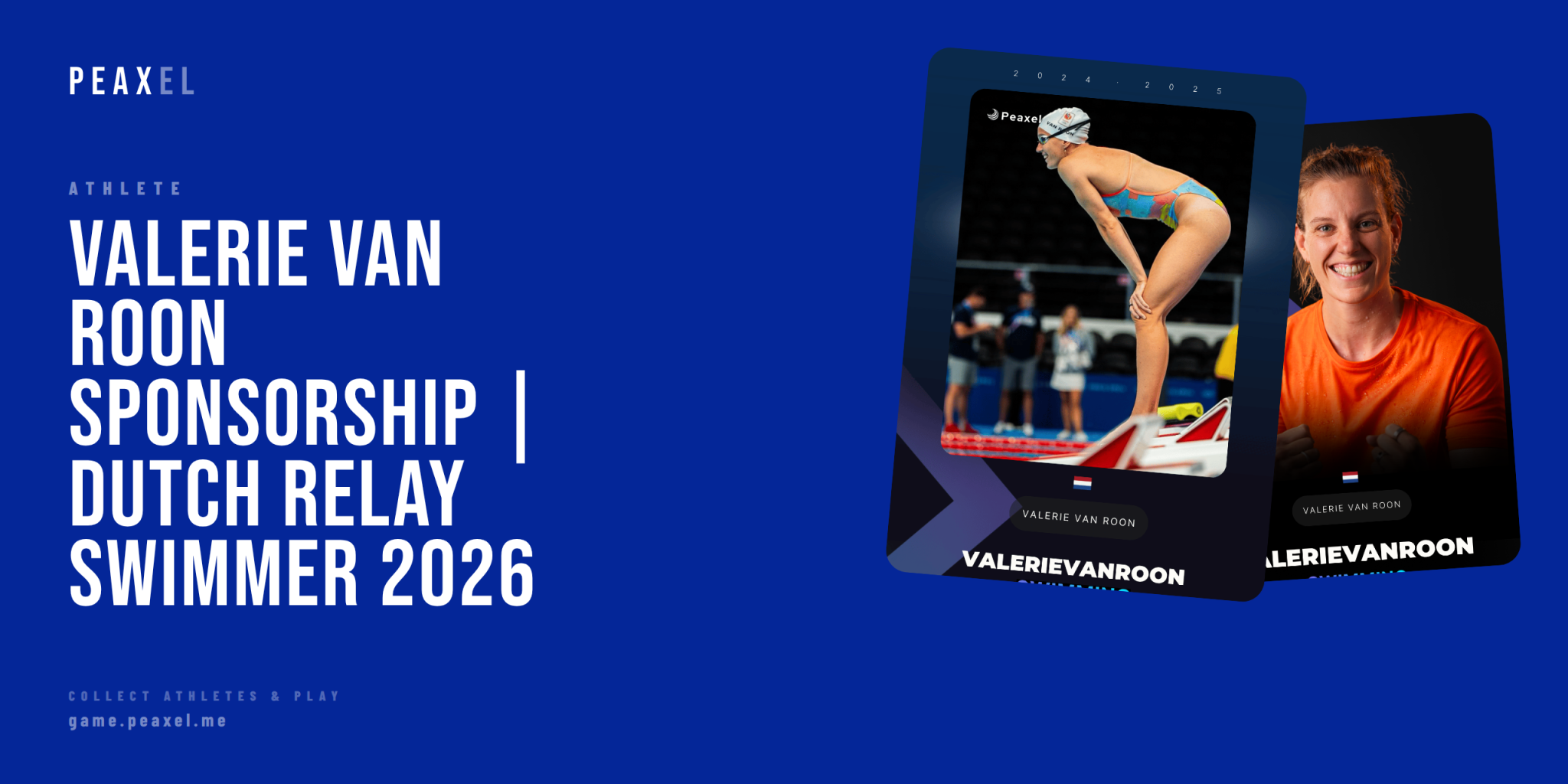
A World Record That Changed Everything
On December 14, 2017, at the European Short Course Championships in Copenhagen, Valerie van Roon touched the wall as part of the Dutch 4×50m freestyle relay team that had just rewritten history. The time of 1:33.91 was a new world record, establishing the Netherlands as the fastest nation in short course sprint relay swimming.
For van Roon, born in Delft and raised within the structured Dutch swimming system, that moment represented more than athletic achievement. It opened doors to the commercial realities that define professional swimming careers in 2026.
The Economics of Dutch Sprint Swimming
Sprint swimming operates differently from distance events. The races are measured in seconds, sometimes hundredths of seconds, and the margin between a medal and anonymity is razor-thin. For athletes like van Roon, this creates both opportunity and pressure in the sponsorship marketplace.
The Dutch swimming federation, KNZB, provides a structured support system for elite athletes. Olympic qualification pathways, training facilities, and coaching infrastructure are largely funded through federation resources. However, the personal sponsorship layer—equipment deals, appearance fees, and brand partnerships—requires individual negotiation and visibility.
Van Roon’s consistency at major championships has made her a reliable partner for brands seeking exposure in European swimming markets. Her 2018 FINA World Championships silver medals in the 4×50m and 4×100m freestyle relays demonstrated she could perform when it mattered most.
Federation Support vs. Personal Sponsorship
The Dutch model balances federation investment with athlete autonomy. Training costs, travel to competitions, and access to sports science resources typically flow through KNZB. But equipment sponsorships, swimwear deals, and personal brand partnerships remain negotiated individually.
This dual structure creates interesting dynamics. Athletes must maintain federation relationships while building personal commercial value. For relay specialists like van Roon, individual visibility becomes crucial—her name must stand apart from the team context to attract sponsors seeking identifiable ambassadors.
Building Value Through Results
Van Roon’s career trajectory illustrates how consistent performance translates to commercial opportunity. Her 2014 European Junior Championships bronze in the 50m freestyle signaled early potential. The 2017 world record elevated her profile significantly.
By 2019, she had added gold in the 4×50m freestyle relay at the European Short Course Championships. The 2022 European Aquatics Championships bronze in the 50m freestyle proved she could compete individually at the continental level, not just as a relay component.
Each result builds negotiating leverage. Sponsors evaluate athletes through performance data, media exposure, and social media engagement. Van Roon’s combination of relay world records and individual medals creates a compelling profile for brands targeting swimming audiences.
The Olympic Qualification Factor
In April 2024, van Roon secured her Paris 2024 Olympic berth with a personal best of 24.62 seconds in the 50m freestyle at the Eindhoven Qualification Meeting. Olympic qualification dramatically increases an athlete’s sponsorship value—the exposure multiplier of the Games far exceeds any other swimming competition.
For sponsors, Olympic athletes represent premium partnerships. The guaranteed media coverage, the emotional narratives surrounding Olympic competition, and the prestige of association with the Games command higher partnership fees. Van Roon’s Olympic status elevated her commercial positioning heading into the 2024-2026 cycle.
The Relay Specialist’s Challenge
Relay swimming presents unique sponsorship challenges. Individual events create clear narratives around single athletes—their times, their medals, their stories. Relay events distribute attention across four swimmers, diluting individual brand value.
Van Roon has navigated this by maintaining strong individual results alongside relay excellence. Her 50m freestyle bronze at the 2022 European Championships demonstrated she could medal alone, not just within a team context. This versatility makes her more attractive to sponsors seeking ambassadors with personal competitive narratives.
The strategic balance between relay contribution and individual achievement defines modern sprint swimming careers. Athletes must deliver for their national teams while building personal brands that attract commercial partners.
Social Media and Athlete Visibility
Modern swimming sponsorship increasingly depends on social media presence. Sponsors evaluate not just competitive results but audience engagement, content quality, and personal brand alignment. Athletes who can translate pool success into digital visibility command higher partnership values.
The transition from pure athlete to content creator reflects broader sports industry trends. Swimming’s brief competition windows—races lasting under 25 seconds for sprinters—require athletes to build year-round engagement through training content, behind-the-scenes access, and lifestyle posts.
What Elite Relay Swimming Teaches About Sports Business
Van Roon’s career demonstrates several principles applicable across professional sports. Consistent performance builds long-term commercial value more reliably than single breakthrough moments. Individual results complement team success in creating sponsorship appeal. Federation support provides stability while personal sponsorship provides upside.
For emerging swimmers, her trajectory offers a template: establish international credentials through junior competition, contribute to relay success for visibility, pursue individual medals for personal brand value, and leverage Olympic qualification for maximum commercial opportunity.
The Dutch swimming system has produced numerous world-class sprinters through this model. Van Roon represents its successful execution—a career built on both athletic excellence and strategic commercial positioning.
Discover the Athlete Behind the Results
Beyond the world records and championship medals, Valerie van Roon continues competing at the highest level of international swimming. Her journey from Delft junior swimmer to Olympic athlete and world record holder illustrates the pathway available to dedicated sprint specialists.
Explore her full profile on Peaxel and discover how fantasy sports gaming connects fans with elite athletes across dozens of disciplines worldwide.