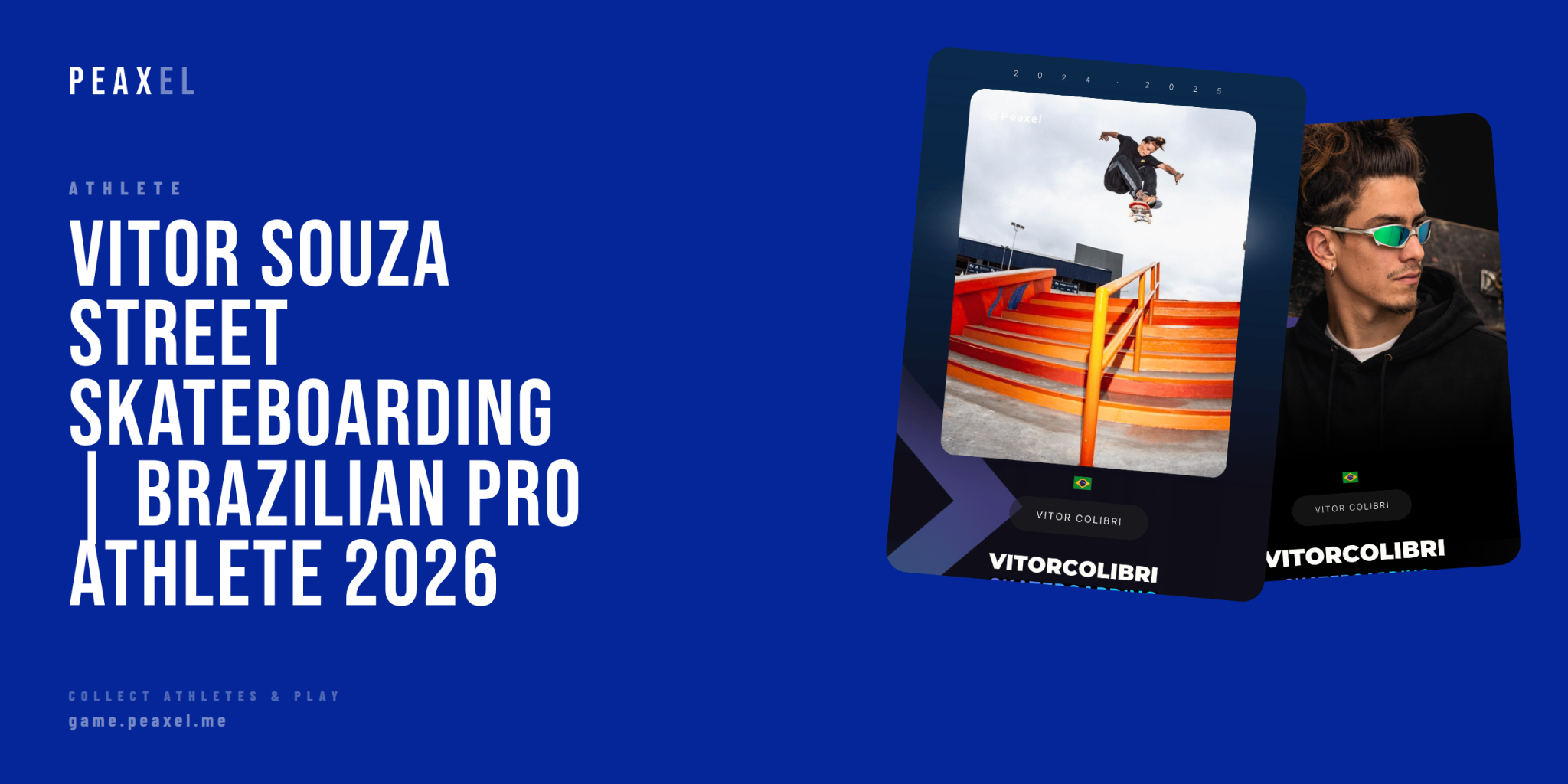
From Rio’s Streets to Global Recognition
In the heart of Rio de Janeiro, where concrete meets creativity, Vitor Souza has carved out a reputation as one of Brazil’s most distinctive street skateboarders. Known widely by his nickname “Vitor Colibri,” the 27-year-old has transformed local skate spots into stages for technical mastery, building an international following through his authentic approach to street skating.
Born on July 19, 1998, Vitor discovered skateboarding early and never looked back. His journey from neighborhood sessions to professional recognition reflects the grassroots spirit that defines street skateboarding culture in South America. Unlike park or vert skating, street skateboarding demands an intimate relationship with urban architecture—stairs, ledges, rails, and gaps become the canvas for self-expression.
Technical Style and Creative Vision
What separates Vitor Colibri from countless other skaters is his technical precision combined with creative line selection. Street skateboarding requires reading urban environments differently than most people—seeing a handrail not as a safety feature but as a potential trick obstacle, viewing a stair set as an opportunity rather than a shortcut.
Praça Duó, one of Rio’s iconic skate spots, has become synonymous with Vitor’s progression. The plaza offers the mix of ledges, manual pads, and flat ground that street skaters need to develop well-rounded technical abilities. His sessions there have been documented extensively through his social media channels, offering aspiring skaters a window into professional-level street skating.
His trick selection emphasizes technical difficulty over raw impact. While some street skaters focus on massive gaps or high-consequence rails, Vitor’s approach leans into flip trick variations, precise grinds, and creative combinations that showcase board control and spatial awareness. This technical foundation has earned him respect within Brazil’s competitive skate community.
Building an Audience Through Authentic Content
Street skateboarding and social media have become inseparable in the modern era. Vitor recognized this shift early, establishing a significant presence across YouTube and TikTok. His content strategy differs from heavily produced skate videos—instead, he shares raw session footage, trick attempts including failures, and glimpses into daily life as a Brazilian street skater.
This authenticity resonates with viewers who appreciate the unfiltered reality of skateboarding. Landing a trick might take dozens or hundreds of attempts. The polished final clip represents only a fraction of the effort required. By showing the process, Vitor connects with both experienced skaters who understand the struggle and newcomers learning what skateboarding actually demands.
His content creation has opened doors beyond personal recognition. Collaborations with fellow Brazilian skaters help promote the broader skateboarding culture in a country with deep roots in the sport. Brazil has produced numerous world-class skateboarders, and content creators like Vitor ensure the next generation stays inspired and connected to the scene.
Street Skateboarding’s Unique Demands
Training as a street skateboarder differs fundamentally from most athletic disciplines. There are no standardized facilities or structured practice schedules. Progress depends on finding spots, often through urban exploration, and dedicating hours to mastering specific obstacles.
Physical preparation for street skating emphasizes impact absorption, ankle stability, and core strength. Falls are inevitable and frequent—the ability to bail safely and recover quickly determines longevity in the sport. Many street skaters cross-train with activities like surfing, which shares balance and body awareness requirements, or strength training to protect joints from repeated impacts.
Mental resilience matters equally. Committing to a trick on a concrete rail with genuine injury potential requires overcoming fear repeatedly. Street skaters develop what the community calls “commitment”—the ability to fully attempt a trick rather than hesitating at the last moment, which often causes worse injuries than full commitment.
Brazil’s Thriving Street Skate Scene
Rio de Janeiro occupies a special place in global skateboarding geography. The city’s architecture, climate, and cultural openness to street skating create ideal conditions for the discipline. Unlike cities where skateboarders face aggressive enforcement, many Rio spots have developed into accepted skate destinations.
The Brazilian skate scene has produced Olympic medalists and X Games champions, creating infrastructure and opportunity for athletes like Vitor. Local competitions, brand sponsorships from Brazilian companies, and media attention have professionalized what began as pure street culture. This ecosystem allows talented skaters to pursue the sport seriously while maintaining connections to its countercultural roots.
Vitor’s role within this ecosystem extends beyond personal achievement. By creating accessible content and skating accessible spots, he contributes to skateboarding’s continued growth in Brazil. Young skaters watching his videos see someone relatable—not a distant professional at a private facility, but someone pushing progression at the same spots they might visit.
Competition and Progression
While street skateboarding originated outside organized competition, events like Street League Skateboarding and the Olympic street discipline have created competitive pathways. Vitor has participated in Brazilian competitions, testing his technical abilities against other top domestic skaters.
Competition street skating differs from video part skating. Athletes have limited time to perform their best tricks on a standardized course. This format rewards consistency and the ability to perform under pressure—skills that require dedicated practice beyond normal session skating. Competitive experience also builds the mental toolkit needed for high-pressure moments.
His competitive involvement, combined with his content creation, positions Vitor within a modern skateboarding career model. Income streams include sponsorships, content monetization, and event participation. This diversified approach reflects how professional skateboarding has evolved from purely sponsor-dependent models.
Looking Forward
Street skateboarding continues evolving technically and culturally. Tricks that seemed impossible a decade ago are now expected at the professional level. This constant progression demands that athletes like Vitor continually push their limits, learning new tricks and refining existing ones.
For fans interested in following Vitor Souza’s journey, his profiles on Peaxel offer another way to engage with his career. The platform features athletes across numerous action sports disciplines, connecting fans with athletes they might not discover through mainstream sports coverage.
As Brazilian skateboarding continues producing world-class talent, athletes like Vitor Colibri represent the bridge between street culture authenticity and professional athletic achievement. His technical approach, content creation, and community involvement embody what modern street skateboarding demands—and what makes it compelling to watch. Explore his athlete profile on Peaxel’s game platform to follow his progression.