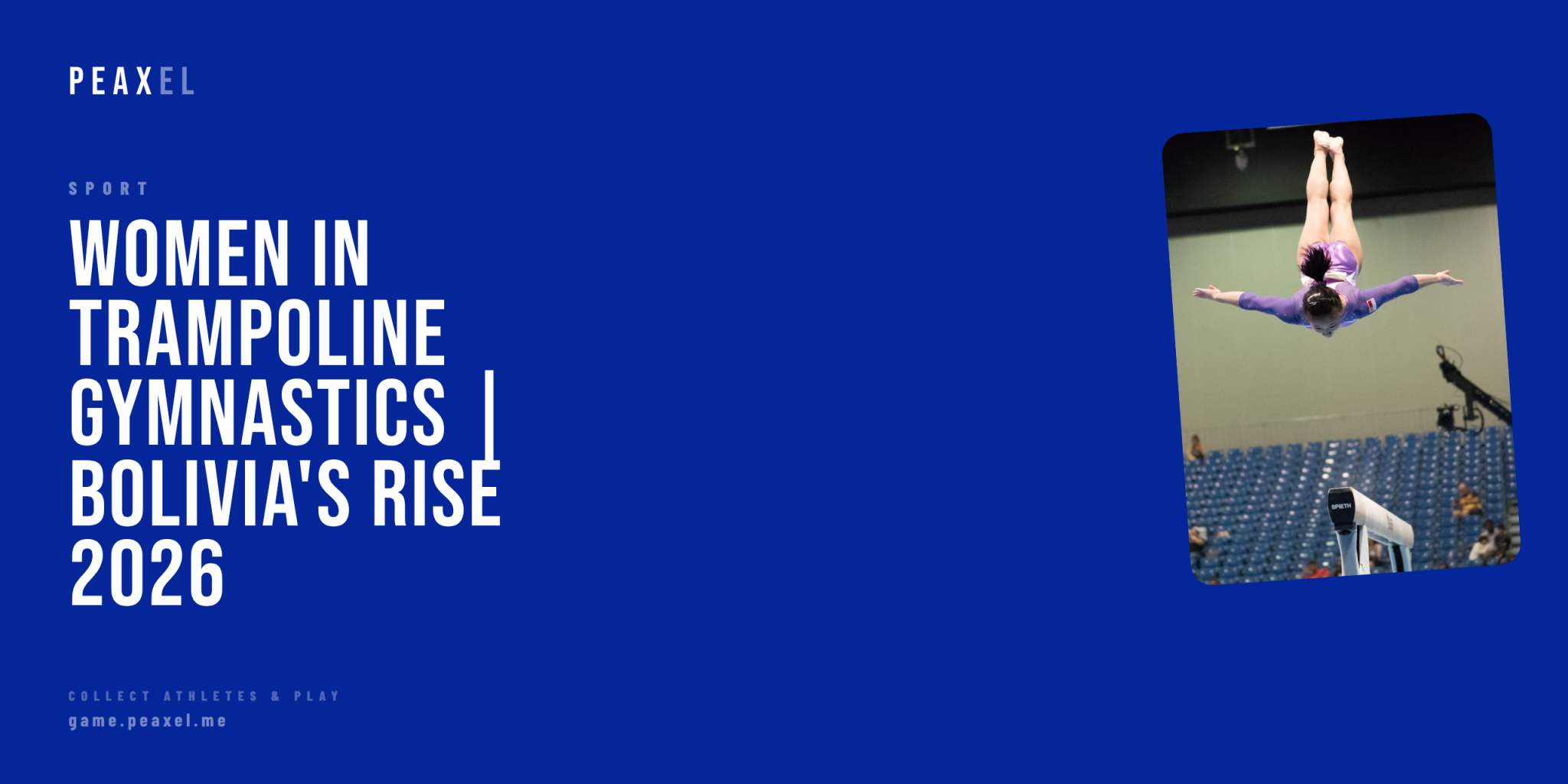
The New Geography of Women’s Trampoline Gymnastics
Trampoline gymnastics has long been dominated by China, Russia, and Belarus. The medal tables at World Championships and Olympic Games tell a consistent story — the same nations, the same training systems, the same pathways to success. But beneath the surface, a quieter revolution is unfolding.
Women from emerging nations are building trampoline programmes where none existed a decade ago. They train without the infrastructure of national centres, compete without the backing of federations with century-long gymnastics traditions, and represent countries that have never produced an Olympic trampolinist. Their stories are rewriting what’s possible in the sport.
At the 2023 Pan American Games in Santiago, Chile, trampoline gymnastics featured athletes from across the Americas. Among them was Maya Quinteros Zaballa, representing Bolivia — a country with no established trampoline infrastructure and no history in the discipline at international level.
Maya Quinteros Zaballa: Bolivia’s Trampoline Pioneer
Maya Quinteros Zaballa competes for the Bolivian national trampoline gymnastics team and represents her country on the FIG international circuit. Based in La Paz, she balances elite sport with academic studies in Digital Design at Universidad Católica Boliviana.
Her participation at the 2023 Pan American Games marked a landmark moment for Bolivian gymnastics. Competing against athletes from nations with established programmes — Brazil, Canada, the United States — she carried the flag for a country still building its trampoline identity.
The challenges are significant. Bolivia has no dedicated trampoline training centre comparable to those in traditional powerhouse nations. Athletes like Maya train with limited equipment, limited coaching depth, and limited competitive opportunities outside of major international events.
Yet she continues to represent Bolivia at the highest level available to her, pushing the boundaries of what Bolivian gymnastics can achieve. Her presence at continental championships signals to younger athletes in La Paz and beyond that the pathway exists — even if it must be carved rather than followed.
The South American Context: Brazil Leading, Others Following
South American trampoline gymnastics has one clear leader: Brazil. Camilla Lopes Gomes became the first Brazilian trampolinist to win gold at a FIG World Cup event in 2023, claiming both individual and synchronized titles in Baku. She competed at the Paris 2024 Olympics, the culmination of a career that has redefined Brazilian expectations in the sport.
Camilla’s success demonstrates what’s possible when infrastructure, coaching, and athlete talent align. She has been named Brazilian Trampoline Gymnast of the Year four times and was ranked world number one in doubles in 2023.
But Brazil’s success also highlights the gap. Most South American nations lack the federation support, training facilities, and competition calendar that Brazilian athletes access. For athletes like Maya Quinteros Zaballa, competing at the same continental events as Brazilian Olympians requires overcoming structural disadvantages at every stage of development.
The Pan American Games as a Development Platform
The Pan American Games serve a critical function for trampoline gymnastics in the Americas. Unlike World Championships or Olympic Games, where qualification is intensely competitive, the Pan Am Games provide a continental platform where athletes from smaller federations can gain international experience.
For Bolivia, the 2023 Pan American Games in Santiago represented visibility. Maya Quinteros Zaballa competing on the same apparatus as world-ranked athletes creates a reference point for future generations. It proves that Bolivian trampoline gymnastics exists, that the federation can field athletes at major events, and that the pathway — however narrow — is open.
What It Takes to Build a Trampoline Programme from Scratch
Establishing trampoline gymnastics in an emerging nation requires more than individual athlete determination. It requires trampolines — specialized equipment costing tens of thousands of dollars. It requires coaches with technical expertise in a discipline where execution is judged to the tenth of a point. It requires competition opportunities, both domestic and international, to develop the race-day experience that separates training from performance.
Most critically, it requires time. Trampoline gymnastics demands years of progressive skill development. Athletes must master basic jumps before advancing to twisting somersaults, and must demonstrate consistent execution before adding difficulty. There are no shortcuts.
Nations like Bolivia are in the early stages of this process. The presence of athletes at continental championships indicates that foundational work is underway. But building medal-winning programmes will require sustained investment over multiple Olympic cycles.
The Role of Individual Athletes as Ambassadors
In emerging nations, individual athletes often carry the weight of entire programmes. Maya Quinteros Zaballa is not simply competing for herself — she is demonstrating to Bolivian sports administrators, potential sponsors, and young athletes that trampoline gymnastics is a viable pursuit.
Her social media presence under the handle mayis.quinteros extends her reach beyond competition venues. By sharing her training, competition journey, and personal life, she builds awareness of the sport in a market where trampoline gymnastics has minimal visibility.
This ambassador role is common across emerging sport nations. Athletes become the face of their disciplines, responsible not only for their own performance but for the sport’s perception and growth in their home countries.
Women Leading the Way Across the Americas
The women’s side of trampoline gymnastics in the Americas features a range of development stages. Brazil leads with Olympic representation and World Cup medals. Canada and the United States field athletes competitive at world level. Mexico and Argentina have established programmes producing continental-level competitors.
Then there are the pioneers — athletes from nations where trampoline gymnastics is still being introduced. These women compete knowing that their results may not match established nations, but that their participation matters for what comes next.
Maya Quinteros Zaballa fits this profile precisely. Her value to Bolivian gymnastics extends beyond any single competition result. She is building a foundation, establishing that Bolivian trampoline gymnastics exists on the international stage.
Discovering Trampoline Athletes from Every Nation
The global nature of trampoline gymnastics creates opportunities for fans to discover athletes from unexpected places. Peaxel tracks trampoline gymnasts from across the world, including emerging nations where the sport is still developing.
You can explore the full range of sports and athletes on the platform through the complete sports list, including profiles of trampoline athletes like Maya Quinteros Zaballa and Camilla Lopes Gomes.
For fans interested in following the growth of gymnastics beyond traditional powerhouses, these emerging nation athletes represent the future — building the sport one competition at a time.