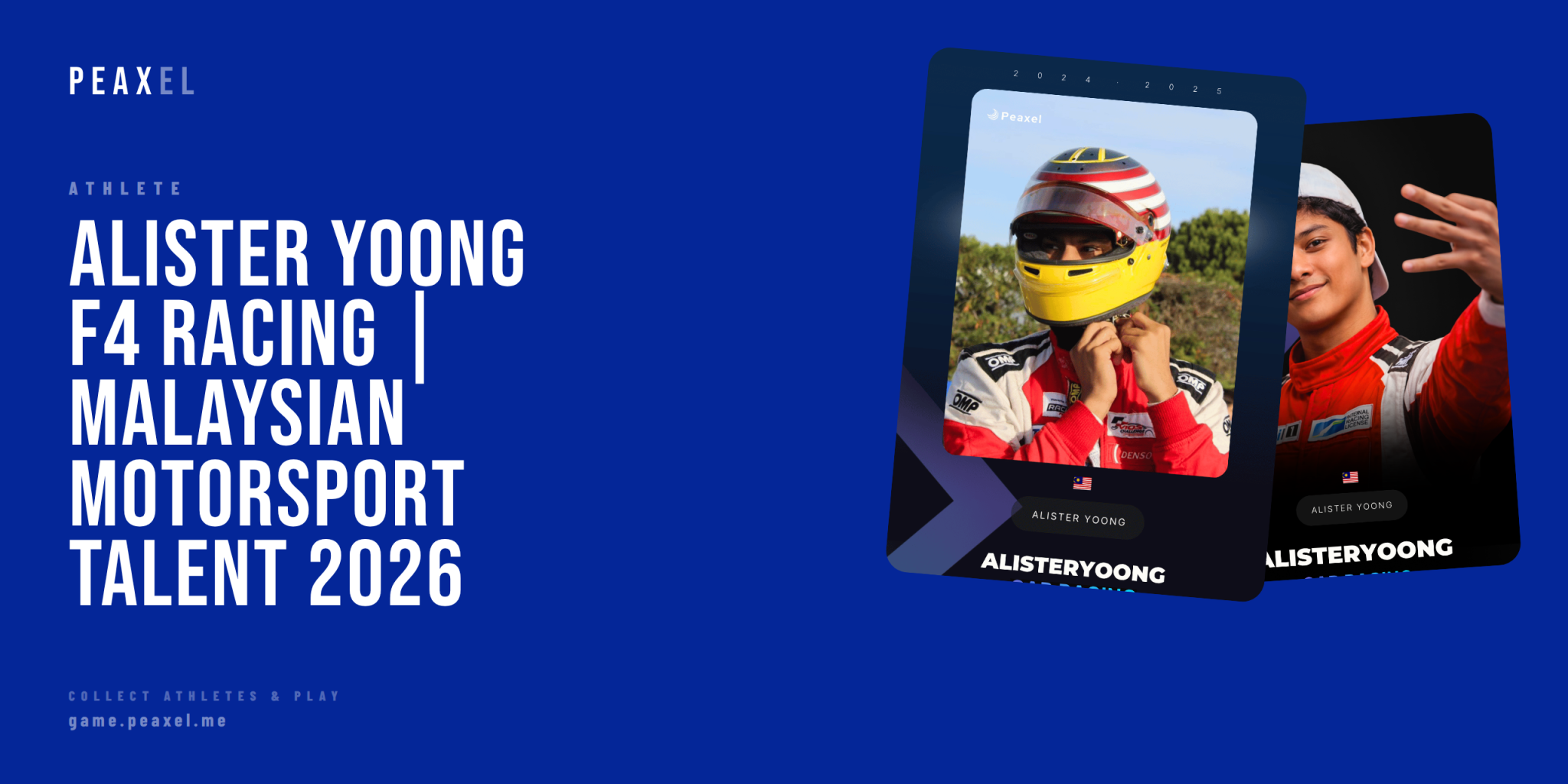
The Weight of a Famous Name
In Malaysian motorsport, the name Yoong carries singular significance. Alex Yoong remains the only driver from Malaysia to have competed in Formula 1, racing for Minardi between 2001 and 2002. Two decades later, his son Alister Yoong is navigating the complex world of junior single-seater racing with the same determination—but an entirely different path.
Born in 2003, Alister started his motorsport journey at 13 years old, considerably later than many of his peers who begin karting as young as six or seven. That late start has never defined him. Instead, it has fueled a relentless drive to accelerate his development and prove that talent, not timing, determines success.
Breaking Through in Formula 4 SEA
Alister made his single-seater debut in the Formula 4 South East Asia Championship during the 2017-2018 season. The F4 SEA series serves as a crucial development platform for young Asian drivers, providing competitive racing experience on circuits across Malaysia, Thailand, and the Philippines.
By 2019, Alister had secured his first race win—a breakthrough moment that validated years of compressed learning. That victory wasn’t just about crossing the finish line first. It represented proof that a driver who started late could compete with and beat rivals who had been racing since childhood.
The F4 pathway is notoriously demanding. Drivers must master car setup, tire management, race craft, and the mental pressure of wheel-to-wheel competition simultaneously. For Alister, each race weekend became an intensive education in professional motorsport.
European Ambitions and Strategic Pivots
In 2020, Alister publicly stated his ambition to compete in Europe—the traditional heartland of single-seater racing development. His strategy was clear: win championships in Asia first, build credentials that would attract European team attention, and secure the sponsorship necessary to fund an international campaign.
That plan reflects the economic reality of junior motorsport. Without factory backing or substantial personal funding, young drivers must prove their worth repeatedly before opportunities materialize. Alister understood this equation and set about executing it methodically.
The COVID-19 pandemic disrupted racing calendars worldwide, forcing many young drivers to recalibrate their career timelines. Rather than wait, Alister adapted.
Touring Cars: A Different Kind of Education
By 2022, Alister had expanded his racing portfolio by entering the Toyota GAZOO Racing Festival and Vios Challenge Season 5. Competing in the Super Sporting Class, he transitioned from open-wheel racing to tin-top competition—a shift that demanded entirely different skills.
Touring car racing emphasizes close-quarters combat, contact management, and racecraft in ways that single-seaters do not. Cars can touch, bump, and jostle without immediate retirement. The strategic calculus changes completely.
For a young driver still building his toolkit, this cross-discipline experience proved invaluable. Alister aimed for consistent top-five finishes while learning the nuances of front-wheel-drive racing dynamics. His adaptability impressed observers who noted his ability to extract performance from unfamiliar machinery.
Carving an Independent Identity
Being the son of a Formula 1 driver creates both opportunities and burdens. Doors may open more easily, but expectations arrive attached. Every result gets measured against an impossible benchmark. Every setback invites unfavorable comparisons.
Alister has approached this challenge with notable maturity. Rather than trading exclusively on his father’s name, he has emphasized building his own reputation through results. His social media presence focuses on his racing rather than his lineage. His interviews center on his development rather than his heritage.
This approach reflects a broader trend among second-generation racing drivers. The most successful—from Max Verstappen to Mick Schumacher—have ultimately been judged on their own merits, not their parentage. Alister appears determined to follow that template.
The Southeast Asian Racing Ecosystem
Malaysian motorsport exists within a broader Southeast Asian racing ecosystem that has grown significantly over the past decade. The region now hosts multiple junior formulae, touring car championships, and endurance racing series that provide genuine career pathways.
The Sepang International Circuit, which hosted Formula 1 from 1999 to 2017, remains a world-class facility that anchors regional motorsport. Young Malaysian drivers benefit from this infrastructure, gaining experience on a track that has challenged the world’s best.
Alister’s career trajectory mirrors that of other talented Asian drivers seeking international recognition. The path typically runs through regional championships, then to European or Japanese formulae, before—hopefully—reaching the pinnacle series. It’s a long road with many exits, but Alister continues to progress.
Comparison: The Next Generation of Single-Seater Talent
Alister’s journey parallels that of other young drivers navigating the junior formula landscape. Dario Cabanelas, a Swiss driver with Spanish and Ukrainian heritage, has taken a different but equally valid path—moving from karting success to French F4 before joining the Eurocup-3 series with MP Motorsport. Both drivers represent the global nature of modern junior motorsport, where talent can emerge from any nation with the right combination of skill, opportunity, and persistence.
What Comes Next
At 22 years old in 2026, Alister Yoong stands at a pivotal career juncture. The junior formula window doesn’t stay open indefinitely. Drivers must demonstrate upward momentum or risk being overtaken by younger competitors with fresher sponsorship appeal.
His combination of F4 race wins and touring car experience provides a versatile foundation. Whether his future lies in single-seaters, GT racing, or prototype competition remains to be determined. What’s certain is that he will pursue it on his own terms.
For motorsport fans interested in following emerging talent before they reach mainstream attention, Alister Yoong represents exactly the kind of athlete worth tracking. His story is still being written, and platforms like Peaxel provide opportunities to engage with his career as it unfolds. You can explore his profile at Peaxel’s athlete game and discover more racing talent across all sports on the platform.