Why Badminton Deserves Your Attention
Badminton is often underestimated by casual sports viewers, yet it holds the title of the fastest racket sport on Earth. Professional players routinely smash shuttlecocks at speeds exceeding 400 kilometers per hour, making rallies explosive and unpredictable. With over 220 million people playing badminton worldwide, it ranks among the most participated sports globally.
The sport combines lightning reflexes, tactical depth, and remarkable endurance. Matches can swing in seconds, and the best players make the court feel impossibly small with their movement and shot placement. For new fans, understanding the basics unlocks a deeply rewarding viewing experience.
The Basics: Court, Equipment, and Format
A badminton court measures 13.4 meters long and 6.1 meters wide for doubles, slightly narrower for singles. The net stands at 1.55 meters at the edges and 1.524 meters at the center. Players use lightweight rackets, typically weighing between 70 and 95 grams, to strike a feathered or synthetic shuttlecock.
Matches are played as best-of-three games, with each game going to 21 points. A player must win by at least two points, with a cap at 30-29 if the score reaches 29-all. Points are scored on every rally regardless of who served, a system called rally scoring.
Singles vs Doubles
Singles badminton is a grueling test of fitness and court coverage. One player must defend and attack across the entire court, making stamina and shot accuracy paramount. Doubles, by contrast, emphasizes coordination, quick exchanges at the net, and devastating combined attacks.
Mixed doubles adds another layer, pairing one male and one female player per side. The tactics shift significantly, with positioning and rotation becoming critical elements of strategy.
Scoring and Serving Rules
Every rally ends with a point for one side. The serving side scores if they win the rally; otherwise, the point and serve go to the opponent. In singles, the server stands on the right if their score is even, left if odd. Doubles follows a rotation system based on the score.
The serve must be hit underarm, below the server’s waist, and travel diagonally into the opponent’s service court. Foot faults and overhand serves result in immediate point loss. These rules keep the serve from becoming an overwhelming weapon, ensuring rallies develop.
Key Shots Every Fan Should Know
The smash is badminton’s signature attacking shot, a steep downward strike aimed to end the rally. The drop shot deceives opponents by softly placing the shuttle just over the net. The clear sends the shuttle high and deep, resetting the rally and buying recovery time.
Net play separates elite players from good ones. Tight net kills punish weak returns, while delicate net drops force opponents to lift the shuttle, creating smash opportunities. Watching how players manipulate pace and angle reveals the sport’s tactical richness.
The BWF World Tour Structure
The Badminton World Federation (BWF) organizes the professional circuit. The World Tour consists of tiered events: Super 1000, Super 750, Super 500, and Super 300 tournaments. Higher tiers offer more ranking points and prize money, attracting the world’s best players.
The season culminates in the BWF World Tour Finals, where the top eight players or pairs in each discipline compete. Beyond the tour, the World Championships and Olympic Games represent the pinnacle of individual achievement in badminton.
Major Tournaments to Watch
The All England Open, held annually since 1899, remains the sport’s most prestigious event outside the Olympics. The Indonesia Open and China Open draw massive crowds and feature intense competition. Thomas Cup (men’s team) and Uber Cup (women’s team) showcase national pride in a team format.
Global Powerhouses and Emerging Nations
China, Indonesia, Japan, South Korea, and Denmark have historically dominated international badminton. These nations produce Olympic champions, world title holders, and deep talent pools across all disciplines. India and Malaysia have also produced individual stars who compete at the highest level.
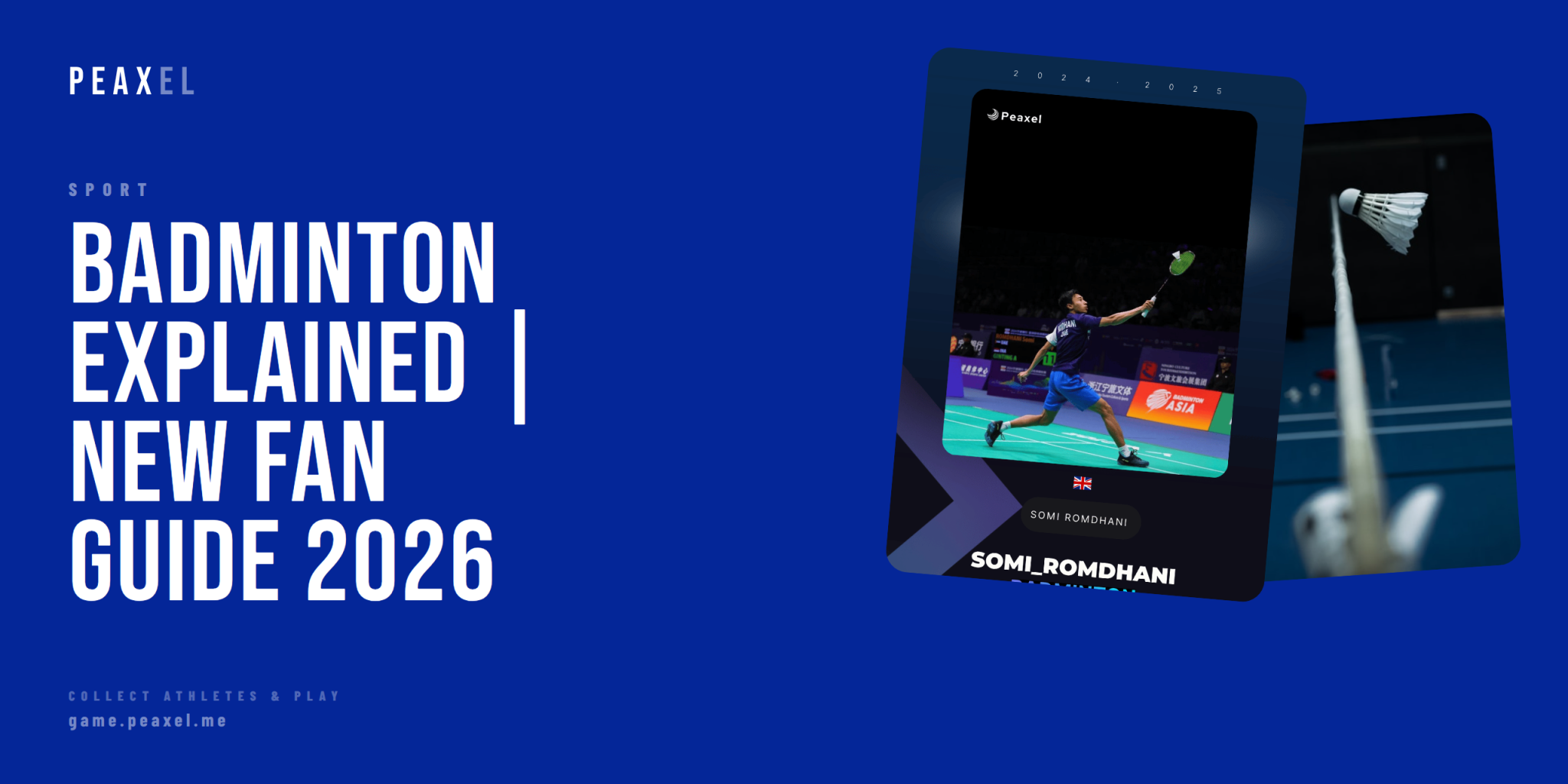
Emerging nations are making inroads. The United Arab Emirates, represented by players like Somi Romdhani, is developing its badminton infrastructure. Romdhani, ranked 133 in men’s singles, competes in events like the Asia Championships and Abu Dhabi Masters, representing the growing global footprint of the sport.
What Makes Badminton Unique
The shuttlecock’s aerodynamics create a sport unlike any other racket game. It decelerates rapidly after being struck, meaning players must anticipate trajectory rather than simply react to speed. This physics quirk rewards deception, disguise, and timing over pure power.
Rallies demand both explosive bursts and sustained movement. Elite players cover the court with astonishing efficiency, often logging several kilometers during a single match. The combination of speed, finesse, and endurance makes badminton physically demanding at the professional level.
How to Start Watching
Live coverage of BWF World Tour events is available through official broadcasts and streaming platforms. Highlights on BWF’s YouTube channel offer accessible entry points for new fans. Focus on following one or two players through a tournament to understand match narratives and rivalries.
Pay attention to the scoreboard dynamics. In badminton, momentum shifts are common, and a player trailing 15-20 can still mount a comeback. The interval at 11 points in each game provides a natural break to assess tactics and player condition.
Badminton on Peaxel
For fans wanting to engage beyond watching, Peaxel offers a fantasy sports platform featuring badminton athletes. Collect digital athlete cards, build teams, and compete as a virtual manager. Discover the full roster of sports available on Peaxel’s sport directory.
Whether you’re drawn to the explosive smashes or the subtle net exchanges, badminton rewards attentive viewing. Start with a major tournament, pick a player to follow, and experience why millions around the world consider it the ultimate racket sport.