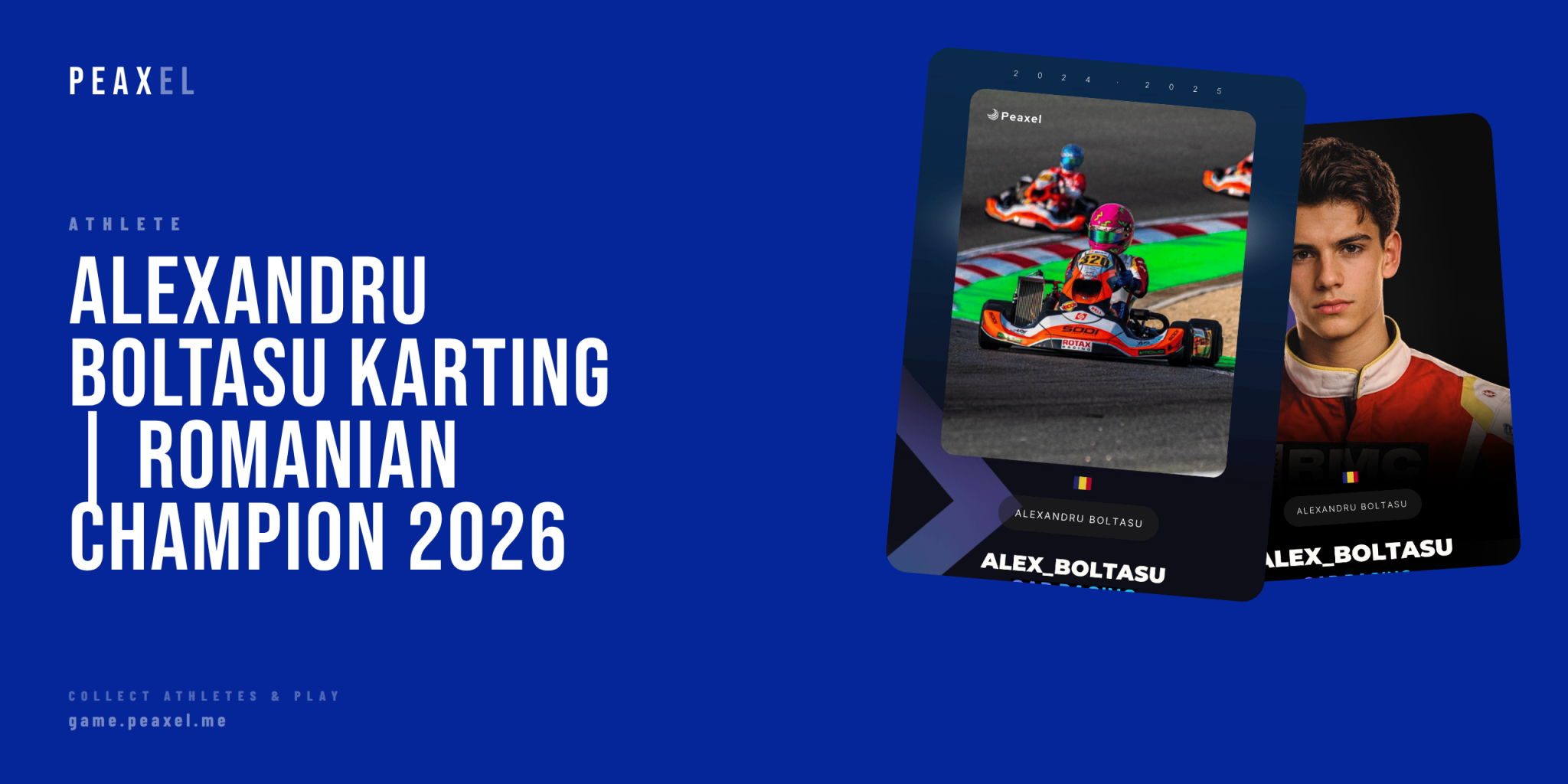
From Zero to National Champion in Three Years
Alexandru Boltasu did not grow up in a motorsport family. He did not start karting at age five like many of his competitors. When he first sat in a kart in 2020, he was already 13 years old—late by any professional standard. Yet within three years, he had claimed the Romanian national karting championship.
That 2023 title with Toka Racing saw Boltasu finish first out of 30 drivers. It was the culmination of a rapid ascent that defied conventional wisdom about when racing careers must begin. His progression from the Mini category to beating senior drivers demonstrated raw talent that coaching and seat time alone cannot manufacture.
The Path Through Romanian Karting
Boltasu’s journey followed an accelerated timeline. In 2020, he entered the Mini category as a complete novice. By 2021, he had advanced to Junior competition, securing third place in two separate national championships. These results attracted attention from Toka Racing, one of Romania’s established karting operations.
The 2022 season presented the real test. Boltasu moved into senior competition, racing against drivers with years more experience. Rather than dominate immediately, he focused on racecraft—learning how to position himself in traffic, manage tire degradation across long stints, and extract maximum performance under pressure.
That education paid off in 2023. With Toka Racing’s support, Alexandru Boltasu won the national championship outright. The same year, he made his auto racing debut, competing in two events and finishing on the podium in one of them.
International Breakthrough: Rotax Grand Finals 2024
The Rotax Max Challenge Grand Finals represent karting’s most prestigious international competition. Drivers qualify through national championships worldwide, then compete against the global elite at a single venue. In 2024, Boltasu earned his place and finished seventh overall.
That result against the world’s best junior karters confirmed what Romanian motorsport observers already knew: Boltasu possesses pace that translates beyond domestic competition. The Grand Finals field included factory-supported drivers from Italy, France, and the Netherlands—nations with far deeper karting infrastructures than Romania.
His 2024 campaign extended beyond the Grand Finals. Boltasu claimed third place in the Swedish National Championship, competing away from home circuits against Scandinavian drivers on unfamiliar tracks. He also finished fourth in the Romanian Open Cup’s KZ2 category, the shifter kart class that serves as the final step before car racing.
Why Karting Success Matters for Car Racing
Every current Formula 1 driver came through karting. The discipline teaches car control, racecraft, and competitive instincts in ways that simulators and junior formulas cannot replicate. Boltasu’s karting results position him for the transition to single-seaters that defines professional motorsport pathways.
His KZ2 experience is particularly relevant. Shifter karts feature sequential gearboxes and reach speeds over 150 km/h. Driving them requires managing power delivery, heel-toe downshifts, and chassis setup—skills that transfer directly to formula cars. Boltasu’s fourth-place Romanian Open Cup finish showed he can adapt to more complex machinery.
Other young drivers on Peaxel have followed similar paths. Alister Yoong, the Malaysian driver whose father competed in Formula 1, also built his foundation through Asian karting before moving to single-seaters and touring cars.
Training and Development at 17
At 17, Boltasu balances racing commitments with the physical and mental development required for professional motorsport. Karting demands exceptional fitness—drivers experience lateral forces exceeding 2G through corners while managing karts that weigh under 180 kilograms fully fueled.
His training regimen includes neck strengthening exercises critical for car racing, cardiovascular conditioning for heat management during long sessions, and reaction time drills that translate to starts and overtaking moves. The cognitive load of racing—processing track conditions, tire wear, competitor positions, and team strategy simultaneously—requires focused mental preparation.
Toka Racing’s infrastructure provides access to data analysis tools, coaching staff, and testing opportunities that accelerate development. Romanian motorsport lacks the factory karting programs found in Italy or Germany, making team support even more critical for drivers seeking international careers.
Romania’s Motorsport Landscape
Romania does not feature prominently in global motorsport history. The country lacks permanent racing circuits meeting FIA Grade 1 standards, and domestic championships draw limited international attention. This makes Boltasu’s international results more significant—he has succeeded despite infrastructure disadvantages.
His Swedish championship podium required traveling to Scandinavia, adapting to different track surfaces, and competing without the home-crowd advantage Romanian events provide. These experiences build the adaptability essential for drivers pursuing European or global championships.
The path forward likely leads through European Formula 4 championships, where costs remain manageable compared to Formula 3 or Formula 2. Boltasu’s karting results provide the credibility teams require when evaluating young driver applications.
What Comes Next
The 2026 season presents opportunities for Boltasu to cement his reputation before transitioning to cars. Another strong Rotax Grand Finals performance would reinforce his status among the world’s elite junior karters. Continued KZ2 competition develops the technical skills car racing demands.
His timeline remains aggressive but realistic. Drivers typically move from karting to junior formulas between ages 15 and 18. Boltasu’s late start means he must maximize each season, but his results suggest the pace exists to compete at higher levels.
For fans tracking emerging motorsport talent, Alexandru Boltasu represents exactly the profile worth following: verified results against international competition, a clear development trajectory, and the determination to overcome infrastructure limitations. You can follow his journey and add him to your team on Peaxel, where fans collect athlete cards and compete as managers of rising sports talents across dozens of disciplines.