What Makes BMX Freestyle Park Equipment Different
BMX freestyle park is not your neighborhood bike ride. The discipline demands equipment specifically engineered to withstand massive aerial tricks, hard concrete landings, and the relentless abuse of skatepark sessions. Every component—from frame geometry to tire pressure—serves a precise purpose in helping riders execute 720 spins, backflips, and technical combinations.
Since BMX freestyle park became an Olympic sport at Tokyo 2020, equipment standards have evolved rapidly. Professional riders now use bikes that balance lightweight construction with reinforced durability, allowing for both height and control during competition runs. Understanding this gear reveals why the sport looks so effortless in the hands of elite athletes.
The BMX Freestyle Park Frame
The frame is the foundation of every freestyle park bike. Professional riders almost universally choose chromoly steel frames, which offer the perfect combination of strength and flex. Unlike aluminum, chromoly absorbs impact vibrations rather than transferring them directly to the rider’s body.
Frame geometry in park bikes features a shorter rear end compared to street BMX setups. This compact design makes the bike more responsive for spinning tricks and aerial maneuvers. Top tube lengths typically range from 20.5 to 21 inches for adult riders, though personal preference and riding style influence the final choice.
Head Tube Angle and Its Impact
The head tube angle determines how the bike handles transitions and landings. Park bikes generally feature steeper angles around 75 degrees, which provides quick steering response essential for navigating tight bowl sections and linking tricks through a competition run.
Wheels and Tires for Park Riding
BMX freestyle park bikes use 20-inch wheels as the universal standard. This wheel size has defined the sport since its origins, offering the ideal balance between maneuverability and stability. Double-wall rims with 36 spokes provide the strength needed to handle repeated impacts from drops and failed landing attempts.
Tire selection varies based on surface conditions. Indoor parks with smooth concrete often see riders using slicker tires with minimal tread for reduced rolling resistance. Outdoor parks with rougher surfaces require more aggressive tread patterns that grip through unpredictable textures.
The Gyro Brake System Explained
One of the most distinctive features of BMX freestyle bikes is the gyro brake system, also called a detangler. This mechanism allows the handlebars to spin 360 degrees continuously without tangling the brake cable. For park riders who incorporate barspins and tailwhips into their runs, this system is essential.
The gyro consists of upper and lower cables connected through a bearing-mounted plate at the headset. When the bars rotate, the cables separate and reconnect seamlessly, maintaining brake function regardless of handlebar position. Some riders remove brakes entirely for weight savings and cleaner aesthetics, though competition rules vary by event.
Handlebars and Controls
Park riders favor handlebars with a rise between 8.5 and 9.5 inches, allowing comfortable body positioning during aerial tricks. Bar width typically matches shoulder width, though some riders prefer slightly narrower setups for faster spins.
Grips use soft rubber compounds that absorb vibration while maintaining grip during sweaty sessions. Flangeless designs have become popular, eliminating the raised edge that can cause blisters during extended riding. Most professional setups include bar ends to protect hands during crashes and prevent the handlebars from snagging on clothing.
Cranks and Drivetrain
Three-piece chromoly cranks dominate the professional scene, offering superior strength over one-piece alternatives. Crank arm length typically falls between 165mm and 175mm, with shorter arms providing more ground clearance for grinding and longer arms offering better leverage for pumping through transitions.
Sprocket and gear ratios in park riding favor moderate setups around 25 teeth front to 9 teeth rear. This ratio provides enough speed for generating amplitude while remaining manageable during technical sections where precise control matters more than raw velocity.
Protective Gear Requirements
Competition rules mandate full-face helmets for BMX freestyle park events at the Olympic and World Championship level. These helmets combine the protection of motocross helmets with lighter weight construction suitable for action sports. Certified helmets must meet CPSC, ASTM, or equivalent safety standards.
Beyond helmets, professional riders wear knee pads, shin guards, and often elbow protection during practice sessions. Competition runs may see reduced padding for mobility, but the training environment demands comprehensive protection given the repetitive nature of learning new tricks.
How Elite Riders Configure Their Setups
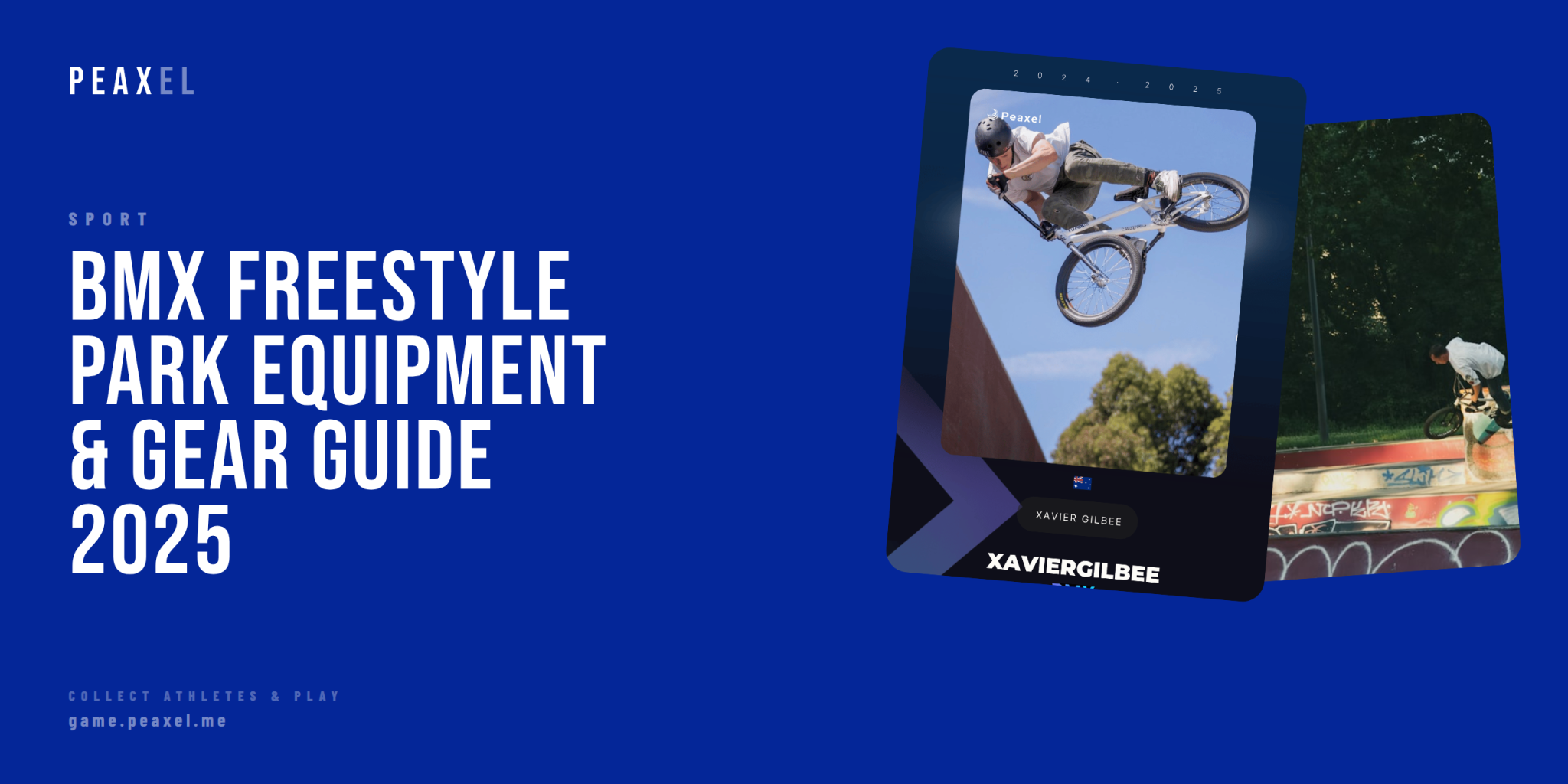
Australian rider Xavier Gilbee exemplifies the new generation of BMX freestyle park athletes pushing equipment limits. His 2026 Australian National Championship win featured runs with 720 whips and triple whips—tricks that demand absolute confidence in equipment reliability. Riders at this level work closely with sponsors to customize every component.
Fellow Australian Dylan Devitt has gained recognition for landing the world’s first 360 nothing front bike flip, a trick requiring equipment that responds predictably during complex aerial sequences where the rider completely separates from the bike mid-air.
The Evolution of Park Bike Technology
BMX freestyle park equipment continues evolving as riders attempt increasingly technical tricks. Lighter materials, stronger welds, and refined geometries emerge each season. The sport’s Olympic inclusion has accelerated research and development investment from major manufacturers.
Current trends show interest in integrated headset systems that reduce weight while improving durability, and cassette hub technology that allows for smaller rear sprockets without sacrificing engagement speed. These incremental improvements compound over time, enabling tricks that seemed impossible a decade ago.
Where to Follow BMX Freestyle Park
The discipline features prominently at X Games, UCI Urban Cycling World Championships, and the Olympic Games. Fans can explore the full roster of BMX athletes and other action sports competitors through Peaxel, which covers dozens of disciplines from freestyle park to downhill mountain biking.
For those interested in building fantasy teams around BMX and other action sports, athletes like Xavier Gilbee are available to follow and collect on the Peaxel fantasy sports platform, where fans can engage with the sport beyond simply watching competitions.