K-1 Isn’t Just Another Kickboxing League
Most fantasy players lump all striking sports together. That’s a mistake. K-1 operates on its own calendar, its own ruleset, and its own talent pipeline—and it’s producing fighters who don’t appear on anyone’s radar until they’re headlining cards in Tokyo.
If you’ve been playing fantasy Muay Thai or general kickboxing, you’re missing half the picture. K-1 runs a distinct tournament circuit with events like K-1 World MAX and K-1 GENKI, pulling fighters from Europe, Japan, and beyond. The scoring, the pacing, the athlete trajectories—they’re all different. And that means the fantasy value is different too.
Peaxel covers K-1 as a standalone discipline, which opens up a category most fantasy platforms ignore entirely.
Why K-1 Fighters Are Undervalued Right Now
Here’s the reality. K-1’s international expansion is accelerating, but fantasy coverage hasn’t caught up. Fighters making their K-1 debut don’t carry the name recognition of UFC veterans or Glory champions—even when they’re competing at the same level.
That gap between actual performance and perceived value is where fantasy points live.
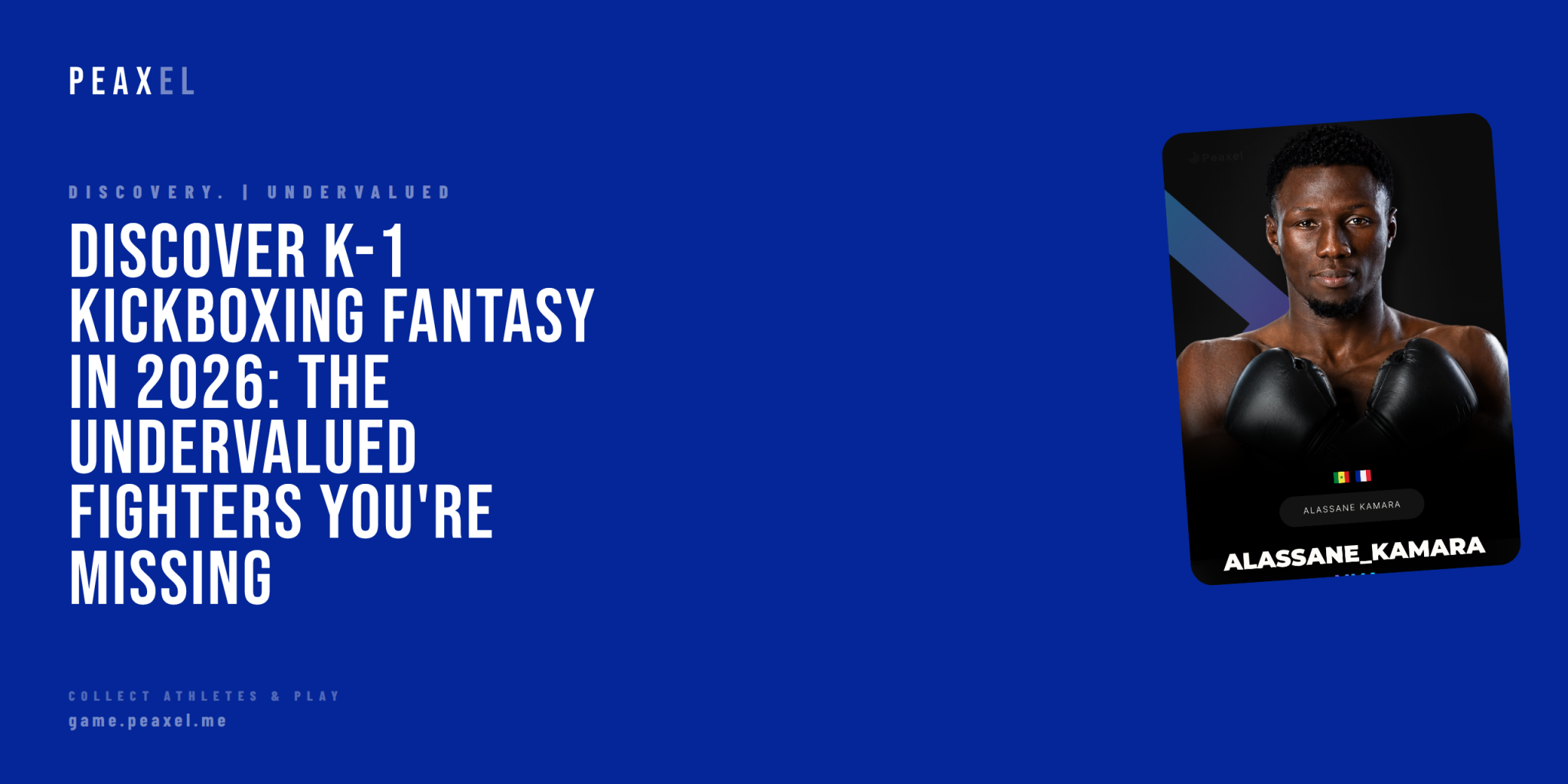
Take a fighter who steps in as a late replacement at a K-1 World MAX quarterfinal. Nobody expected them to be there. Nobody had them on their roster. But they show up, perform, and suddenly they’re booked for a main event in Tokyo four months later. That’s not hypothetical. That’s exactly what happened with Alassane Kamara.
Alassane Kamara: The Savate-to-K-1 Pipeline
Alassane Kamara trains out of Emergence Le Havre in Normandy, France. His background is Savate—French boxing that emphasizes footwork, lateral movement, and precision kicking. It’s not the typical feeder discipline for K-1, which makes him interesting.
In early 2025, Kamara stepped in as a last-minute replacement at the K-1 World MAX 2025 Tournament. He faced Dutch fighter Darryl Verdonk in the quarterfinal and delivered an aggressive, high-volume performance that turned heads. The Savate footwork translated. The pressure fighting worked.
The result? A booking against Daizo Sasaki—a former Krush Super Lightweight Champion—at K-1 GENKI 2026 in Tokyo. That’s not a tune-up fight. That’s a statement matchup against a Japanese veteran on home soil.
Honestly, Kamara is the type of pick that wins fantasy weeks. He’s competing at the highest level of K-1, but he doesn’t carry the price tag of established names. You can add his card on Peaxel and build around him while everyone else chases obvious picks.
What Makes K-1 Fantasy Different
K-1 scoring rewards aggression. Clean technique matters, but so does forward pressure and ring control. Fighters who push the pace—like Kamara with his relentless leg kicks—tend to accumulate scoring moments even when they’re not landing highlight knockouts.
For fantasy purposes, that means you’re not just betting on finishes. You’re tracking activity, output, and stylistic matchups. A fighter who throws volume and controls distance can outscore a power puncher who’s waiting for one big shot.
The K-1 calendar also clusters events around specific windows. Tokyo cards in April, European qualifiers through summer, tournament rounds in autumn. Knowing when to roster K-1 fighters matters as much as knowing who to roster.
Building a K-1 Discovery Roster
If you’re new to K-1 fantasy, start with fighters making the transition from national scenes to the international K-1 circuit. French fighters coming from Savate, Dutch fighters from the kickboxing academies, Japanese prospects graduating from Krush—these are the athletes entering K-1 with real skills but minimal fantasy hype.
Kamara fits that profile exactly. So do the fighters he’s competing against. The entire K-1 70kg division is stacked with undervalued talent because the division itself doesn’t get the attention of heavier weight classes.
Peaxel’s full sports coverage lets you explore K-1 alongside other combat disciplines. You can build a roster that spans Muay Thai, K-1, and amateur MMA without being locked into one promotion or one ruleset.
The Discovery Advantage
Most fantasy players stick to what they know. Football, basketball, maybe some UFC if they follow MMA. K-1 sits outside that comfort zone—and that’s precisely why it rewards attention.
When a fighter like Alassane Kamara goes from late replacement to Tokyo headliner in under a year, the fantasy players who noticed early are the ones who benefit. Everyone else scrambles to catch up after the performance already happened.
That’s the discovery advantage. Finding the discipline before it’s crowded. Finding the fighter before they’re expensive. Peaxel makes that possible by covering sports that mainstream platforms skip entirely.
If you’re ready to explore K-1 fantasy, Kamara’s athlete card is a good place to start.