The Explosive Art of Vault: Gymnastics’ Most Thrilling Event
In artistic gymnastics, no event captures the raw power and split-second precision of human movement quite like vault. Athletes sprint down a 25-meter runway, launch themselves off a springboard, contact the apparatus for a fraction of a second, and execute complex aerial maneuvers before landing—all in under six seconds. It is gymnastics distilled to its purest explosive form.
Yet this spectacular event did not always exist in its current form. The vault apparatus, the techniques, and the scoring system have undergone dramatic transformations since gymnastics became a codified sport in the 19th century. Understanding vault’s history reveals how innovation, athlete safety, and the pursuit of difficulty have shaped one of the Olympics’ most-watched moments.
Origins: From Pommel Horse to Vaulting Horse
Vault’s origins trace back to ancient equestrian training. Roman soldiers practiced mounting and dismounting horses as part of military preparation, developing the physical skills that would later inform gymnastic apparatus design. When Friedrich Ludwig Jahn established the foundations of modern gymnastics in early 19th-century Germany, the pommel horse served multiple purposes—including as a vaulting obstacle.
The original vaulting apparatus was essentially a pommel horse without handles, positioned lengthwise for men and widthwise for women. Athletes would run toward it, place their hands on the leather surface, and push off to execute various aerial movements. This simple configuration would define vault for over a century.
Women’s vault entered the Olympic program at the 1952 Helsinki Games, with Soviet gymnast Yekaterina Kalinchuk claiming the first gold. Early women’s vaults were relatively simple by today’s standards—handsprings and basic somersaults were considered advanced techniques.
The Yurchenko Revolution
The 1980s brought vault’s most significant technical revolution. Soviet gymnast Natalia Yurchenko introduced a new vault entry in 1982 that fundamentally changed the event. Instead of approaching the springboard face-first and diving onto the horse, Yurchenko performed a round-off onto the springboard, followed by a back handspring onto the apparatus.
This round-off entry created dramatically more power and rotation potential. Suddenly, gymnasts could perform double somersaults with twists in the post-flight phase. The Yurchenko vault and its countless variations—Yurchenko full, Yurchenko double, Yurchenko with additional twists—became the dominant vault family in elite competition.
Today, nearly every elite female vaulter uses the Yurchenko entry. The technique proved so effective that it essentially obsoleted forward-entry vaults at the highest levels of competition, though these remain important for difficulty progression and some specialists still perform them.
The 2001 Equipment Change: From Horse to Table
The most visible transformation in vault history occurred in 2001 when the International Gymnastics Federation (FIG) replaced the traditional vaulting horse with the vaulting table. This change was driven by safety concerns following several serious injuries at major competitions.
The new apparatus—sometimes called the “tongue” or “mushroom” due to its shape—provided a larger, more forgiving contact surface. At 120 centimeters long and 95 centimeters wide, the table gave gymnasts significantly more margin for hand placement than the narrow horse. The apparatus height was also standardized at 125 centimeters for women and 135 centimeters for men.
Critics initially worried the change would simplify vault, but the opposite occurred. With a more stable platform, gymnasts felt confident attempting increasingly difficult vaults. Difficulty scores that seemed impossible on the old horse became achievable. The table era has seen vault difficulty explode, with athletes now regularly performing skills that would have been considered science fiction in the 1990s.
How Vault Scoring Works
Modern vault scoring under the FIG Code of Points combines two components: difficulty (D-score) and execution (E-score). Unlike other gymnastics events where athletes build routines, vault provides just one explosive attempt to demonstrate skill.
Each recognized vault in the Code of Points carries a specific difficulty value. A basic Yurchenko layout might be valued at 4.4, while the Biles II—a Yurchenko double pike—carries a 6.6 difficulty. The D-score is predetermined; gymnasts receive this value if they complete the vault as declared.
The E-score starts at 10.0, with deductions taken for execution errors. Judges evaluate the first flight phase (springboard to apparatus), the support phase (hand contact), the second flight phase (apparatus to landing), and the landing itself. Bent knees, insufficient height, rotation errors, and landing steps all result in deductions.
In qualifying and event finals, gymnasts perform two different vaults from different vault families, with the average score determining placement. This format rewards versatility—specialists cannot simply perform the same vault twice.
Legendary Vaulters Who Shaped the Event
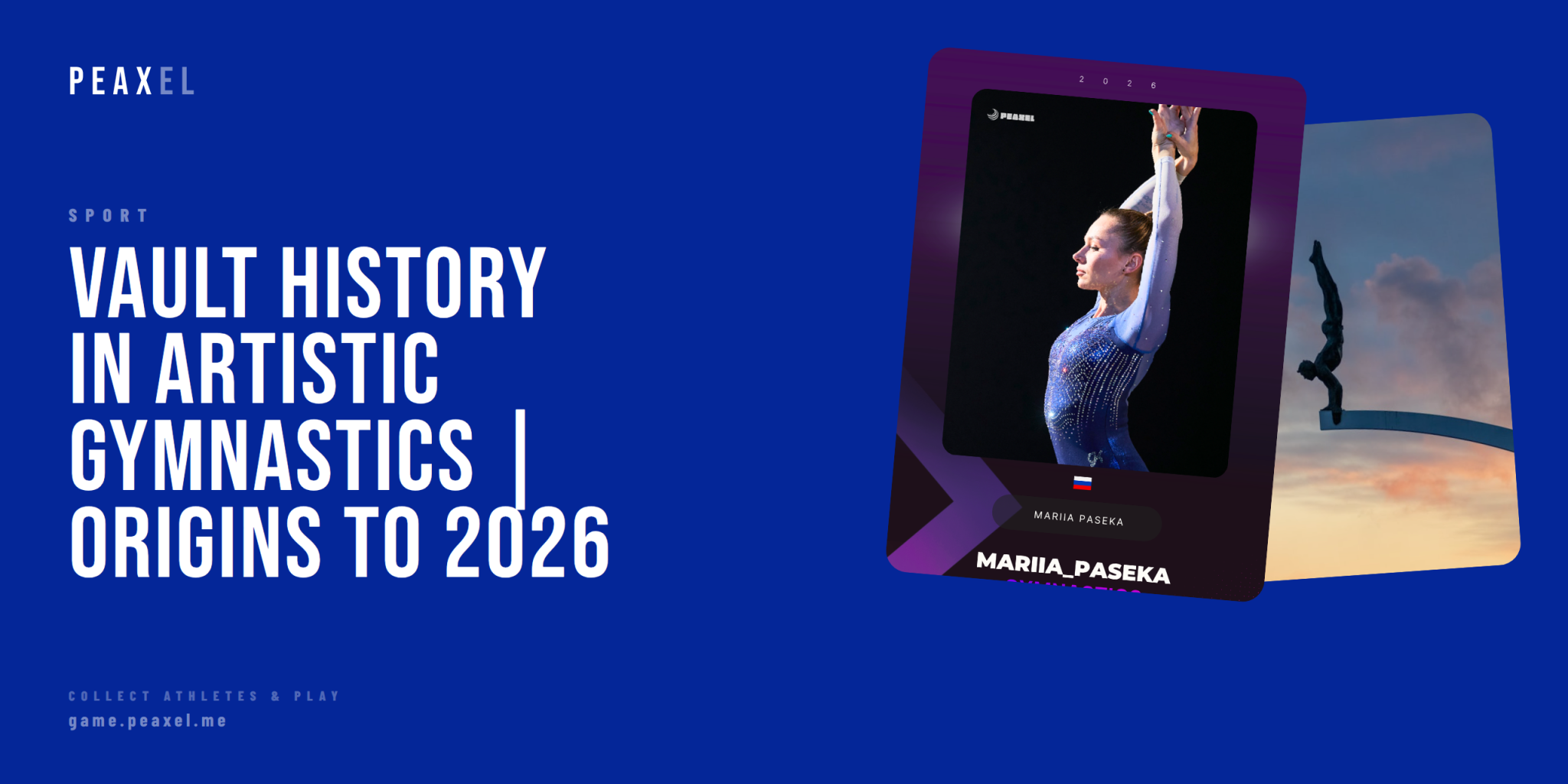
Certain athletes have left indelible marks on vault history through technical innovation and competitive dominance. Maria Paseka of Russia became one of vault’s most decorated specialists, winning World Championship titles in 2015 and 2017 while also claiming Olympic bronze in 2012 and silver in 2016. Her powerful Amanar vault—a Yurchenko with 2.5 twists—epitomized the modern era’s technical demands.
Simone Biles has pushed vault’s boundaries further than any gymnast in history. Her namesake vaults include the Biles (Yurchenko double layout half-out) and the Biles II (Yurchenko double pike), skills so difficult that other gymnasts rarely attempt them. Her 2024 Olympic vault gold in Paris cemented her status as the greatest vaulter ever.
On the men’s side, Ri Se-gwang of North Korea revolutionized vault difficulty with his namesake skill—a handspring double front pike with a half twist. His back-to-back Olympic titles in 2012 and 2016 demonstrated that specialized vaulters could dominate against all-around competitors.
Vault Today: Power, Precision, and Progress
Contemporary vault represents the apex of human explosive power in gymnastics. Elite vaulters generate tremendous speed down the runway—often exceeding 8 meters per second—then convert that horizontal velocity into vertical lift and rotation. The physics involved require extraordinary fast-twitch muscle development combined with spatial awareness that allows athletes to know precisely where they are during multiple rotations.
Training for vault differs from other gymnastics events. Vaulters spend countless hours on basic drills: sprints, hurdle mechanics, punch board work, and pit landings. A single vault may take only seconds, but the preparation involves thousands of repetitions building the specific strength and timing patterns required.
The event continues evolving. Each Olympic cycle brings new skills as athletes and coaches discover novel combinations of rotation, twist, and entry techniques. The vaulting table, once controversial, has enabled this progression by providing a platform stable enough for gymnastics’ most daring innovations.
Understanding Vault as a Fan
For new gymnastics fans, vault offers immediate accessibility. The format is simple: run, jump, flip, land. Yet depth emerges when viewers learn to recognize different vault families, appreciate the subtle execution differences that separate medalists from the field, and understand why certain landings draw gasps while others draw groans.
Watch for the first flight phase—the distance and height between springboard and table contact reveals approach power. Notice hand placement on the table: centered, simultaneous contact indicates control. In the second flight, height matters enormously; elite vaulters rise well above the apparatus before descending. Finally, observe the landing: stuck landings without steps remain gymnastics’ most celebrated achievement.
Vault rewards both casual viewing and deep study. Its brief duration concentrates drama into seconds, while its technical complexity provides endless nuance for dedicated fans. From Friedrich Ludwig Jahn’s training apparatus to today’s gravity-defying performances, vault has evolved into gymnastics’ most explosive showcase of human athletic potential.
Explore more gymnastics content and discover athletes pushing the boundaries of vault on Peaxel, where you can follow specialists like Maria Paseka and build your own fantasy gymnastics roster from the complete list of sports available.