What Makes Double Mini Trampoline Equipment Unique
Double mini trampoline stands apart from individual trampoline and tumbling through its distinctive two-bed apparatus. Athletes sprint down a runway, launch onto a mount bed, transition to a spotter bed, and dismount onto a landing mat—all within seconds. The equipment must withstand tremendous force while providing consistent bounce characteristics that elite athletes depend on.
Unlike recreational trampolines, competition-grade double mini apparatus follows strict Fédération Internationale de Gymnastique (FIG) specifications. Every component—from bed tension to frame dimensions—is regulated to ensure fair competition worldwide. Understanding this equipment reveals why double mini demands such specialized athletic preparation.
The Double Mini Apparatus: Two Beds, One System
The double mini apparatus consists of two inclined trampoline beds connected in sequence. The mount bed sits at approximately 25 degrees, while the spotter bed angles at roughly 10 degrees. This configuration creates the distinctive flight path that defines the discipline.
Each bed measures approximately 3 meters long and 0.9 meters wide. The beds use woven nylon or string webbing stretched across steel frames using springs or elastic cables. Bed tension is calibrated precisely—too tight reduces bounce height, too loose creates unpredictable responses during complex skills.
Frame Construction and Safety Padding
Frames are constructed from powder-coated steel tubing designed to absorb repeated high-impact landings. Safety padding covers all exposed metal surfaces, typically in contrasting colors to help athletes orient themselves during aerial maneuvers. The padding must meet FIG thickness and density requirements to protect athletes from contact injuries.
The Runway and Approach Zone
Athletes build speed on a 25-meter runway before mounting the apparatus. Competition runways use spring-floor technology similar to artistic gymnastics, providing energy return that helps athletes generate approach velocity.
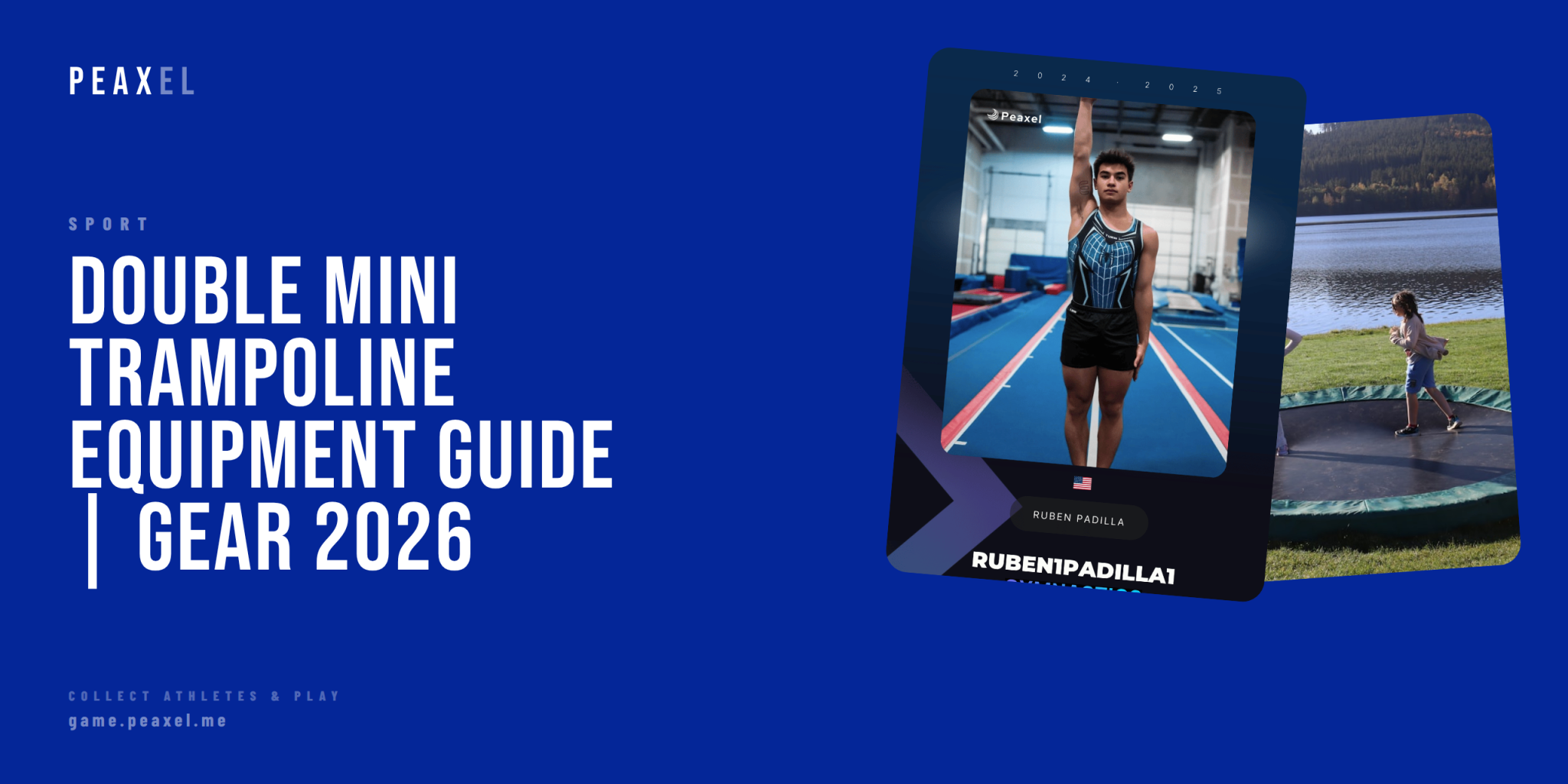
The runway surface must offer consistent friction across its length. Too slippery and athletes lose control; too grippy and it disrupts their stride pattern. Elite competitors like Ruben Padilla—the 2023 World Champion in double mini—develop precise approach rhythms that depend on predictable runway characteristics.
Landing Zones and Safety Mats
The landing zone extends several meters beyond the apparatus, covered in specialized mats that absorb impact while maintaining stability. Competition landing mats typically measure 6 meters by 3 meters with thickness between 20 and 30 centimeters.
These mats use layered foam construction. The top layer provides surface grip and comfort, while lower layers absorb and distribute landing forces. Poor mat quality increases injury risk, particularly for athletes performing high-difficulty dismounts with multiple rotations and twists.
Mat Positioning and Competition Standards
FIG regulations specify exact mat placement relative to the apparatus. Landing zone boundaries are marked clearly, as athletes receive deductions for landing outside designated areas. Judges assess not just trick execution but also landing precision within the approved zone.
Athlete Attire and Personal Equipment
Double mini athletes wear fitted gymnastics attire that allows full range of motion without excess fabric that could catch on equipment. Men typically compete in singlets or gymnastics shorts with fitted tops, while women wear leotards.
Footwear deserves particular attention. Most athletes compete barefoot or in specialized trampoline shoes with thin, flexible soles. These shoes provide grip on the runway and beds without adding weight or bulk that could affect aerial control. Spanish double mini specialist Melania Rodriguez represents the precision this discipline demands—her routines require equipment that responds identically every time.
Training Equipment Variations
Elite training facilities use additional equipment beyond competition apparatus. Foam pits allow athletes to practice new skills with reduced injury risk. Overhead spotting rigs provide safety support during skill development.
Many facilities incorporate video analysis systems positioned around the apparatus. High-speed cameras capture technique details invisible to the naked eye, helping coaches and athletes refine body positions during complex aerial sequences.
Conditioning Equipment
Double mini athletes supplement apparatus work with strength and conditioning equipment. Plyometric boxes, resistance bands, and balance trainers develop the explosive power and body control essential for high-difficulty routines. Core strength equipment is particularly important—maintaining body position during triple somersaults requires exceptional abdominal and back strength.
Equipment Maintenance and Safety Protocols
Competition apparatus requires regular inspection and maintenance. Springs lose tension over time, bed webbing stretches, and padding compresses with use. FIG-sanctioned competitions mandate equipment checks before each session.
Bed replacement follows strict schedules based on usage hours rather than calendar time. High-volume training facilities may replace beds annually, while lower-use venues might extend intervals. Athletes notice subtle equipment changes immediately—consistent bounce characteristics are essential for executing precise skills.
The Future of Double Mini Equipment
Equipment manufacturers continue refining double mini apparatus. Recent innovations focus on improved shock absorption, more consistent bounce characteristics, and enhanced durability. Some manufacturers experiment with alternative bed materials that maintain tension longer than traditional woven webbing.
Safety equipment evolves alongside apparatus improvements. Newer landing mats incorporate advanced foam technologies that better protect athletes during high-impact landings. As difficulty levels increase—athletes now regularly perform triple somersaults with multiple twists—equipment must keep pace with athletic demands.
Discover Double Mini Athletes on Peaxel
Double mini trampoline combines explosive power with precise equipment engineering. From the specialized two-bed apparatus to calibrated landing zones, every component enables the spectacular aerial performances that define this discipline. Fans interested in following elite double mini athletes can explore profiles on Peaxel, where competitors like Ruben Padilla and Melania Rodriguez showcase their talents. Browse the full roster of sports on Peaxel to discover more athletes pushing boundaries in trampoline gymnastics and beyond.