What Is Formula 4 Racing?
Formula 4 represents the first rung on the international single-seater ladder. Created by the FIA in 2014, F4 championships provide young drivers aged 15 and older with their introduction to formula car racing after graduating from karting. The series operates under standardized technical regulations, ensuring costs remain manageable while delivering genuine racing education.
F4 cars produce approximately 160 horsepower and feature carbon fiber monocoques, slick tires, and aerodynamic packages that teach fundamental single-seater techniques. The category exists in over 15 countries, from the French F4 Championship to series in Germany, Italy, Japan, and the United States. Each championship feeds into higher categories like Formula Regional and Formula 3.
The Development Pathway From Karting to F1
The journey from karting to Formula 1 follows a well-established pathway. Drivers typically compete in OK Junior and OK karting categories before transitioning to F4 around age 15 or 16. Success in F4 opens doors to Formula Regional championships, then F3, F2, and ultimately F1 for the most talented.
This structured progression allows teams and academies to evaluate driver potential at each level. Ferrari Driver Academy, Red Bull Junior Team, and Mercedes Junior Programme all scout talent from F4 grids worldwide. Recent F1 drivers including Lando Norris, Charles Leclerc, and George Russell all competed in F4 during their development years.
French F4 Championship: A Proving Ground
The French F4 Championship has established itself as one of Europe’s most competitive junior series. Racing on circuits like Paul Ricard, Pau-Arnos, and Lédenon, the championship attracts international talent seeking European racing experience. The series runs Mygale chassis with Renault engines, providing consistent machinery that emphasizes driver skill.
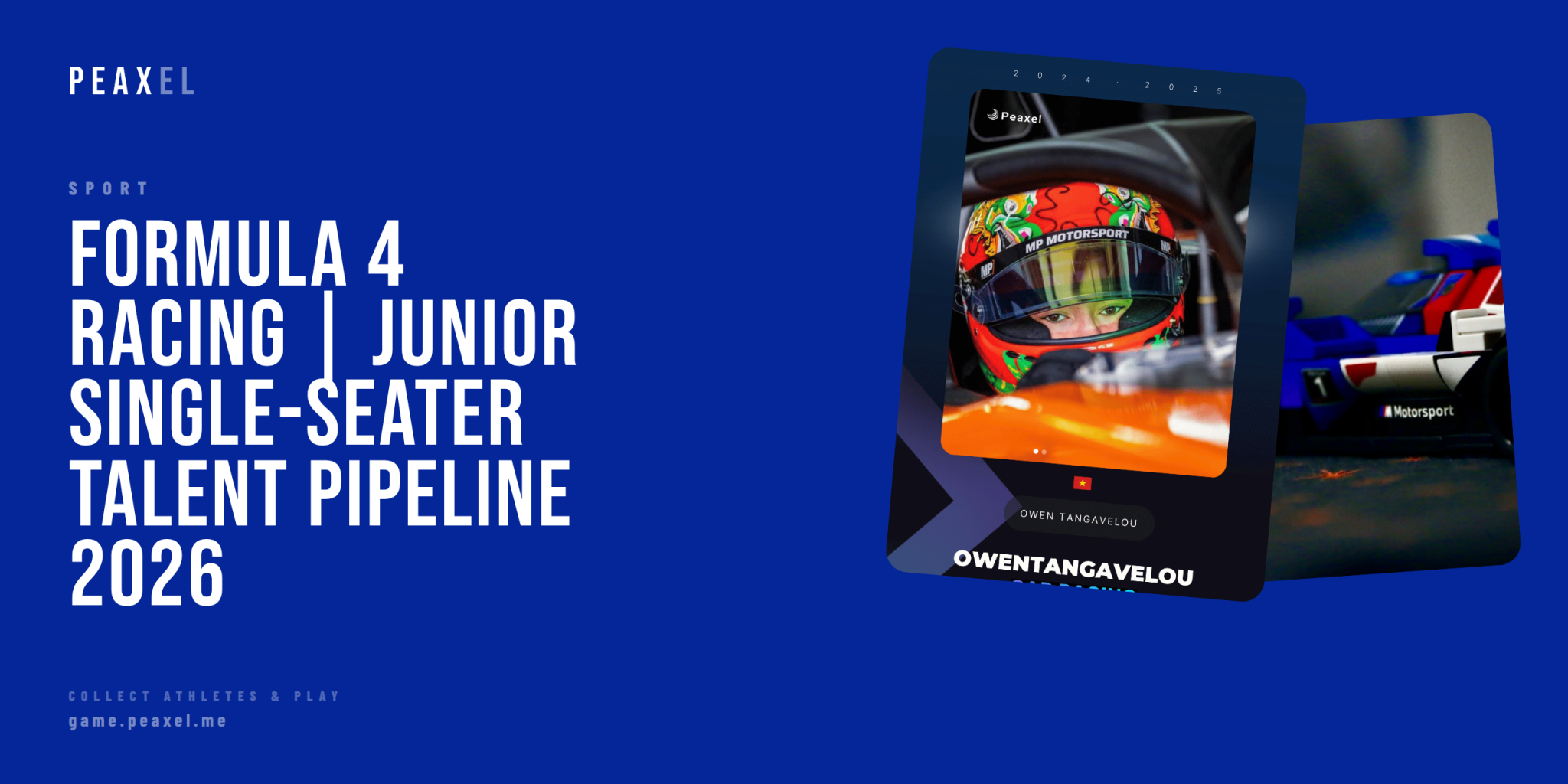
Owen Tangavelou, a French-Vietnamese driver born in 2005, exemplifies the French F4 pathway. He debuted in the championship in 2020 at age 14, finishing 12th overall. The following season, Tangavelou improved dramatically to fifth place, collecting two podiums and two fastest laps. His progression demonstrates how F4 serves as a learning environment where drivers develop racecraft over multiple seasons. You can follow his career on Peaxel.
From F4 to Formula Regional: The Next Step
Formula Regional championships represent the bridge between F4 and F3. These series feature more powerful cars with approximately 270 horsepower and increased aerodynamic grip. The Formula Regional European Championship (FREC) and Eurocup-3 attract F4 graduates seeking to prove themselves against stronger competition.
After his French F4 success, Tangavelou competed in the Formula Regional Asian Championship with Hitech Grand Prix in 2022. He then joined G4 Racing for FREC, finishing 20th in his debut season. Racing for Trident in 2023, he achieved two top-five finishes and ended 14th overall. In 2024, he signed with MP Motorsport for the Eurocup-3 series.
Swiss Talent Rising Through the Ranks
Dario Cabanelas, a Swiss driver with Spanish and Ukrainian heritage born in 2006, followed a similar trajectory. His karting career included a Vega Trofeo victory and third place in the Swiss OK Junior Championship in 2020. Transitioning to French F4 in 2021, Cabanelas finished eighth overall, improving to ninth with two podiums in 2022.
His Eurocup-3 debut came in October 2023 with Saintéloc Racing. Consistent top-ten finishes across three rounds earned him a 2024 contract with MP Motorsport, where he joined teammates including Emerson Fittipaldi Jr. Track his development on Peaxel.
What Makes a Successful F4 Driver?
Success in Formula 4 requires more than raw speed. Drivers must adapt quickly to new circuits, manage tire degradation across race distances, and execute clean overtakes in traffic. The competitive grids often feature 20 or more drivers, making race starts and first-lap positioning crucial.
Physical conditioning becomes increasingly important as drivers progress. F4 cars generate significant lateral forces, demanding neck strength and cardiovascular fitness. Mental preparation also plays a vital role—drivers must process feedback, analyze data, and maintain focus across practice, qualifying, and multiple races per weekend.
The Financial Reality of Junior Motorsport
A competitive F4 season typically costs between €150,000 and €300,000, covering car rental, engineering support, testing, and travel. While substantially less than higher categories, this investment requires significant family resources or sponsorship backing. Many drivers combine personal funding with support from national federations or regional motorsport programs.
The FIA’s cost-cap regulations in F4 help contain expenses compared to unregulated series. Standardized chassis and engines prevent costly development races, keeping the focus on driver development rather than technical advantages.
Global F4 Championships Worth Watching
Beyond France, several F4 championships produce exceptional talent. The Italian F4 Championship operates on legendary circuits including Monza and Imola. ADAC F4 in Germany provides racing at the Nürburgring and Hockenheim. British F4 uses Brands Hatch and Silverstone, while the F4 US Championship races at Road Atlanta and Indianapolis.
The F4 UAE Championship offers winter racing for European-based drivers, providing additional seat time during the off-season. Many drivers compete in multiple championships throughout the year to maximize experience and exposure to scouts.
Fantasy Motorsport and Emerging Drivers
Following junior motorsport talent has never been more accessible. Platforms like Peaxel allow fans to discover emerging athletes across dozens of sports including car racing. By collecting digital athlete cards and building fantasy teams, fans can engage with drivers like Tangavelou and Cabanelas before they reach mainstream recognition.
The appeal lies in identifying future champions early. Today’s F4 grid contains drivers who may compete in Formula 1 within five years. For motorsport enthusiasts, tracking their development from junior categories creates lasting connections with athletes throughout their careers.
The Future of Formula 4 Racing
Formula 4 continues evolving as the gateway to professional motorsport. Recent regulatory updates have improved safety standards while maintaining affordability. The introduction of hybrid technology in higher categories may eventually filter down to F4, preparing drivers for the technical demands of modern racing.
For young drivers like Tangavelou and Cabanelas, F4 provided the foundation for their single-seater careers. Their progression through French F4 to Formula Regional demonstrates the pathway functioning as intended—developing talent, building experience, and preparing the next generation of racing champions.