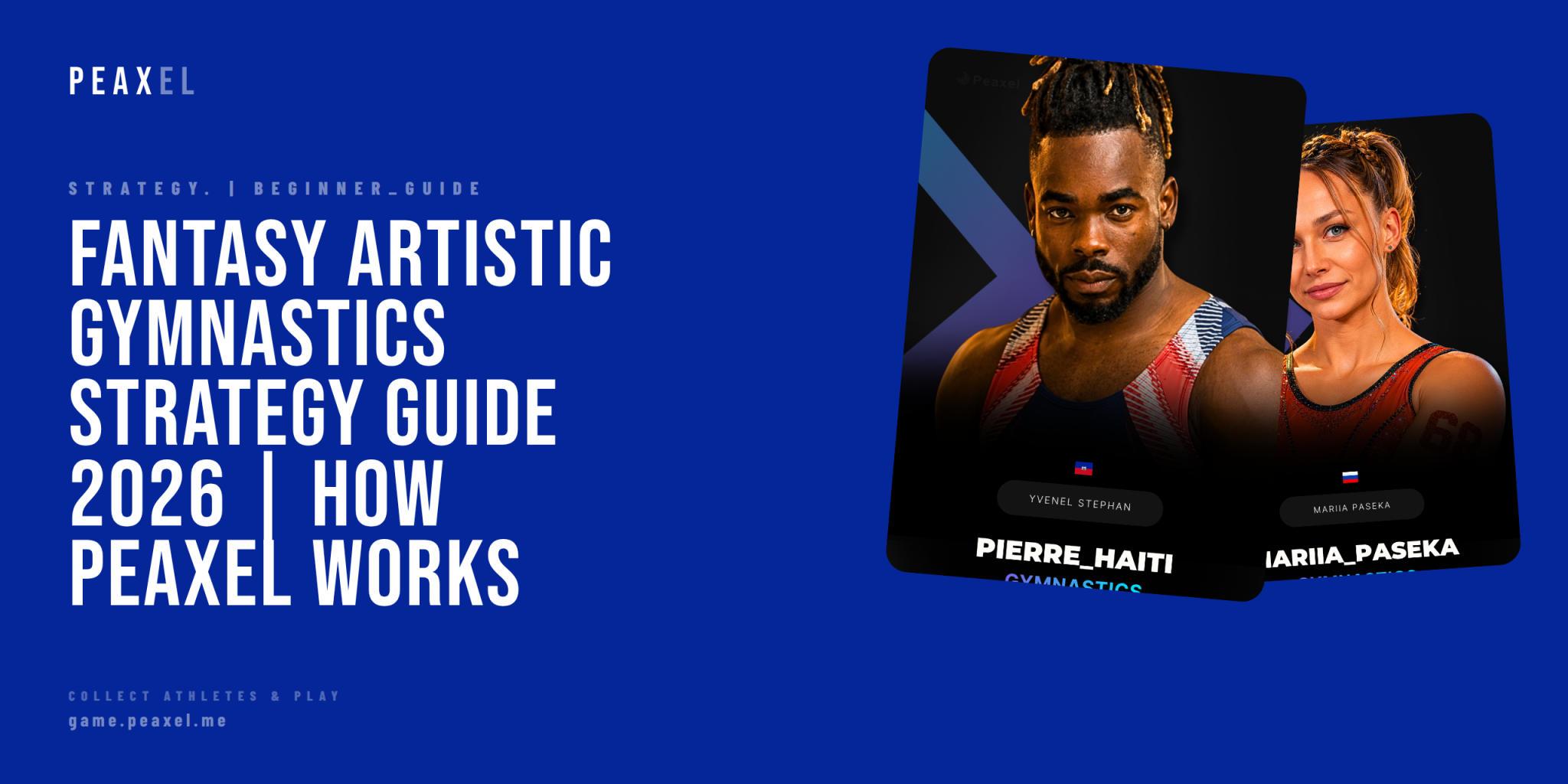
Why Artistic Gymnastics Works for Fantasy
Vault takes under five seconds. In that window, a gymnast like Maria Paseka built a career that included two Olympic medals and two World Championship titles. That’s the appeal of artistic gymnastics for fantasy players—concentrated bursts of performance where execution and difficulty combine into a single measurable score.
On Peaxel, artistic gymnastics athletes earn points based on real competition results. Unlike team sports where you’re tracking assists and minutes played, gymnastics gives you clean data. A gymnast either nails the landing or doesn’t. The difficulty score is published. The execution deductions are transparent.
This makes artistic gymnastics one of the more approachable disciplines for fantasy newcomers. You don’t need to understand complex team dynamics—you’re evaluating individual athletes on individual apparatus.
Understanding Apparatus Specialists vs All-Arounders
Your first strategic decision is whether to pick apparatus specialists or all-around competitors. Both have fantasy value, but they perform differently across competition calendars.
Apparatus specialists like Maria Paseka compete primarily on a single event. Paseka’s entire career centered on vault, where she developed some of the most difficult skills in the women’s code of points. When she competed, she appeared in vault finals—not balance beam, not floor exercise. For fantasy purposes, this means her scoring opportunities were concentrated but high-ceiling.
All-around gymnasts compete on four apparatus (women) or six apparatus (men). They generate more total scoring opportunities per competition but rarely dominate any single event. Pierre Yvenel Stephan represents this versatility—he qualified for World Challenge Cup events on horizontal bar while training across multiple apparatus as part of his all-around development.
The tradeoff is straightforward: specialists offer volatility with upside, all-arounders offer consistency with lower peaks.
Reading the Competition Calendar
Artistic gymnastics follows a structured international calendar. The major events include:
- FIG World Cup series — Individual apparatus competitions held throughout the year
- World Challenge Cups — Qualification pathway events for Olympic and World Championship spots
- Continental Championships — European, Pan American, Asian championships
- World Championships — Annual pinnacle event (non-Olympic years)
- Olympic Games — Quadrennial peak
For fantasy purposes, World Cup events happen most frequently. This is where active gymnasts accumulate points consistently. When building your lineup, check which athletes are entered in upcoming World Cup stops—not all gymnasts compete at every event.
Why Legacy Athletes Still Matter
Maria Paseka retired in July 2022 after two Olympic cycles. So why include her in a 2026 fantasy guide?
On Peaxel, athlete cards represent career achievement as well as current activity. Paseka’s card carries the weight of her accomplishments—London 2012 bronze, Rio 2016 silver, Glasgow 2015 and Montreal 2017 World titles. These historical performances establish baseline card value.
For players building collections rather than weekly lineups, legacy athletes offer stability. They’re not going to lose value from a poor competition result because they’re no longer competing. Their cards function more like blue-chip holdings in your portfolio.
Active athletes like Pierre Yvenel Stephan offer different value. He’s still chasing FIG World Cup results and building his international resume. His card value fluctuates with each competition—higher risk, higher potential upside.
Building Your First Artistic Gymnastics Lineup
Start simple. Pick one apparatus specialist and one all-arounder from Peaxel’s full sports list.
Look for athletes with upcoming competition entries. Check their recent results if available—consistency matters more than a single brilliant performance. An athlete who qualifies for finals regularly will outscore one who occasionally wins but often misses qualification.
Nationality matters too. Continental Championships only include athletes from that region. If you’re tracking a European gymnast, factor in European Championship opportunities. Stephan competes for Haiti, which means Pan American events are his continental pathway—a different schedule than European competitors.
Honestly, the biggest mistake new fantasy gymnastics players make is ignoring the calendar. You can have the best athletes in your lineup, but if none of them are competing this month, you’re not scoring points.
Where to Go From Here
Artistic gymnastics rewards players who pay attention to detail—difficulty values, execution consistency, and competition frequency. The scoring is transparent, the athletes are extraordinary, and the sport translates naturally into fantasy format.
If you’re ready to start building your artistic gymnastics lineup, explore Maria Paseka’s card or Pierre Yvenel Stephan’s card on Peaxel. Both represent different strategic approaches—legacy value versus active competition upside. The choice depends on how you want to play.