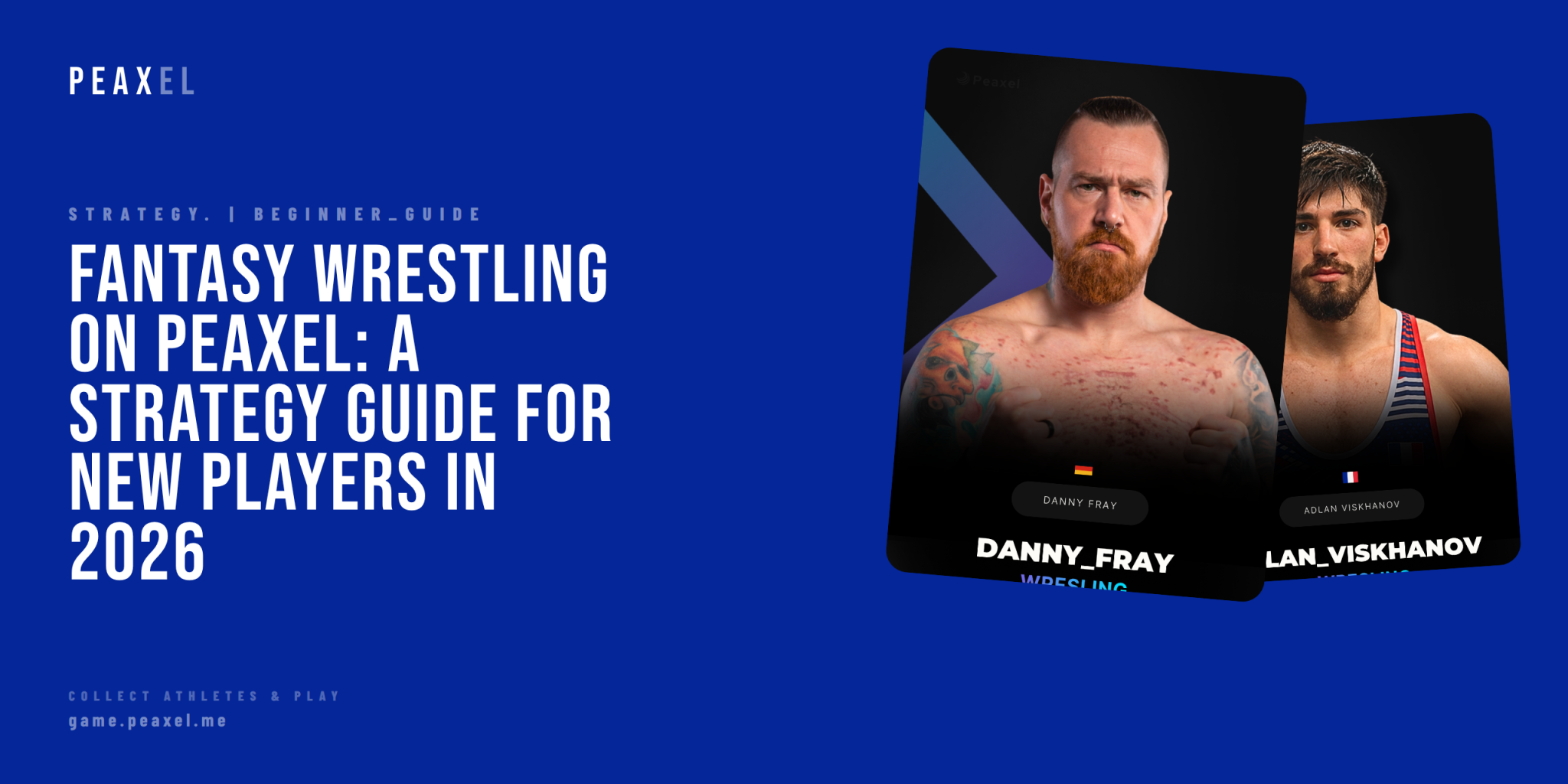
Wrestling Has a Fantasy Game Now
You’ve played fantasy football. Maybe fantasy basketball. But fantasy wrestling? That’s new territory for most players—and it’s exactly why Peaxel exists. The platform covers sports that mainstream fantasy apps ignore, and wrestling sits right at the center of that mission.
Whether you’re into Olympic-style freestyle grappling or the theatrical intensity of professional wrestling, Peaxel treats both seriously. You collect athlete cards, build lineups, and earn points when your wrestlers compete in real events. No betting. No entry fees. Just strategy.
This guide walks you through how it actually works.
How Wrestling Cards Work on Peaxel
Every wrestler on Peaxel has a digital card. Think of it like a trading card that tracks real performance. When you add a wrestler to your lineup and they compete—whether at a UWW-sanctioned tournament or a wXw event in Germany—their results generate fantasy points for you.
Take Adlan Viskhanov, a French freestyle wrestler competing at 92-97kg. His card reflects his actual competitive record: bronze at the 2025 World Military Wrestling Championships, silver at the 2024 European U23 Championships, multiple French national titles. When Viskhanov steps on the mat at a European Championships qualifier, your lineup scores based on how he performs.
Cards aren’t static. They gain value as athletes compete more frequently and achieve results. A wrestler climbing the international rankings becomes a more valuable fantasy asset.
Building Your First Wrestling Lineup
Start simple. Peaxel doesn’t require you to fill twenty roster spots on day one. You can begin with a single wrestler and expand from there.
Here’s the practical approach:
- Pick one active competitor. Look for wrestlers with upcoming events. Viskhanov competes regularly on the European circuit—that means consistent scoring opportunities.
- Check their competition calendar. A wrestler who only competes twice a year won’t generate many points. Frequency matters.
- Diversify across styles. Peaxel covers freestyle, Greco-Roman, and professional wrestling. Mixing disciplines spreads your risk.
You can explore the full range of wrestling styles and other combat sports on the Peaxel sports directory.
Freestyle vs Professional Wrestling: Different Scoring Logic
Freestyle wrestlers like Viskhanov score through tournament placements, medal finishes, and match wins at UWW events. The scoring is tied to verified competitive results—did they medal? Did they advance past pool stages?
Professional wrestlers follow a different rhythm. Danny Fray, a German powerhouse competing in Westside Xtreme Wrestling, generates points through event appearances, match outcomes in wXw shows, and career milestones. Pro wrestling events happen more frequently than UWW tournaments, which can mean steadier point accumulation.
Neither style is “better” for fantasy—they just require different lineup strategies.
What Makes a Good Wrestling Fantasy Pick
Not every wrestler is worth adding. Here’s what to look for:
Active competition schedule. Viskhanov has competed at European Championships, World Military Championships, and French nationals in the past 18 months. That’s a healthy event frequency.
Upward trajectory. Athletes improving year-over-year—like moving from U23 podiums to senior-level medals—tend to keep generating scoring opportunities. Viskhanov’s progression from junior bronze to senior military bronze shows exactly this pattern.
Verifiable results. Peaxel scores from real competitions. If you can’t confirm an athlete’s recent activity, their card may sit dormant in your lineup.
Danny Fray fits a different profile: consistent wXw appearances since 2021, regular singles and tag team matches, and documented improvement under established coaches at the wXw Academy. For professional wrestling picks, match frequency often outweighs tournament prestige.
Common Mistakes New Wrestling Managers Make
Honestly, the biggest error is picking wrestlers based on name recognition alone. A legendary retired grappler won’t score fantasy points if they’re not actively competing.
Second mistake: ignoring weight classes. A wrestler moving up or down in weight often faces an adjustment period with inconsistent results. Check their recent competition weight before adding them.
Third: stacking your lineup with wrestlers from a single nation. If that country’s federation pauses events, your entire lineup goes cold. Spread across regions—France, Germany, Eastern Europe, wherever active competition circuits exist.
Getting Started Today
You don’t need wrestling expertise to play. The cards tell you what you need to know: recent results, competition history, and upcoming events. Start with one wrestler, watch how scoring works for a few weeks, then expand.
Viskhanov’s card is a solid first pickup for anyone interested in Olympic-style wrestling—he’s young, climbing international rankings, and competes frequently. Fray works if you want exposure to professional wrestling’s event-heavy calendar.
Both cards are available on Peaxel right now. Add one, see how points accumulate, and go from there.