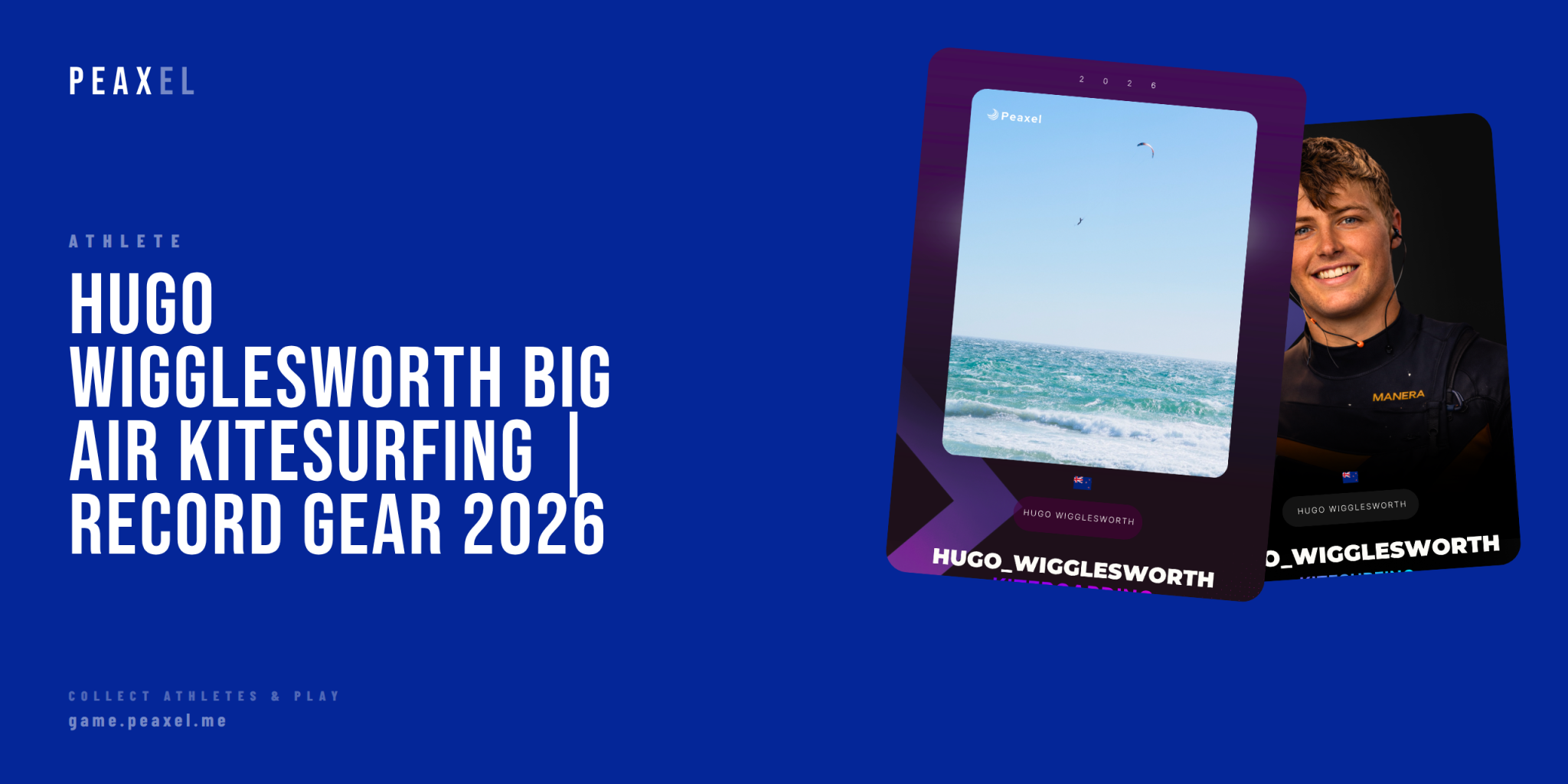
Breaking the 40-Meter Barrier
On December 6, 2025, Hugo Wigglesworth achieved what no kitesurfer had done before: he launched 40.0 meters into the sky above Kite Beach in Cape Town, South Africa. The jump was verified by WOO Sports, the industry-standard tracking device, and included an astonishing 13 seconds of hang time. At just 19 years old, the New Zealand native became the first human to break the 40-meter ceiling in Big Air kitesurfing.
This record did not come out of nowhere. Just months earlier, in September 2024, Wigglesworth had set the previous WOO World Record at 36.7 meters during a session at Plimmerton Beach, New Zealand. His rapid progression from national prodigy to global record-holder has been defined by relentless training, fearless commitment, and an obsessive focus on equipment optimization.
The Gear Behind the Flight
Big Air kitesurfing is as much about technology as it is about athleticism. Wigglesworth’s record-breaking jump relied on a carefully tuned combination of kite, board, harness, and measurement technology. Understanding this gear reveals why certain athletes can push beyond what was previously thought possible.
The Kite: FLYSURFER Engineering
Wigglesworth rides for FLYSURFER, a German brand known for precision-engineered kites designed for maximum lift and control. In Big Air, the kite must generate enormous upward force while remaining stable in turbulent gusts. FLYSURFER’s designs emphasize high aspect ratios and lightweight materials, allowing riders to harness strong winds without losing control at the apex of their jump.
The specific kite size and tuning depend on wind conditions, but Wigglesworth’s setups typically prioritize explosive lift over speed. This means a kite that can accelerate quickly through the power stroke and hold the rider aloft during the critical hang-time phase.
The Board: Built for Impact
Big Air boards are reinforced to withstand the immense forces of high-altitude landings. Wigglesworth’s boards feature robust construction with shock-absorbing materials, allowing him to land from heights that would destroy conventional equipment. The bindings must lock securely while still permitting quick release in emergencies—a balance that requires constant refinement.
The Harness: Power Transfer
A hardshell waist harness is standard for Big Air competitors. The harness distributes the kite’s pull across the rider’s core, allowing precise control during the explosive launch phase. Wigglesworth’s setup includes reinforced hook systems that prevent accidental unhooking during violent gusts.
WOO Sports: Measuring the Impossible
The WOO device has become the definitive standard for Big Air measurement. Attached to the board, it uses accelerometers and GPS to track jump height, hang time, and landing impact. Wigglesworth’s 40-meter record was verified by WOO, ensuring its legitimacy within the global kitesurfing community. This data-driven approach has transformed Big Air from a subjective spectacle into a measurable sport.
From Plimmerton to Cape Town
Wigglesworth’s journey to the record books began in New Zealand, where he was introduced to kitesurfing before he could walk. His parents, Luke and Suzie, are both kitesurfers, and Hugo spent his childhood on the water. By his early teens, he was already competing in hydrofoil and Big Air events.
His breakthrough came in 2024 when he won the Hydrofoil Big Air World Championship on the GKA Kite World Tour—during his very first season on the professional circuit. That same year, he set the 36.7-meter WOO record at Plimmerton Beach, announcing himself as the sport’s most explosive talent.
Cape Town’s Kite Beach, known for its consistent strong winds and flat-water launch zones, provided the ideal conditions for the 40-meter attempt. Wigglesworth traveled there specifically to chase the record, spending weeks waiting for the perfect wind window.
The Competition: Jamie Overbeek and the Next Generation
Wigglesworth is not the only young rider redefining Big Air. Jamie Overbeek, the Dutch prodigy who podiumed at Red Bull King of the Air at age 16, has also pushed into the 35-meter range and remains a close rival. The two represent a new generation of athletes who grew up with WOO devices, data analysis, and engineered equipment, accelerating the sport’s progression far beyond what previous generations achieved.
Why Equipment Matters in Big Air
Unlike many extreme sports where athlete skill is the primary variable, Big Air kitesurfing places enormous emphasis on gear. A poorly tuned kite can collapse at altitude; a weak board can shatter on landing. The margins between a record-breaking jump and a catastrophic failure are measured in material science as much as technique.
Wigglesworth’s sponsors—FLYSURFER, WOO Sports, and Kitemana—provide not just equipment but ongoing R&D collaboration. His feedback directly influences kite design, board construction, and harness engineering. This symbiotic relationship between athlete and manufacturer is central to Big Air’s evolution.
What Comes Next
With the 40-meter barrier broken, the question becomes: how high can Big Air kitesurfing go? Wigglesworth has already hinted at targeting 45 meters, though such a jump would require even stronger winds and further equipment refinement. The sport’s trajectory suggests that records will continue to fall as materials improve and athletes like Wigglesworth push their limits.
For fans who want to follow Hugo Wigglesworth’s journey—or collect his digital athlete card on Peaxel—his career offers a front-row seat to the most explosive discipline in water sports. Explore more athletes across all sports on Peaxel and discover the next generation of action sports talent at Peaxel.me.