What Is Indoor Skydiving?
Indoor skydiving takes place inside vertical wind tunnels that generate powerful upward airflow, allowing athletes to float, spin, and perform acrobatic maneuvers without jumping from an aircraft. What began as a training tool for skydivers has evolved into a standalone competitive sport with its own world championships, judging systems, and athlete pathways.
The sport is governed internationally by the Fédération Aéronautique Internationale (FAI) through its Indoor Skydiving Commission. Competitions attract athletes from dozens of countries who train year-round in wind tunnels to master complex routines combining speed, precision, and artistry.
Competitive Disciplines in Indoor Skydiving
Indoor skydiving competitions feature multiple disciplines, each with distinct rules and judging criteria. Understanding these categories is essential for following the sport.
Freestyle
Freestyle is the artistic discipline where individual athletes perform choreographed routines to music. Judges evaluate difficulty, execution, and artistic impression. Routines typically last 60 to 90 seconds and include spins, flips, and transitions between body positions. This discipline showcases the creative potential of wind tunnel flight.
Dynamic Flying
Dynamic flying emphasizes speed and precision. Athletes compete in 2-way or 4-way teams, racing through sequences of predetermined moves as quickly as possible. Speed rounds measure how fast teams complete required formations, while free rounds allow creative sequences judged on difficulty and execution.
Formation Skydiving
Adapted from outdoor skydiving, formation flying involves teams of 4 or 8 athletes building geometric shapes in the tunnel. Judges count how many formations teams complete within a set time. Precision and synchronization determine success.
How Indoor Skydiving Scoring Works
Scoring systems vary by discipline but follow consistent principles established by FAI regulations.
Freestyle Scoring
Freestyle routines receive scores across three categories: technical difficulty, execution quality, and artistic presentation. Each category contributes to the final score, with difficulty rewarding athletes who attempt complex maneuvers. Deductions apply for falls, touches, or incomplete moves. Final rankings combine scores from multiple rounds.
Dynamic and Speed Scoring
In dynamic flying, speed rounds use timing systems to measure completion of required sequences. Free rounds receive scores based on move difficulty multiplied by execution quality. Teams must balance ambition with clean execution since failed moves score zero.
Formation Scoring
Formation teams earn one point per completed formation within the time limit. Judges watch for grip breaks, incomplete shapes, or timing violations. Consistency across multiple rounds determines final standings.
Major Indoor Skydiving Competitions
The FAI World Indoor Skydiving Championships represent the pinnacle of the sport. The 2024 edition took place in Charleroi, Belgium, featuring competitors from over 30 nations across all disciplines. Continental championships in Europe, Asia, and the Americas provide qualification pathways and regional competition.
Wind tunnel operators also host independent competitions throughout the year. Facilities like iFLY, Windoor, and independent tunnels organize events ranging from local contests to international invitationals that attract elite competitors.
The Athlete Pathway
Indoor skydiving offers an accessible entry point compared to traditional skydiving. Athletes can begin training without aircraft certification, making the sport available to younger participants. Many elite outdoor skydivers now cross-train in tunnels to refine body control and spatial awareness.
Competitive pathways typically progress from local tunnel competitions through national championships to international FAI events. Training volumes for elite athletes often exceed 10 hours weekly in the tunnel, supplemented by physical conditioning and video analysis.
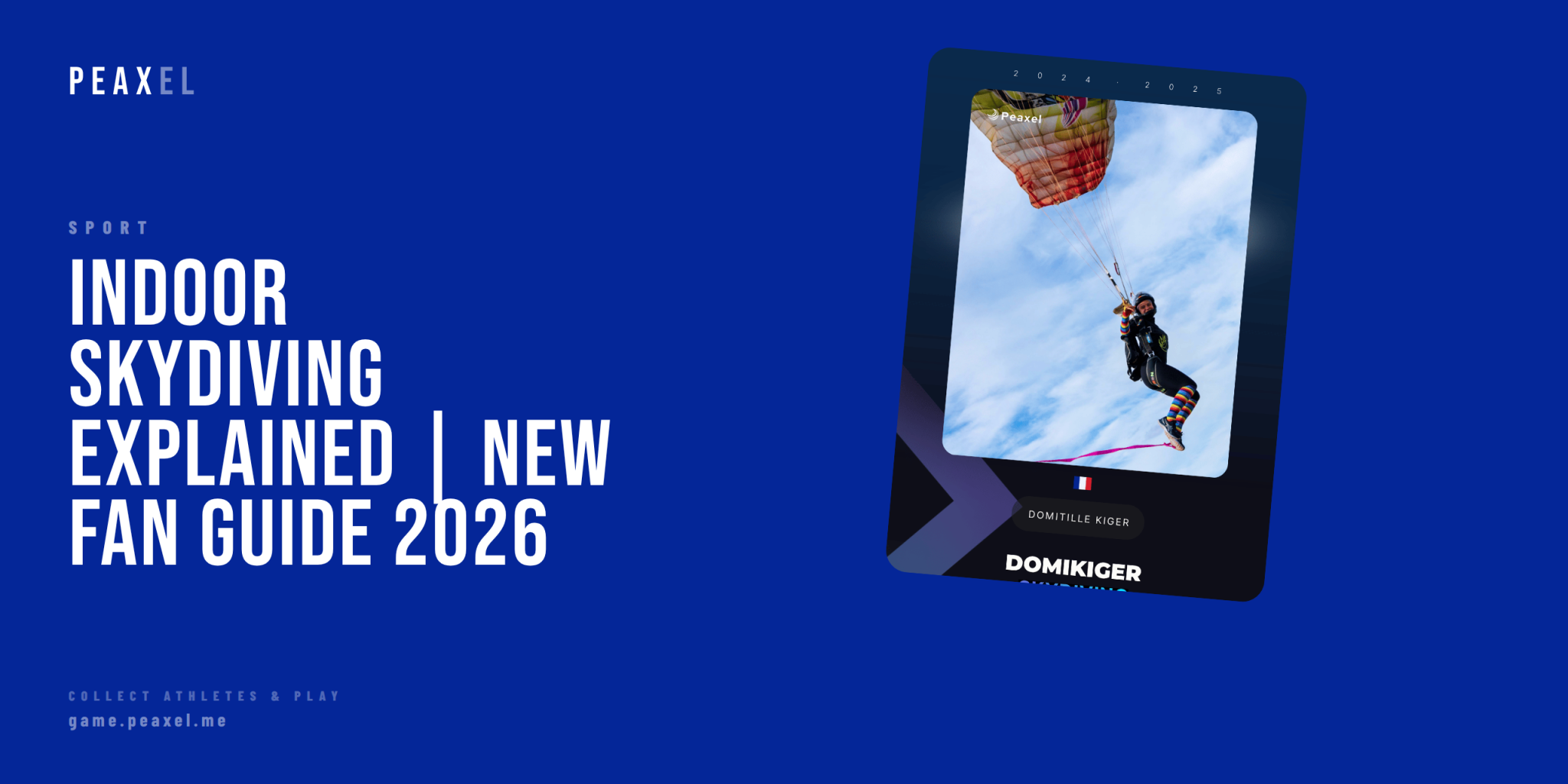
Athletes like Domitille Kiger, a French freefly world champion, exemplify the connection between outdoor and indoor disciplines. After achieving multiple world titles in outdoor freefly, Kiger co-founded zerOGravity, an indoor skydiving center in Poitiers, France, in 2020. Her transition highlights how elite athletes contribute to the sport’s infrastructure while continuing to compete and inspire. You can follow her journey on Peaxel.
Equipment and Tunnel Technology
Modern indoor skydiving tunnels use recirculating airflow systems that generate wind speeds exceeding 250 kilometers per hour. Flight chambers typically measure 3 to 5 meters in diameter, with glass walls allowing spectator viewing.
Athletes wear fitted jumpsuits designed for specific disciplines. Freestyle competitors often use loose suits that catch air for slower movements, while dynamic flyers prefer tight suits that reduce drag for speed. Helmets, goggles, and earplugs complete the standard equipment.
Why Fans Are Discovering Indoor Skydiving
Indoor skydiving combines the visual spectacle of aerial acrobatics with accessible competition formats. Matches are short, scoring is transparent, and the action is continuous. Unlike outdoor skydiving where weather delays are common, indoor events run on predictable schedules.
The sport also offers participatory appeal. Many fans try recreational tunnel flights before becoming spectators, creating personal connection to the skills they watch elite athletes demonstrate.
Following Indoor Skydiving in 2026
The FAI maintains official rankings and competition calendars through its Indoor Skydiving Commission. Major events stream online, and facilities often share athlete training content on social media.
For fans interested in discovering athletes across action sports including indoor skydiving, Peaxel offers a platform to follow competitors and build fantasy teams. The complete list of sports on Peaxel includes disciplines from skydiving to freestyle BMX, connecting fans with athletes pushing boundaries in vertical wind tunnels and beyond.