The Heart of Independent Wrestling
Professional wrestling exists in two distinct worlds. There are the massive televised promotions with global audiences, and then there is the independent circuit—intimate venues, loyal local fanbases, and wrestlers building their craft one match at a time. In the UK and across Europe, independent wrestling has cultivated a community unlike any other in sports entertainment.
This is where wrestling feels most authentic. Fans sit close enough to hear every impact. Wrestlers develop their characters organically, testing what works in front of crowds who show up week after week. The independent scene is both a proving ground and a destination, attracting talent who choose community over corporate contracts.
The British Wrestling Revival
The UK independent wrestling scene experienced a renaissance in the 2010s that continues today. Promotions like British Wrestling Revolution, Fight Factory Wrestling, and Tidal Championship Wrestling operate regular events across England, Scotland, and Wales. These organizations provide platforms for homegrown talent while occasionally hosting international stars.
What makes British wrestling distinctive is its emphasis on technical proficiency combined with theatrical storytelling. Matches often build over multiple events, rewarding fans who attend consistently. The crowds become part of the show, with chants and reactions influencing how wrestlers develop their personas.
Venues range from community centers to historic theaters. The smaller settings create an atmosphere impossible to replicate in arenas—every near-fall feels urgent, every heel turn personal. This intimacy is what keeps fans returning and what makes the British scene a respected training ground internationally.
Athletes Shaping the Scene
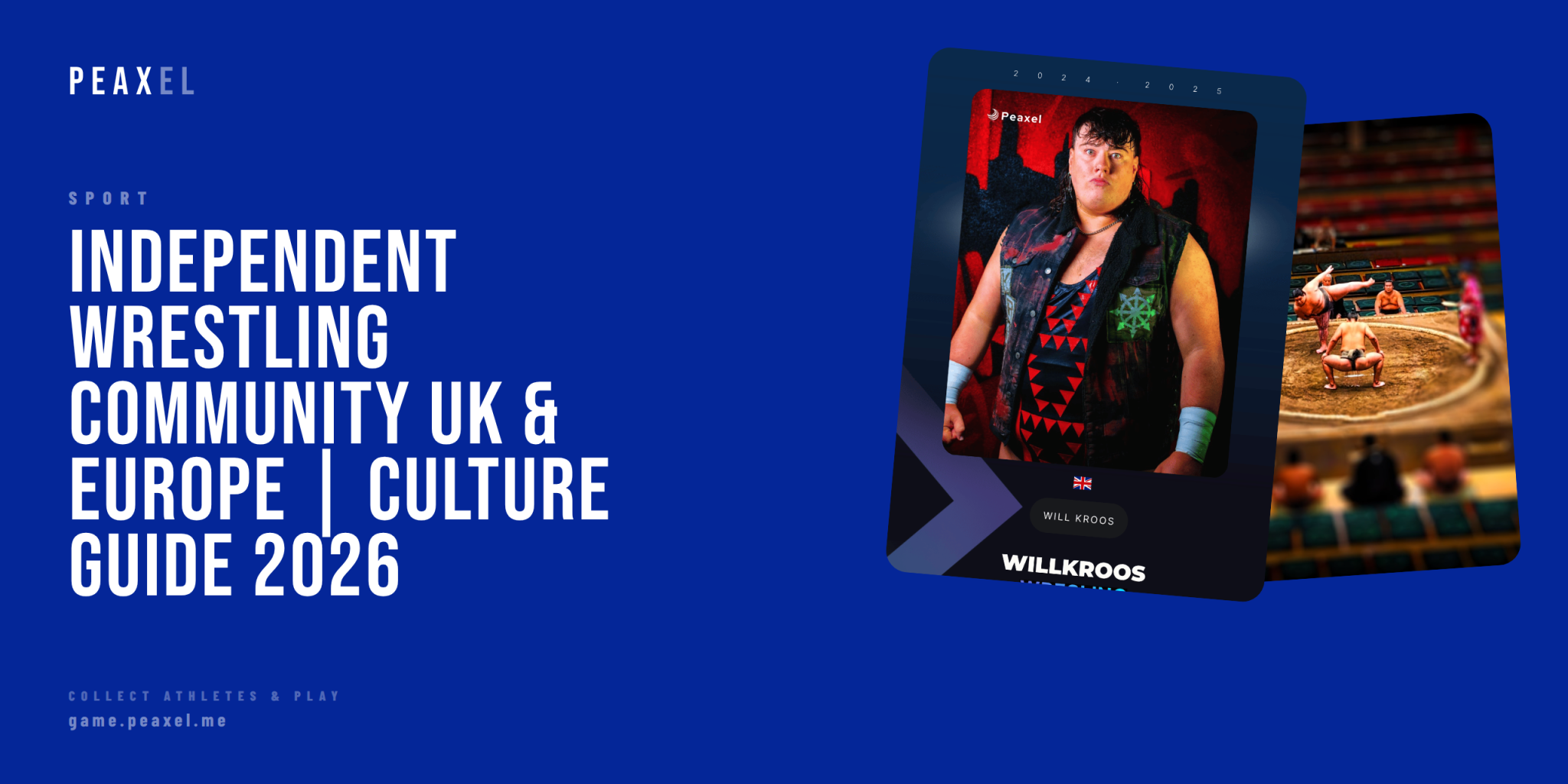
Will Kroos, known as “The Headline,” exemplifies what the British circuit produces. Standing 6 feet 3 inches and weighing 275 pounds, he combines heavyweight power with cruiserweight agility—a rare combination that has made him a standout since his 2017 debut. Kroos has competed across multiple promotions including British Wrestling Revolution and Fight Factory Wrestling, where he captured the Heavyweight Championship.
His signature move, the “Kroosification” piledriver variant, has become a moment fans anticipate. But beyond the moves, Kroos represents the versatility that independent wrestling demands. Without the production resources of major promotions, athletes must connect through pure performance and ring psychology. You can follow his career through Peaxel’s platform.
Germany’s wXw: Europe’s Wrestling Academy
Across the Channel, Westside Xtreme Wrestling (wXw) has established itself as continental Europe’s premier independent promotion and training facility. The wXw Wrestling Academy in Germany has produced talent who have gone on to compete worldwide, making it a critical institution in European wrestling’s development.
The academy operates with structured coaching programs led by experienced professionals. Students learn not just moves but the psychology of storytelling in the ring—how to pace a match, when to build momentum, and how to connect with an audience. This comprehensive approach has made wXw graduates sought after across the independent circuit.
Danny Fray, who debuted in November 2021 after training under Robert Dreissker and The Rotation at the wXw Academy, represents the powerhouse style the promotion cultivates. At 6 feet 5 inches and 242 pounds, his arsenal includes devastating moves like the Big Boot, Black Hole Slam, and Sidewalk Slam. He has already faced notable opponents including Dreissker himself, Nick Schreier, and Tristan Archer. Track his progression through his Peaxel profile.
Fan Culture: More Than Spectators
Independent wrestling fans differ from typical sports audiences. They are active participants in the product. Chants emerge organically, inside jokes develop between regulars, and wrestlers adjust their performances based on crowd energy. This dynamic relationship shapes the entire experience.
Social media has amplified this connection. Wrestlers interact directly with fans between events, building anticipation for storylines and matches. The parasocial relationship that exists in mainstream entertainment becomes genuinely interactive in independent wrestling. Fans feel investment because they have actual influence.
The merchandise culture reflects this closeness. Rather than mass-produced items, independent wrestlers often sell hand-designed shirts and prints at events. Fans collect these items as markers of shows attended, building personal archives of their relationship with the scene.
The Economics of Independence
Running an independent promotion requires balancing passion with practicality. Most promotions operate on thin margins, relying on ticket sales, merchandise, and streaming revenue. Wrestlers typically work multiple promotions simultaneously, building their schedule around bookings rather than exclusive contracts.
This economic reality shapes the product. Without massive production budgets, promotions invest in what matters—talented performers and compelling storylines. The result is often more creatively satisfying than corporate alternatives, even if the production values are modest.
For wrestlers, the independent circuit offers creative freedom unavailable elsewhere. Characters can evolve organically. Experimental matches test boundaries. The trade-off is financial uncertainty, but for many, the artistic control justifies the instability.
Training Grounds and Talent Pipelines
Academies like wXw serve a crucial function beyond their home promotions. They establish professional standards and create networks of trained wrestlers who share fundamental approaches to the craft. When graduates work together, matches flow smoothly because both performers speak the same technical language.
The UK has developed similar structures. Schools across England and Scotland produce graduates who populate cards throughout the country. This systematized approach to training has elevated the overall quality of British wrestling, making even smaller shows technically competent.
International exchange has accelerated this development. European wrestlers regularly compete in UK promotions and vice versa. Japanese and American independents occasionally tour, exposing local talent to different styles. These cross-pollinations enrich the scene continuously.
The Digital Evolution
Streaming platforms have transformed independent wrestling’s reach. Events that once existed only for those physically present now find global audiences. Promotions build subscriber bases across continents, turning local products into international brands.
This digital presence has created new pathways for discovery. Platforms like Peaxel allow fans to follow independent wrestlers through fantasy sports mechanics, creating engagement beyond passive viewing. The full roster of sports on Peaxel includes wrestling among its diverse disciplines.
Social media clips generate viral moments that introduce indie talent to mainstream audiences. A spectacular move or compelling promo can reach millions within hours, providing exposure that would have been impossible a decade ago.
Why Independent Wrestling Matters
The independent circuit serves wrestling’s ecosystem in essential ways. It develops talent, tests ideas, and maintains artistic standards that corporate promotions sometimes sacrifice for mass appeal. The community built around indie wrestling—wrestlers, fans, promoters, trainers—represents the sport at its most passionate.
For fans seeking authenticity, independent wrestling offers something irreplaceable. The connection between performer and audience, the creative risks, the sense of witnessing careers develop—these experiences define why communities form around small promotions in community centers across the UK and Europe.
As athletes like Will Kroos and Danny Fray continue building their careers, they represent what makes this scene worth following. Their journeys unfold in real time, shaped by the communities that support them. That relationship—direct, invested, mutual—is the culture that keeps independent wrestling thriving.