What Does It Take to Train as a Professional Skydiver?
Skydiving looks like pure freedom—a rush of wind and adrenaline as athletes hurtle toward earth at 120 miles per hour. But behind every jump lies thousands of hours of meticulous training, physical conditioning, and mental preparation that separates weekend enthusiasts from world-class competitors.
In 2026, professional skydiving has evolved into a sophisticated athletic discipline where training happens as much on the ground as in the air. From wind tunnel sessions to visualization techniques, elite skydivers follow demanding regimens that rival any traditional sport.
The Foundation: Building Jump Numbers
Every professional skydiver starts with the same basic requirement: accumulating jumps. Most licensing systems require 25 jumps for a basic A license, but competition-level athletes typically have thousands of jumps logged. Freefly specialists often train for five to ten years before reaching elite status.
Jump numbers matter because skydiving is about muscle memory and spatial awareness. Athletes must react instinctively at terminal velocity where hesitation means lost points or safety risks. This foundation cannot be rushed—it requires years of consistent jumping across varied conditions.
Wind Tunnel Training: The Game Changer
Indoor skydiving facilities have revolutionized how professionals train. Wind tunnels allow athletes to practice body flight positions for hours without the logistical constraints of actual jumps. A single tunnel session can equal the freefall time of dozens of skydives.
Freefly athletes spend significant time in tunnels perfecting head-down and head-up orientations. These controlled environments let coaches provide real-time feedback impossible during actual freefall. Many elite competitors log 100+ tunnel hours annually alongside their jump training.
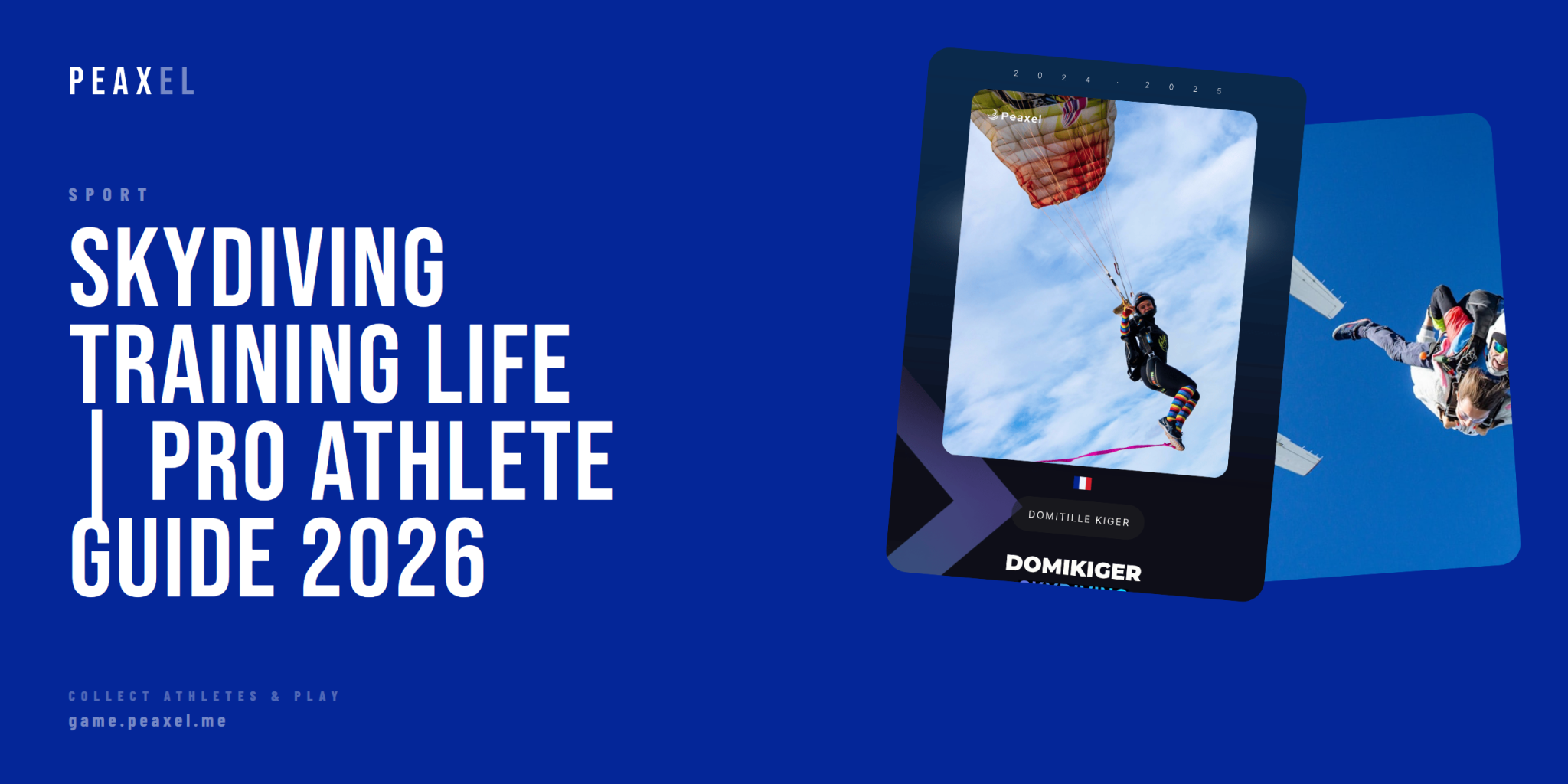
World champion Domitille Kiger exemplifies this modern approach. The French freefly champion began jumping at 15 and has built her multiple world titles through a combination of jump experience and intensive tunnel work. Her co-founding of zerOGravity indoor skydiving center in France reflects how central tunnel training has become to elite performance.
Physical Conditioning for Aerial Athletes
Skydiving demands a unique fitness profile. Athletes need core strength for maintaining stable body positions, flexibility for transitioning between orientations, and cardiovascular endurance for back-to-back competition jumps.
Training programs typically include:
Core stability work focusing on maintaining rigid body positions against 120+ mph wind resistance. Flexibility training for the extreme positions required in freefly disciplines. Cardiovascular conditioning to manage the physical stress of multiple daily jumps during competitions. Neck and shoulder strengthening to handle helmet weight and wind forces during head-down flight.
Unlike many extreme sports, skydiving rewards lean physiques. Extra weight affects fall rate and makes formation work more challenging. Most elite competitors maintain strict fitness regimens year-round.
The Mental Game: Visualization and Focus
Skydiving competitions are won and lost in seconds of freefall. Athletes cannot afford mental lapses when judges score precise formations or freestyle sequences. Mental training has become as important as physical preparation.
Professional skydivers use visualization extensively, mentally rehearsing every move before leaving the aircraft. Formation teams practice sequences on the ground using “dirt dives”—walking through jump plans while lying on creepers or standing in formation.
Competition pressure adds another layer. Athletes must perform complex sequences knowing that small errors are immediately visible to judges. Sports psychologists increasingly work with skydiving teams on focus techniques and competition anxiety management.
Coaching and Team Dynamics
Modern competitive skydiving relies heavily on coaching infrastructure. Athletes like Will Penny, the South African skydiver and coach based in Spain, represent the sport’s emphasis on structured development. His work with the Babylon Freefly team and Flynamik freestyle partnership produced multiple world championships.
Team disciplines require additional training complexity. Formation skydiving teams must synchronize movements across four or eight jumpers. This demands countless practice jumps building communication systems and trust between teammates.
Equipment Mastery and Safety Training
Professional skydivers maintain intimate knowledge of their equipment. Understanding parachute systems, emergency procedures, and gear maintenance is non-negotiable at elite levels. Athletes typically own multiple rigs configured for different disciplines.
Safety training continues throughout careers. Annual refreshers on emergency procedures, new equipment certifications, and currency requirements keep athletes sharp. The sport’s safety record has improved dramatically as training standards have risen.
The Training Calendar
Elite skydivers follow structured annual cycles. Competition seasons drive peak training periods, with athletes increasing jump frequency and tunnel time in the months before major events. Off-seasons focus on skill development, physical conditioning, and equipment updates.
Geographic considerations matter significantly. Many professionals travel to locations with consistent weather, spending winters in warmer climates where jumping remains possible. Training camps bring athletes together for intensive multi-day sessions.
The Investment Required
Professional skydiving demands significant financial commitment. Jump costs, tunnel time, travel, equipment, and coaching add up quickly. Most elite competitors rely on sponsorships, team funding, or parallel careers to sustain their training.
This reality shapes who can compete at the highest levels. The sport continues working to improve accessibility, but the training investment remains substantial compared to many traditional sports.
Following Skydiving Athletes
The dedication required to reach elite skydiving levels creates compelling athletic stories. Platforms like Peaxel let fans discover and follow skydivers alongside athletes from dozens of other action and extreme sports.
For those fascinated by what it takes to master human flight, understanding the training behind the spectacle reveals why professional skydiving demands respect as a serious athletic pursuit.