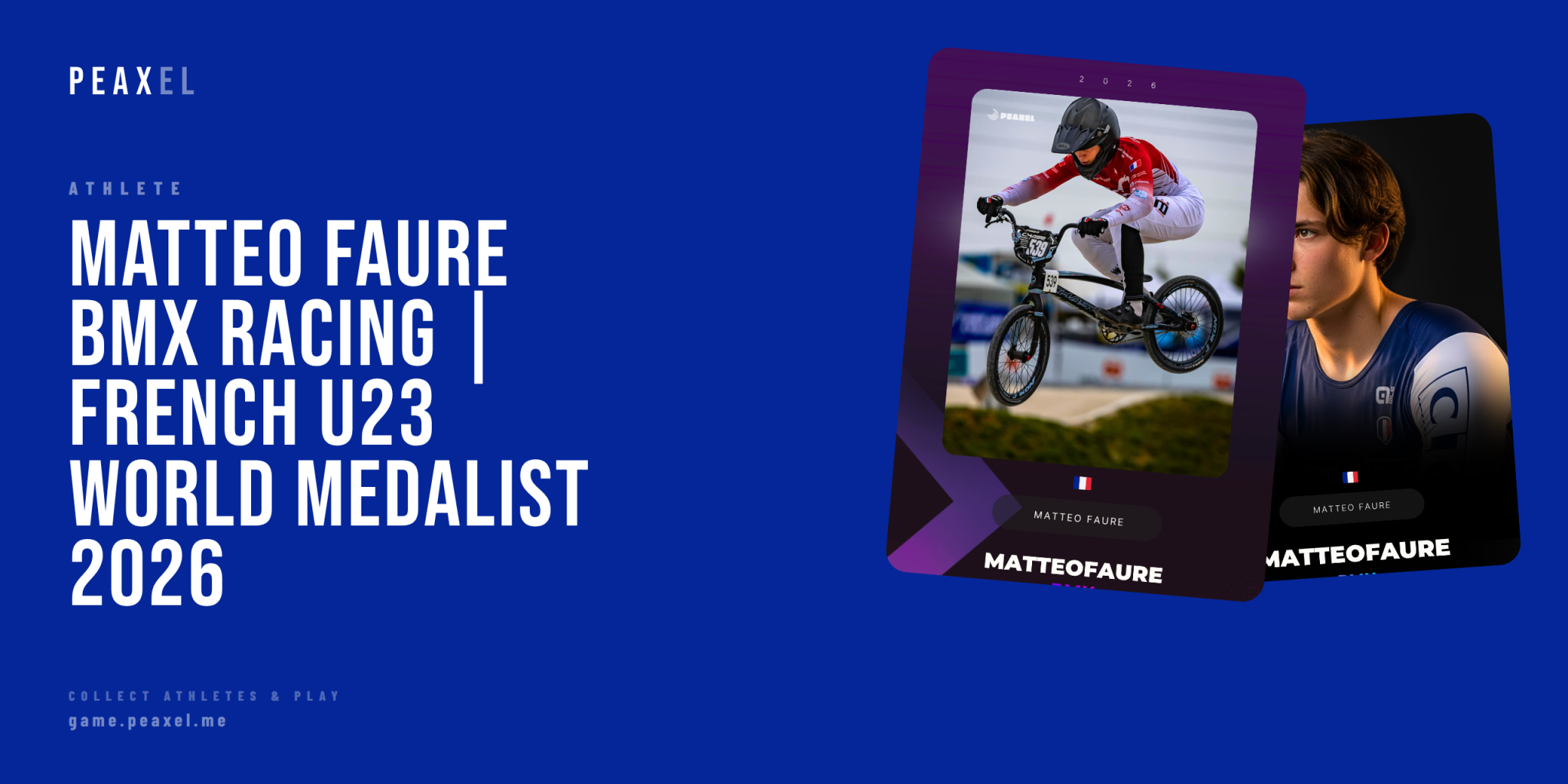
From Junior Ranks to World Championship Podium
Matteo Faure has emerged as one of the most exciting young talents in BMX racing. The French rider, representing Stade Bordelais BMX, secured a bronze medal at the 2025 UCI BMX Racing World Championships in Copenhagen in the Men Under 23 category. That result marked a defining moment in his career trajectory.
BMX racing demands an unusual combination of explosive power, technical precision, and tactical intelligence. Races last under 40 seconds, but the physical and mental preparation required spans years. For Faure, the path to Copenhagen began in French junior competitions, where he represented his country at the 2024 European Championships before stepping up to elite U23 competition.
What BMX Racing Training Actually Looks Like
Elite BMX racers train differently than athletes in almost any other cycling discipline. The sport requires maximum power output from a standing start, precise timing through rhythm sections, and the ability to maintain speed through berms while fighting for position against seven other riders.
A typical training week for a rider like Faure includes multiple track sessions focused on gate starts—the explosive first pedal strokes that often determine race outcomes. Strength training emphasizes lower body power and core stability. Sprint intervals on the bike build the anaerobic capacity needed for 30-second all-out efforts.
Recovery becomes equally important. BMX racing inflicts significant stress on joints and muscles through repeated impacts. Professional riders balance high-intensity track work with mobility sessions and structured rest to avoid overtraining.
The Gate Start: Where Races Are Won
BMX racing’s most critical moment happens before riders even reach the first jump. The gate start—that explosive launch from an eight-rider starting gate—separates elite competitors from the rest. Reaction time, pedal engagement, and body positioning all factor into those crucial opening meters.
Faure has built his reputation partly on strong gate work. At European Cup events throughout 2025, his ability to reach the first corner in contention consistently put him in position to challenge for wins. The technical refinement of this single skill can take years to master.
The International Circuit: UEC and UCI Competition
The pathway for European BMX racers runs through the UEC BMX European Cup and UCI BMX Racing World Cup series. These events attract the world’s fastest riders and offer critical ranking points for world championship seeding.
Faure competed across European venues from Verona to Papendal during the 2025 season, accumulating experience against elite international fields. Each race presents different track layouts, weather conditions, and competitive dynamics. Adaptability becomes essential.
The World Cup circuit tests more than pure speed. Travel schedules, unfamiliar tracks, and the pressure of performing at the highest level require mental resilience. Young riders like Faure must learn to manage these demands while continuing to develop technically.
Comparing Approaches Across Nations
Different countries produce BMX talent through varying development systems. France has invested heavily in BMX infrastructure, with tracks across the country feeding riders into national programs. British rider George Hunt, the 2024 British U23 National Champion, emerged through a similar pathway—regional competition leading to national team selection and international exposure.
The approaches share common elements: early identification of talented juniors, structured progression through age categories, and increasing exposure to international competition. What differs is often the depth of domestic competition and available training facilities.
Physical Demands of Professional BMX Racing
BMX racing appears simple from the outside—pedal fast, jump efficiently, reach the finish first. The physical reality is far more complex. Riders must generate massive power outputs while absorbing impacts from jumps and maintaining precise bike control at speeds exceeding 50 kilometers per hour.
Strength-to-weight ratio matters enormously. Riders need enough muscle mass to generate explosive power but cannot carry excess weight over jumps and through technical sections. Nutrition and body composition become ongoing focuses for professional competitors.
Injury management presents constant challenges. Crashes happen regularly in a sport where eight riders compete simultaneously on tracks filled with jumps and tight corners. Successful careers require both avoiding unnecessary risks and recovering effectively when injuries occur.
The Mental Game in BMX Racing
Physical preparation means nothing without the mental capacity to execute under pressure. BMX races unfold rapidly, with split-second decisions determining outcomes. Riders must commit fully to their lines while remaining aware of competitors around them.
The World Championship podium in Copenhagen represented more than physical achievement for Faure. It demonstrated the ability to perform when stakes were highest—to execute technically demanding maneuvers while managing championship-level pressure.
Visualization plays a significant role in BMX preparation. Riders mentally rehearse track sections, gate starts, and race scenarios repeatedly. This mental practice complements physical training and helps manage competitive anxiety.
What Comes Next for French BMX Racing
Faure’s bronze medal signals the ongoing strength of French BMX racing. The country has produced multiple world-class riders across recent generations, and young talents continue emerging through the national system.
For Faure specifically, the 2025 result establishes a platform for future success. The transition from U23 to elite competition presents new challenges—faster fields, more experienced competitors, and higher expectations. His Copenhagen performance suggests readiness for that next step.
The 2026 season offers opportunities to build on this foundation. European Cup events, World Cup rounds, and championship competitions provide stages for continued development. The physical tools and competitive experience gained through years of dedication now combine with the confidence that comes from podium results.
Following BMX Racing Athletes
BMX racing offers fans intense, accessible competition. Races last seconds rather than hours, and the action is immediately understandable—first across the line wins. The sport’s Olympic inclusion has expanded its global audience significantly.
Platforms like Peaxel allow fans to discover and follow athletes across dozens of sports, including BMX racing. For those interested in riders like Matteo Faure, tracking their competitive journeys adds depth to watching races unfold.