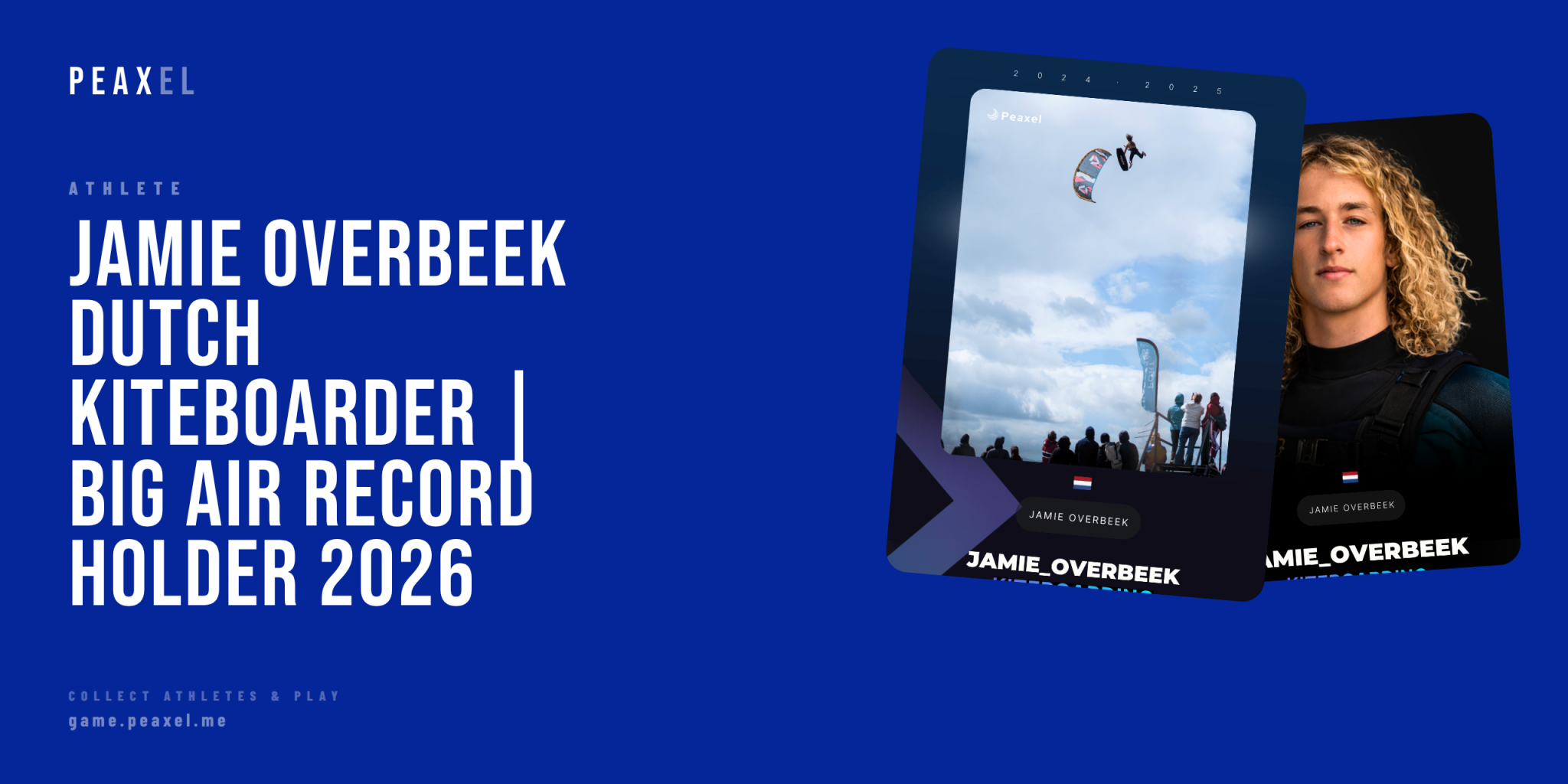
The Youngest to Podium at Red Bull King of the Air
In the world of Big Air kiteboarding, where athletes launch themselves dozens of meters into the sky, age typically correlates with experience. The sport demands years of technical refinement, physical conditioning, and the mental fortitude to commit to massive aerial maneuvers in volatile wind conditions. Yet in 2022, a 16-year-old from the Netherlands shattered expectations.
Jamie Overbeek became the youngest athlete ever to reach the podium at Red Bull King of the Air, the most prestigious Big Air kiteboarding competition on the planet. Finishing second in his debut appearance at the event held in Cape Town, South Africa, Jamie announced himself as a generational talent in a sport where competitors typically peak in their mid-twenties.
The achievement was not a fluke. It was the culmination of a decade of progression that began when Jamie first touched a kite at age six, influenced by his father’s passion for the sport.
Breaking Records Before Breaking Through
Jamie’s path to international recognition was paved with measurable achievements. At 14, he set a Dutch national record with a 31.4-meter jump—a height that would be impressive for any professional kiteboarder, let alone a teenager still in school. He later pushed that mark to 35.3 meters, registering one of the highest jumps ever recorded in the sport.
These numbers matter in Big Air kiteboarding. Unlike freestyle disciplines where judges evaluate trick complexity and style, Big Air competitions reward pure altitude and hang time combined with technical execution. Jamie’s ability to generate and control extreme height demonstrated both his physical power and his understanding of kite dynamics at the highest level.
His progression from recreational rider to record-holder took less than a decade. By the time he arrived at King of the Air, he had already proven he belonged among the elite.
The Demands of Big Air Kiteboarding
Big Air kiteboarding requires athletes to harness wind power to launch themselves off waves and into sustained flight. Competitors typically ride in winds exceeding 30 knots, using large kites that generate massive lift. The physical demands are significant: riders must maintain core stability while rotating through complex maneuvers, absorb heavy landings, and react instantly to changing conditions.
The mental component is equally challenging. Committing to a jump that will send you 30 meters into the air requires absolute confidence in your equipment, your technique, and your ability to handle whatever happens next. Falls from height are common, and the impact with water at speed can be punishing.
Jamie’s success at such a young age suggests an unusual combination of technical skill, physical maturity, and psychological readiness. Athletes who excel in Big Air tend to share a willingness to push limits while maintaining control—a balance that typically develops over many years of competition.
Training and Preparation
Professional kiteboarders structure their training around wind availability, often traveling to locations with reliable conditions. Jamie has trained extensively in the Netherlands, where consistent North Sea winds provide regular opportunities to ride. He has also traveled to international spots known for Big Air conditions.
Physical preparation for Big Air includes core strength training, cardiovascular conditioning, and flexibility work. Riders need explosive power to control their kites through aggressive maneuvers and endurance to sustain multiple hours on the water during competition and training sessions.
Equipment selection also plays a critical role. Big Air riders use specialized kites designed for maximum lift and stability at extreme heights. Board choice affects takeoff dynamics and landing absorption. Jamie, like most professional kiteboarders, works closely with equipment sponsors to optimize his setup for competition conditions.
The Competitive Landscape
Red Bull King of the Air represents the pinnacle of Big Air competition. Held annually in Cape Town during the Southern Hemisphere summer, the event attracts the world’s best riders to compete in the powerful winds that sweep across Table Bay. The competition format rewards both height and technical difficulty, with judges scoring individual jumps throughout heats.
Jamie’s second-place finish in 2022 placed him behind only the most experienced riders in the sport. His performance demonstrated that he could execute at the highest level when it mattered most—a quality that separates competitors who win events from those who merely qualify for them.
Since that breakthrough result, Jamie has continued competing on the international circuit, building experience and refining his technique. The trajectory of his career suggests he remains on an upward path, with potential to claim major titles as he enters his physical prime.
A New Generation of Kiteboarders
Jamie Overbeek represents a broader trend in action sports: the emergence of young athletes who bypass traditional development timelines through early specialization and intensive training. Access to professional coaching, advanced equipment, and global competition opportunities has compressed the learning curve for talented riders.
This generational shift is visible across kiteboarding disciplines. Younger athletes are landing tricks and achieving heights that would have been considered elite-level performances just a decade ago. The sport’s technical ceiling continues to rise as new riders build on the innovations of their predecessors.
For fans following kiteboarding, athletes like Jamie offer a glimpse of where the sport is heading. His combination of physical talent, competitive drive, and willingness to push boundaries positions him as a central figure in Big Air kiteboarding for years to come.
Following Jamie Overbeek
Jamie’s competitive journey continues across international events and training sessions. Fans can follow his progression through Peaxel, where his athlete profile tracks his career and connects supporters with his story. The platform features athletes across dozens of sports, including other kiteboarders like Roni Balbul, who continues to build her presence in the kitesurfing community.
As Jamie Overbeek pursues his next major result, his journey from childhood enthusiast to record-breaking competitor serves as a compelling narrative in modern action sports—one defined by measurable achievement rather than hype.