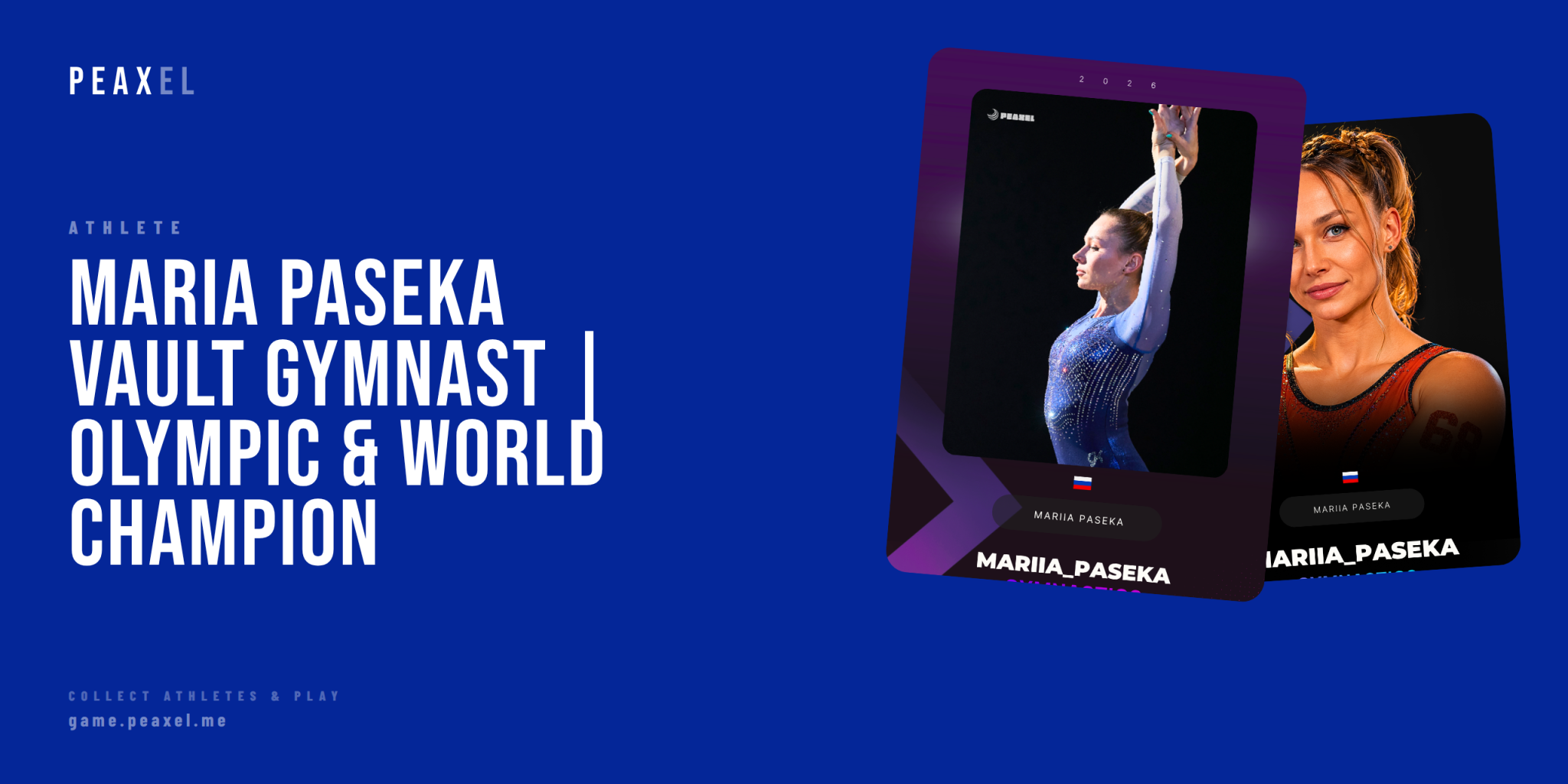
The Making of a Vault Specialist
Maria Paseka discovered gymnastics at age six in Moscow after watching a television programme that captured her imagination. Her mother initially resisted, but the young girl’s persistence won out. She began training at the MGFSO Dynamo youth sports school under coaches Nadezhda Galtsova and Vyacheslav Selifanov, where her natural explosive power quickly became apparent.
By 2009, Paseka had moved to the prestigious Round Lake national training centre outside Moscow. There she trained under Marina Gennadyevna Ulyankina, the coach who would guide her through over a decade of elite competition. The facility, known for producing world-class Russian gymnasts, provided the perfect environment for her vault specialization to develop.
Her international debut came at the junior level with immediate success. At the 2010 European Championships, Paseka contributed to Russia’s team gold and claimed individual silver on vault. The apparatus that would define her career was already her strongest event at age 14.
Olympic Breakthrough at London 2012
At just 16 years old, Maria Paseka announced herself on the world’s biggest stage. The 2012 London Olympics saw her compete alongside established stars, yet she stood out on the vault apparatus. Her powerful Amanar vault—a roundoff onto the springboard, back handspring onto the table, followed by two and a half twisting somersaults—demonstrated the explosive technique that would become her trademark.
Paseka won bronze on vault in London, her first Olympic medal. She also contributed to Russia’s team silver medal, proving her value beyond her specialist event. At an age when many gymnasts are still developing their senior repertoire, she had already claimed hardware at the Games.
The achievement was remarkable given the physical challenges she had already overcome. In early 2011, Paseka underwent two surgeries on her heels, setbacks that would have derailed many careers before they truly began. Her return to competition and immediate Olympic success demonstrated the mental resilience that would characterize her career.
World Championship Dominance
The years following London established Maria Paseka as the definitive vault specialist of her generation. At the 2015 World Championships in Glasgow, she claimed her first world title on vault. The gold medal confirmed what the gymnastics community already knew—on the vault apparatus, Paseka was peerless.
She defended that status at the 2017 World Championships in Montreal, winning her second world vault title. The back-to-back global championships on a single apparatus is an achievement few gymnasts accomplish in any era. Her vaults combined difficulty scores that pushed the boundaries of the Code of Points with execution that satisfied demanding judges.
European Championships brought additional hardware. Paseka won continental gold on vault in both 2015 and 2019, adding four more years between her European titles. Her longevity at the top of an apparatus known for requiring explosive youthful power defied conventional wisdom about vault specialists’ career trajectories.
Rio 2016: Upgrading to Olympic Silver
The 2016 Rio Olympics represented the peak of Paseka’s Olympic career. Four years after her London bronze, she returned to the vault final as the reigning World Champion and a clear medal favorite. The pressure of expectations can break athletes, but Paseka delivered when it mattered most.
She upgraded her Olympic vault medal from bronze to silver, finishing behind only American Simone Biles. In any other era, Paseka’s vault scores would likely have claimed gold. Competing against arguably the greatest gymnast in history, silver represented an extraordinary achievement.
The Rio silver also demonstrated her consistency across Olympic cycles. Medaling at consecutive Games on the same apparatus requires sustained excellence over years of competition. Paseka joined an elite group of vault specialists who could claim multiple Olympic medals on the event.
Technical Mastery and Vault Innovation
Vault in women’s artistic gymnastics demands a unique combination of speed, power, and aerial awareness. Athletes sprint down a runway, hit a springboard, contact the vaulting table for a fraction of a second, and execute complex twisting and flipping elements before landing. The entire sequence lasts mere seconds but requires years to master.
Paseka’s technical approach emphasized height and rotation speed. Her Amanar vault consistently achieved the amplitude that separated elite vaulters from the rest of the field. The ability to generate enough lift to complete two and a half twists while maintaining body control throughout the flight phase distinguished her performances.
Throughout her career, she competed vaults at the highest difficulty levels in the Code of Points. Vault specialists must balance risk and reward—more difficult vaults carry higher start values but greater potential for deductions or falls. Paseka’s success came from executing maximum-difficulty vaults with relative consistency.
Overcoming Physical Adversity
Elite gymnastics takes a severe toll on athletes’ bodies, and vault specialists face particular stress on ankles, knees, and spine. The repeated high-impact landings and explosive takeoffs accumulate damage over years of training. Maria Paseka’s career included significant physical challenges that she repeatedly overcame.
Beyond her 2011 heel surgeries, Paseka dealt with ongoing spinal issues throughout her competitive years. Vault’s demanding nature—the violent deceleration of landing, the compression forces through the spine during takeoff—exacerbated these problems. Many athletes with similar issues would have transitioned away from the apparatus or retired entirely.
Her continued excellence despite these challenges speaks to both her physical conditioning and mental determination. The Round Lake training environment and her coaching team developed management strategies that allowed her to compete at the highest level despite chronic issues.
Legacy in Women’s Vault
When Maria Paseka retired in July 2022, she left behind one of the most decorated vault careers in gymnastics history. Two Olympic medals, two World Championship titles, and two European Championship golds on a single apparatus represents sustained dominance rarely achieved in the sport.
Her career spanned an era of significant evolution in women’s vault. Difficulty levels increased throughout her competitive years as the Code of Points rewarded ever more complex elements. Paseka not only kept pace with this evolution but helped drive it, consistently performing vaults at the sport’s cutting edge.
The Russian vault tradition that produced champions before Paseka continued through her career. She represented the best of a system that identified and developed vault specialists, providing a template for how national programs can nurture apparatus experts.
Discovering Maria Paseka on Peaxel
Athletes like Maria Paseka demonstrate how specialized excellence can create lasting legacies in individual sports. Her decade of vault dominance offers fans a career worth exploring through Peaxel, where you can discover athletes across dozens of sports and disciplines and follow their journeys from emerging talent to established champions.